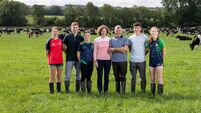
Future of dairy farms is high level efficiency
They must get their business analysed with a profit monitor. When they have reached a satisfactory level of efficiency regarding grass growth/ utilisation, disease control, breeding and general overall management it is then time to expand with some extra stock and some extra facilities. Of course the quota situation must be taken into account for the next 3 or 4 years but a sufficient supply of well bred heifers should be coming on line.
Whether expanding or starting in milk production there is no future except at a high level of efficiency and thankfully the majority of our farmers are well on the road to achieving this. Fortunately, we have many of the best farmers in the world.

The worst thing a dairy farmer can do is to expand an operation that is going badly because when cow numbers are increased, milk yields are likely to drop and whatever is wrong is going to get a lot worse.
The other complete “no no” is to over borrow. We hear so many good stories about New Zealand dairying that it is difficult to understand that they have big problems. They are carrying huge levels of debt amounting on average over €5,000 per cow due mainly to rapid expansion. Some reports puts the borrowing a lot higher.
Due to this level of borrowing and other increases in costs, the banks estimate the average cost of milk production in New Zealand to be 21cent/litre equating to Irish terms which is similar to average Irish costs.
Up until last year the New Zealand banks took a very soft line with farmers but are now getting tough and a lot of farmers are in serious trouble with a good number of high profile farmers gone into receivership. A lot of dairy farmers are being forced to sell but apart from foreign investors (who are somewhat restricted) there are very few buyers.
We must do everything possible to avoid the same happening in Ireland because there is a danger that some vulnerable people could get carried away with all the optimism about dairying and an obsession with very large herds. Ireland can’t afford another bubble burst.
At the start of quotas, Ireland and Denmark had a similar amount of dairy farmers. With the encouragement of the Danish Government, Denmark has less than 3,600 dairy farmers now while we still have around 17,000.
Due to the rapid expansion Danish dairy farmers are reported to owe €19,000 per cow on average or some €2.5 million per farm.
Records show many of the most profitable Irish farmers are those with 60 to 70 cows (sometimes smaller or bigger) and managed efficiently with family labour. When quotas will allow, many of these farmers will increase milk production by over 25% with only small increases in cows and no change in labour requirements.
Remember it will take the profit from 50 to 60 cows to pay an extra labour unit and this is a big step up.
Stocking rates on existing dairy farms is on average well less than two cows per hectare so land availability is not a barrier to significant increases in production on most dairy farms.
Surveys have shown grass production and utilisation on half of grazing land is almost 50% below its potential due mainly to not being reseeded and also deficiencies of fertiliser and lime. There is great scope for increasing cow numbers through higher stocking rates.