Brian Reidy: French milk production comes in many shapes and sizes
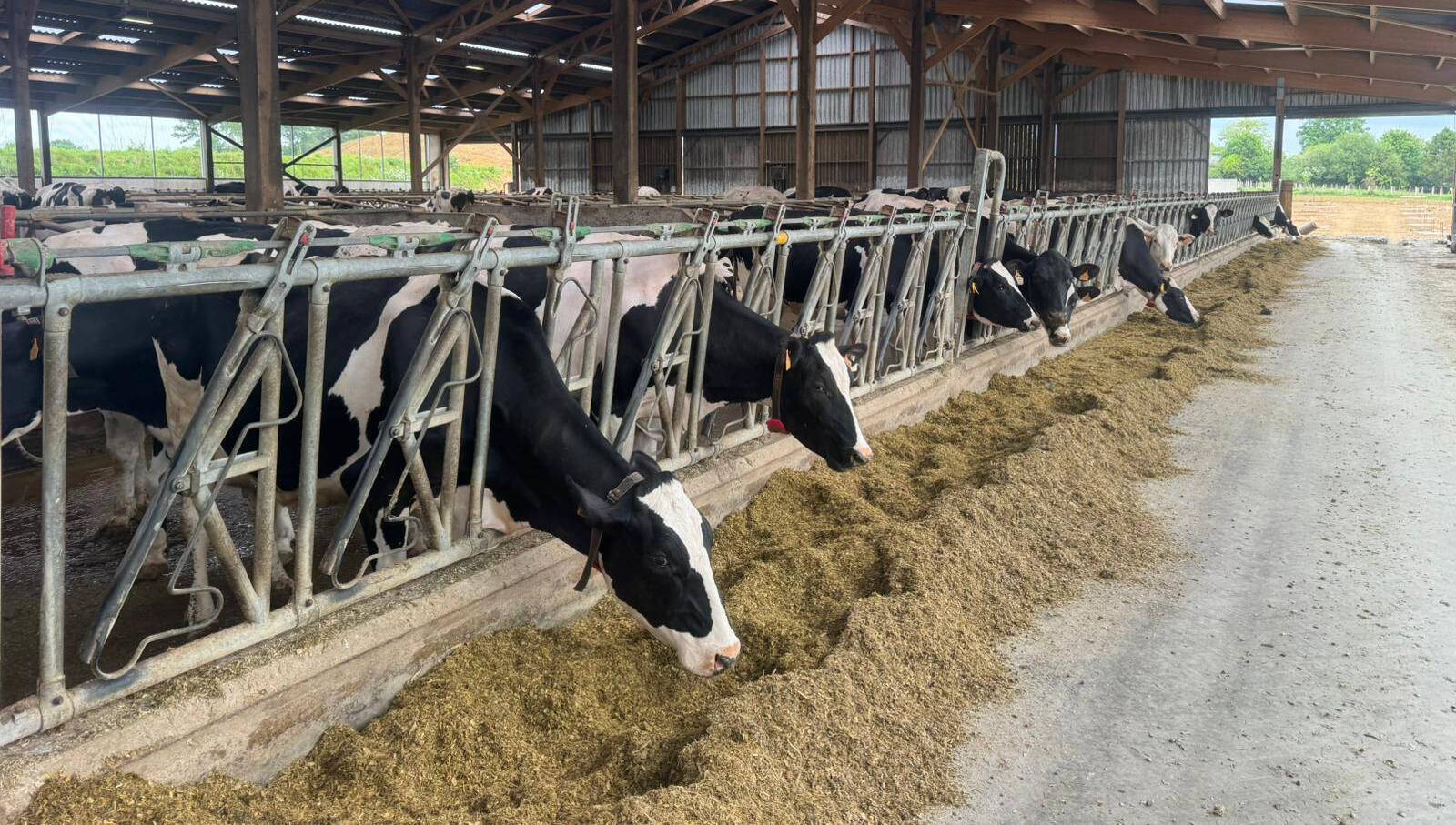
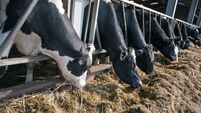
Cows on a four-robot dairy farm Irish Examiner columnist Brian Reidy visited in northwest France. Picture: Brian Reidy

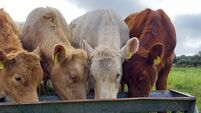
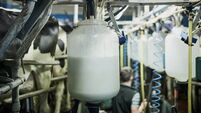
I was lucky to spend four days in France last week and visited several excellent dairy producers. These producers ranged from a herd grazing Normandy cows day and night from mid-February to early December, averaging 24 litres per day to a full-time indoor herd of Holstein cows on four robots producing a rolling average of 44 litres per day, every day of the year.
The systems were diverse, but each had a goal of optimum profitability.
Some herds supplied niche markets, where locally produced milk, cheese and butter commanded premium farmgate and retail prices.
These premiums were mostly based on using home-grown and locally produced feeds and forages and milking local breeds, while the higher yielding herds drove their profitability by improving breeding, feeding and management. The facilities and attention to detail on the 44-litre rolling average herd was second to none.
In particular, the standard of heifer rearing was fantastic, and this was bearing fruit when we viewed the main milking herd and the first calvers were well-matured, had excellent body condition and were milking very close in volume to mature cows.
While discussing their systems with the host farmers, one thing became very obvious to me and that was how they assessed the cost of forage production. The grazing herds we visited could all grow grass but made virtually no grass silage and were almost exclusively using maize silage for buffer feeding, indoor feeding of milkers and for heifer growing.
Read More
The indoor herds cut zero grass silage and only had some pasture for recently dried-off cows. In the case of the four-robot herd doing 44 litres, they grew 225 acres of maize silage and 50 acres of barley, and sourced all other feeds from local producers.
The message was clear: grass is an excellent value feed, but producing grass silage is very expensive.
France is the second-largest milk producer in the European Union. The sector operates under a predominantly family-run, cooperative model, where niche products exist in localised markets.
The Normandy herd referred to above were getting just over 60c per litre for their milk last week. The indoor herds on standard milk contracts with a base solid of 3.8 fat and 3.2 protein were at 47c per litre last week.
- Total milk deliveries last year were 23.5 billion litres, which is 16.3% of total EU-27 milk deliveries.
- There are currently just over 44,200 active dairy farms in France, with an average herd size of 72 cows.
- This gives a national average of just under 7,400 litres per cow annually.
- Of the French national milk pool, 1.12 billion litres are from organic producers.
- About 60% of France's milk remains for domestic consumption, while 40.4% is processed for global export. This accounts for 12.2% of total EU dairy exports.
- Cheese accounts for 36.2% of the national milk collection.
- Raw liquid and packaged milk account for 60%–65% of the consumer market share.
The north-western regions dominate production due to a favourable grass and forage growing climate, with over half of the milk produced annually coming from these three regions.
- Brittany produces 5.2 billion litres of the national milk pool.
- Normandy: 3.9 billion litres.
- Pays-de-la-Loire: 3.6 billion litres.
The weather also has a part to play, and when I visited last week, there was a very welcome downpour for the whole day on Tuesday, and by Friday, you could see fields green up and maize bounce out of the ground. Land type in the northwest of France, in many ways, is very similar to much of Ireland.
Farmers are not much different from country to country — often the language is the only difference. My visit to northwest France confirmed again to me there is more than one way to produce milk and one size does not fit all. Every system has its merits.
In discussion with host farmers, it was clear we have the same challenges as we do here in Ireland. Succession is an issue, an ageing farmer population is a hot topic, a lack of quality labour was discussed, and of course, government and EU red tape got an airing too.
The price a herd gets for their milk dictates everything and as is evident from the above figures, the French herds right now are creating more revenue from milk sales than the equivalent Irish herd.
The 44-litre herd are currently building a robotic feeding system to help with the labour issue and gain better feeding accuracy.
A form of quota remains in France where co-ops have contracted volumes with suppliers and there are fines for oversupply. This in part helps to maintain a stronger farmgate milk price, along with strong marketing and loyalty to home-produced food that we could learn a lot from in Ireland.
- Brian Reidy is an independent ruminant nutritionist at Premier Farm Nutrition. His column features in the every Thursday.