Ireland’s new investment accounts could unlock billions — but where will the money go?

Irish households have invested €1.6bn in the seven US tech giants known as the 'Magnificent Seven': Apple, Microsoft, Amazon, Alphabet, Meta, Nvidia and Tesla. File picture: iStock
As Ireland embarks on a new path to truly turn the country's conservative savers into a nation of investors, a growing question is asking where all these savings will be invested.
On Tuesday, Tánaiste Simon Harris unveiled the personal investment account. From July next year, savers will be able to put up to €12,000 a year into an account with the first €50,000 exempt from tax.
It comes after the launch in January of auto-enrolment, where more than 800,000 workers have been enrolled in the My Future Fund pension scheme. By the end of August, more than €550m had been invested on their behalf with contributions from the workers, their employers and the State.
These two initiatives, taken on top of Ireland's existing occupational pension market, amount to a major push to free up billions in savings and help improve income levels in retirement.
However, none of these schemes prescribes where these funds should be invested. In fact, the vast bulk of Irish pension money is tied up in stocks, bonds or property outside Ireland and even outside Europe.
It was not always that way. In previous generations, people with money to invest generally put it in shares in banks or other national institutions and companies, generally not wanting to take the risk of currency fluctuations.
The euro removed that risk from investing across Europe. Brokers and advisors also offered the sound advice of pushing investors and trustees to diversify their nest eggs. Cheap global index funds made it easy to track a chunk of the world market rather than just a small basket of Irish stocks.
The financial crash, which saw Irish bank shares wiped out, also taught a harsh lesson about having investments focused in one small area.
Add to this, the shrinking of the Irish stock market has done the rest. CRH left Euronext Dublin in 2023 and is now listed only in New York. This summer, DCC agreed to a takeover by US private equity, Irish Continental Group went private, and PTSB shareholders voted to sell to Austria’s BAWAG.
For a pension fund that wanted to buy Ireland Inc, there is less of it to buy. However, there is now a concern that the pendulum has swung too far in the other direction and with the Personal Investment Accounts set to unleash billions more in investments, it is feared that other countries will benefit.
It has been clear for some time that growing companies in Ireland and Europe often have to relocate to other jurisdictions, namely the US, when they want to scale and grow due to the easier access to capital.
“It is not a strategy that anybody would want to go back to,” Irish Association of Pension Funds (IAPF) chief executive Joyce Brennan said earlier this year, referring to the old domestic bias. “The pendulum has probably swung too far the other way," she said.
Of the €145bn sitting in Irish occupational and private pension schemes, just 3% is invested in Ireland. Before the euro was adopted, Irish pension funds kept most of their money at home, in Irish shares, Irish bonds and Irish property.
The IAPF wants to see that 3% rise to about 5% as a start. “We’re talking about a very small increase in percentage terms, but in capital terms that’s absolutely enormous,” she said. On the current asset base, two percentage points works out at roughly €3bn.
The association has proposed an Ireland-focused, long-term investment fund. It would pool pension money into Irish and European private credit, infrastructure, real estate and venture capital, structured as a European Long-Term Investment Fund.
The personal investment account is now the bigger question, because it will draw on a far larger pool.
Irish households hold €222.5bn in currency and deposits, according to the Central Bank. The Parliamentary Budget Office notes that “households across the income distribution hold relatively large deposit balances, some of which could potentially be redirected towards these accounts.”
Mr Harris has framed the accounts in national terms. “Ireland now has a real opportunity to build a stronger savings and investment culture at home while helping shape Europe’s Savings and Investments Union,” he said.
Nothing in the design so far requires any of that money to be invested at home. Like My Future Fund, the account is likely to be filled with low-cost diversified funds. In a global index fund, Ireland barely registers.
For the Irish Venture Capital Association (IVCA), that is the missed opportunity. “Ireland has world-class entrepreneurs, innovative companies and a strong track record of economic growth,” said Sarah-Jane Larkin, the IVCA’s director general.
“The challenge is that much of the capital generated by Irish households and institutions does not find its way back into the domestic economy.
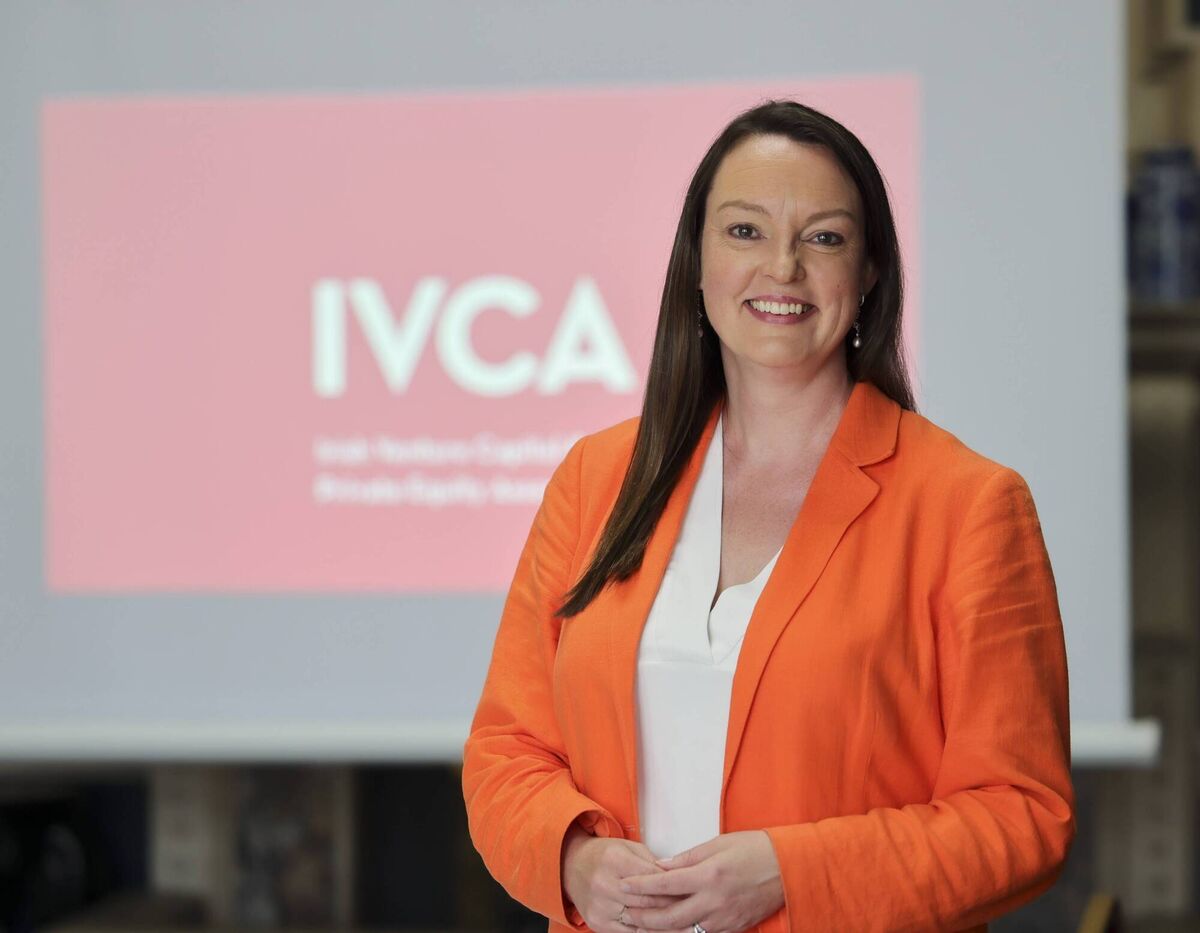
“Too often, domestic savings are invested abroad while ambitious Irish companies seek growth capital.” The numbers back her up. In the first three months of this year, international investors provided 85% of the venture capital raised by Irish companies. A few years ago, the split was closer to half and half.
“The Personal Investment Account has the potential to be a game-changer for Irish savers,” Ms Larkin said, “but its success should be measured not only by how much people save, but by whether those savings help support productive investment in the Irish economy.”
The IVCA wants a professionally managed national fund-of-funds “enabling a small proportion of domestic pension savings to invest through Irish venture capital and private equity funds”, which could also take “a modest share of savings” from the new accounts.
Spreading investments beyond Ireland is accepted as a key way to diversify a person's portfolio. Even the State itself follows this logic.
The Future Ireland Fund, the sovereign fund being built from windfall corporation tax receipts to cover ageing costs from 2041, “is expected to invest globally across equity and bond markets” and “is unlikely to have a major domestic focus in Ireland”, according to the NTMA.
Central Bank governor Gabriel Makhlouf, speaking in Dublin last month about European savings leaking abroad, put the question another way.
“The question we should be asking is not simply how to redirect those flows, but why those returns are perceived to be higher outside Europe, and what we can do about it,” he said. “Fundamentally, it comes back to the performance of the real economy.”
We already have some clue as to where people might invest their savings if they take up one of the new accounts.
Data from the Central Bank shows the value of shares, bonds and funds held by Irish households reached a record €35.1bn at the end of March. But it is still small compared to deposits. The data shows that for every euro invested directly in the markets, more than six sit in the bank.
Of the money invested by households, about €6.1bn is held through foreign custodians, which the Central Bank puts down to the growing popularity of online trading platforms, many based elsewhere in the euro area. Funds now make up half of all household holdings, at €17.6bn, including €5.6bn in exchange-traded funds.
And the data does show that Irish investors do favour home, with 44% of holdings in Irish-originated securities.
But what households own directly is more revealing. They hold €1.6bn in the seven US tech giants known as the “Magnificent Seven”, Apple, Microsoft, Amazon, Alphabet, Meta, Nvidia and Tesla. That is about a third of all their US-listed shares, and exactly as much as they hold directly in Irish government bonds.
Nobody is seriously proposing that Irish savers be forced to bet their retirement on Irish start-ups. The IVCA talks about “a small allocation”, while the IAPF is hoping for a modest 5%.
The legislation for the personal investment accounts has yet to be finalised. So it remains to be seen if they will be allowed to invest as previous schemes did or if it will open the door for some of the money to find its way to Irish businesses.
CONNECT WITH US TODAY



Be the first to know the latest news and updates