Pensions report: Balancing daily life with saving for retirement
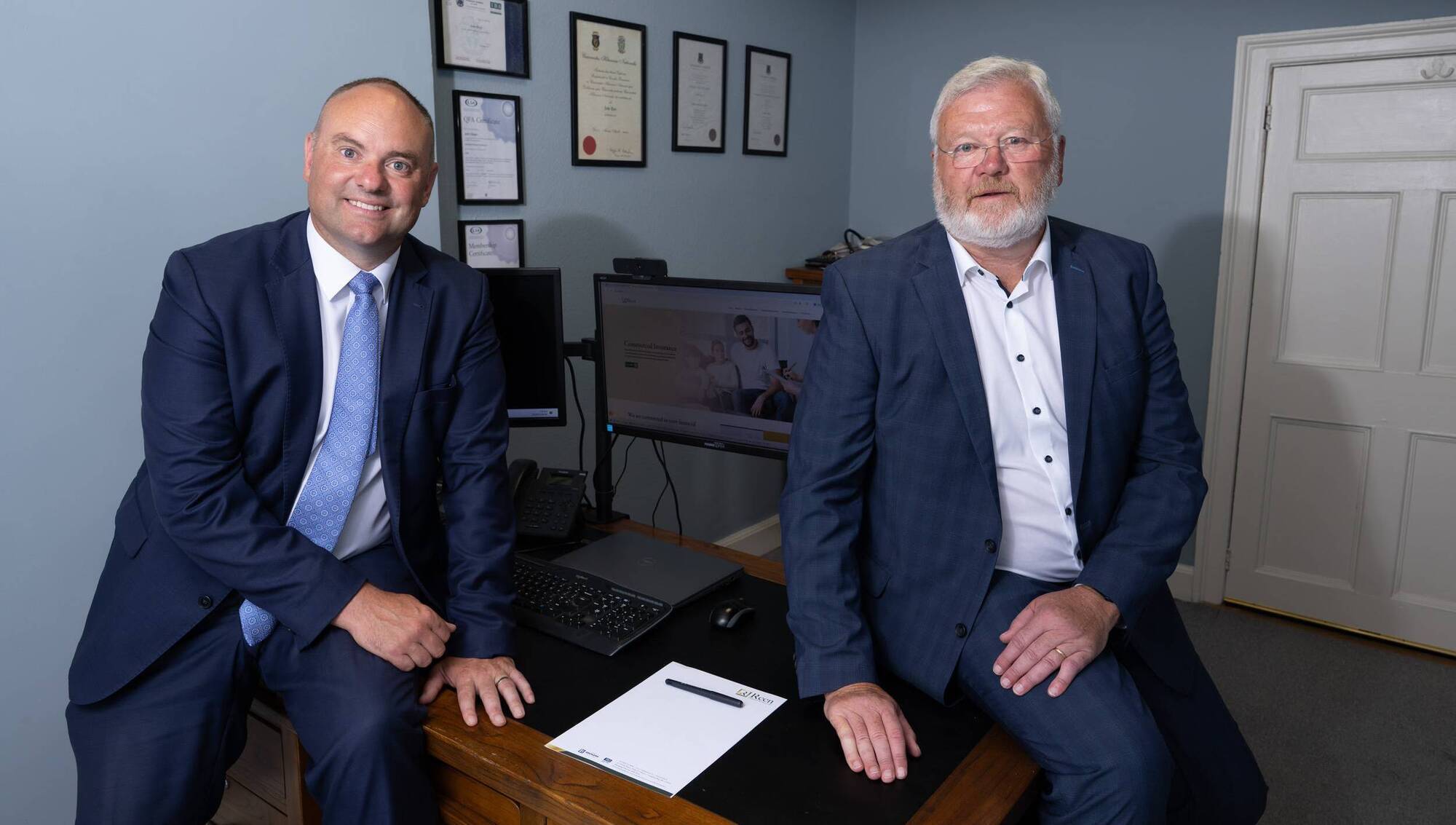
John Reen and Eoin Liston at Reen Financial Services in Tralee. Reen Financial Services is set to exceed €150m in client assets under management following the acquisition of Eoin Liston Financial Services Ltd.
How do we balance current financial responsibilities with future retirement needs? How much should we put aside today, to have enough in the future? How much is enough? How much can we afford? For some, these are questions easily answered. For most, expert advice helps enormously, with John Reen, managing director of Reen Financial Services (RFS) being well placed to provide it.
Earlier this year, he was a key player in the acquisition of Eoin Liston Financial Services, bringing two respected financial services firms together in a deal expected to create one of Kerry’s largest locally-owned advisory businesses. The transaction puts RFS on course to exceed €150 million in client assets under management.
Asked how most view the topic of pensions, Reen says among the general population it’s usually either something to think about later, or something they wish they had thought about sooner.
“If you’re in your twenties,” he says, “retirement may seem a lifetime away. If you’re closer to retirement, you may wonder whether you’ve done enough. But wherever you are in life, there is one message worth remembering: It is never too early to start planning for retirement, and it is rarely too late to review your position.
“While pensions may not be the most exciting financial topic,” he says, “they can play an important role in helping people build greater financial security and choice in later life.”
Asked about the value of starting early, Reen says time is one of the biggest advantages a pension saver can have: “Pension savings are generally invested over the long term, allowing investments the opportunity to grow over many years. While investment returns are never guaranteed and the value of investments can rise and fall, starting early gives your money more time to potentially benefit from long-term growth.”
Acknowledging that retirement can seem too distant to worry about, particularly for younger workers focused on more immediate priorities, such as housing, travel, education costs and career-building, he says: “Even modest contributions made consistently over time, can help establish a valuable savings habit. Starting small is often better than delaying altogether.”
Describing the introduction of auto-enrolment this year as a ‘positive step’ that will have helped many younger workers to begin saving into a pension for the first time, he cautions: “While this is an important foundation for retirement planning, the minimum contribution levels may not be sufficient on their own to provide the level of retirement income that individuals hope to achieve.
“Where affordable, increasing contributions over time can help build a larger pension pot and improve future retirement outcomes. For younger employees, workplace pension schemes can be a useful first step, particularly where employer contributions are available.”
For mid-career individuals, Reen says determining how much they need to save right now can be difficult, particularly given that they don’t know how long they will live, what their future income will be, how investments will perform, or what future expenses might arise. With that, most don’t know when they might like to retire.
Acknowledging the mid-career balancing act, he says that for those in their thirties, forties and fifties, financial life often becomes more complicated at what is otherwise a good time to assess whether existing pension arrangements remain suitable.
“Mortgages, childcare costs, household bills and other commitments can leave little room for long-term planning,” he says. “As a result, pensions can sometimes move down the priority list and this in the years that can be particularly important, with many earning more than they did earlier in their careers, having greater capacity to build retirement savings.”
One issue that frequently emerges, according to Reen, is people losing track of pensions from previous employment. “Changing jobs several times throughout a career can result in multiple pension arrangements, making it difficult to understand their overall retirement position.”
For help in answering ‘important questions,’ he recommends regular pension reviews. “These enable pause to consider how much is currently being saved, the pension benefits already in place, whether they’re on track for the retirement they want, whether their goals have changed over time and whether they should consider professional financial advice. Taking stock now may provide a clearer picture of their retirement prospects and allow them to make informed decisions.”
The pensions gap is the shortfall between the amount of money a person is expected to have in retirement and the amount they actually need to maintain their desired standard of living. Minding the pensions gap is something that occupies time in the minds of many, but thought alone won’t solve it. Action is required.
Reen says: “Retirement outcomes differ greatly from one person to another. Career breaks, part-time work, caring responsibilities and variations in lifetime earnings can all influence pension savings. The fact that this may result in some people accumulating lower pension benefits than expected highlights the importance of periodically reviewing pension arrangements and factoring retirement planning into major career and life decisions. The earlier potential gaps are identified, the more options may be available to address them.”
One of the most common concerns people have about their pension is whether they should have started saving earlier. Reen’s response is that while beginning sooner often provides advantages, that does not mean opportunities disappear later in life.
“For those approaching retirement, understanding their current financial position is often the most important step,” he says. “This includes reviewing pension arrangements, expected state pension benefits, other savings and investments, outstanding debts and anticipated retirement spending needs.”
Sagely, he opines that rather than focusing on what could have been done differently in the past, it is usually more productive to focus on what can be done today.
“Professional advice can be particularly valuable at this stage,” he says, as it helps people to understand the options available and make informed decisions about retirement planning.”
Elaborating on the theme of retirement today looking different from how it looked in the past, Reen says: “Many no longer expect to stop working completely at a fixed age. Some plan a gradual transition, choosing part-time work, consulting, volunteering or pursuing personal interests.
“As people are generally living longer, retirement may last twenty years or more. This means that financial planning is increasingly important and that retirement planning is no longer simply about stopping work. Instead, it’s more about creating the financial flexibility to live the lifestyle you want during a significant phase of life.”
Reen further argues that retirement planning is not about predicting the future, it’s about preparing for it: “Financial decisions made throughout a working life can influence the choices available later on. Whether retirement is forty years away or fast approaching, taking time to understand your pension arrangements is an investment in your future financial wellbeing.
“The important thing is not when you started, it’s taking an interest in where you stand today and considering what steps may be appropriate for tomorrow. When it comes to pensions, it is never too early to start planning. With that, it is rarely too late to take a fresh look at your future and to remember that there is income tax relief of 20% or 40% on the contributions made to a pension.”
Delaying action can reduce the time available for pension savings to grow.
Losing track of pension benefits from previous employment can make retirement planning more difficult.
Focusing solely on fund values may overlook the broader goal of generating sustainable retirement income.
Failing to review investments can result in arrangements that no longer suit your circumstances or objectives.
Avoiding professional advice may mean missing opportunities or misunderstanding important options.
A periodic review can help identify these issues before they become significant problems.
Review any pension arrangements you already have.
Check for pensions from previous employers.
Understand how much you are currently contributing.
4. Familiarise yourself with the pension and tax rules relevant to your circumstances.
Seek professional financial advice if you are unsure of your position.
Join a workplace pension scheme if available.
Understand any employer contributions.
Review contributions as your income grows.
Learn how your pension is invested.
Seek professional guidance if you are unsure where to begin.
Regularly review pension arrangements.
Locate pension benefits from previous employers.
Assess current contribution levels.
Review retirement objectives.
Consider obtaining professional advice.


CONNECT WITH US TODAY



Be the first to know the latest news and updates