SMEs need tailored hybrid work and flexibility, says SFA director
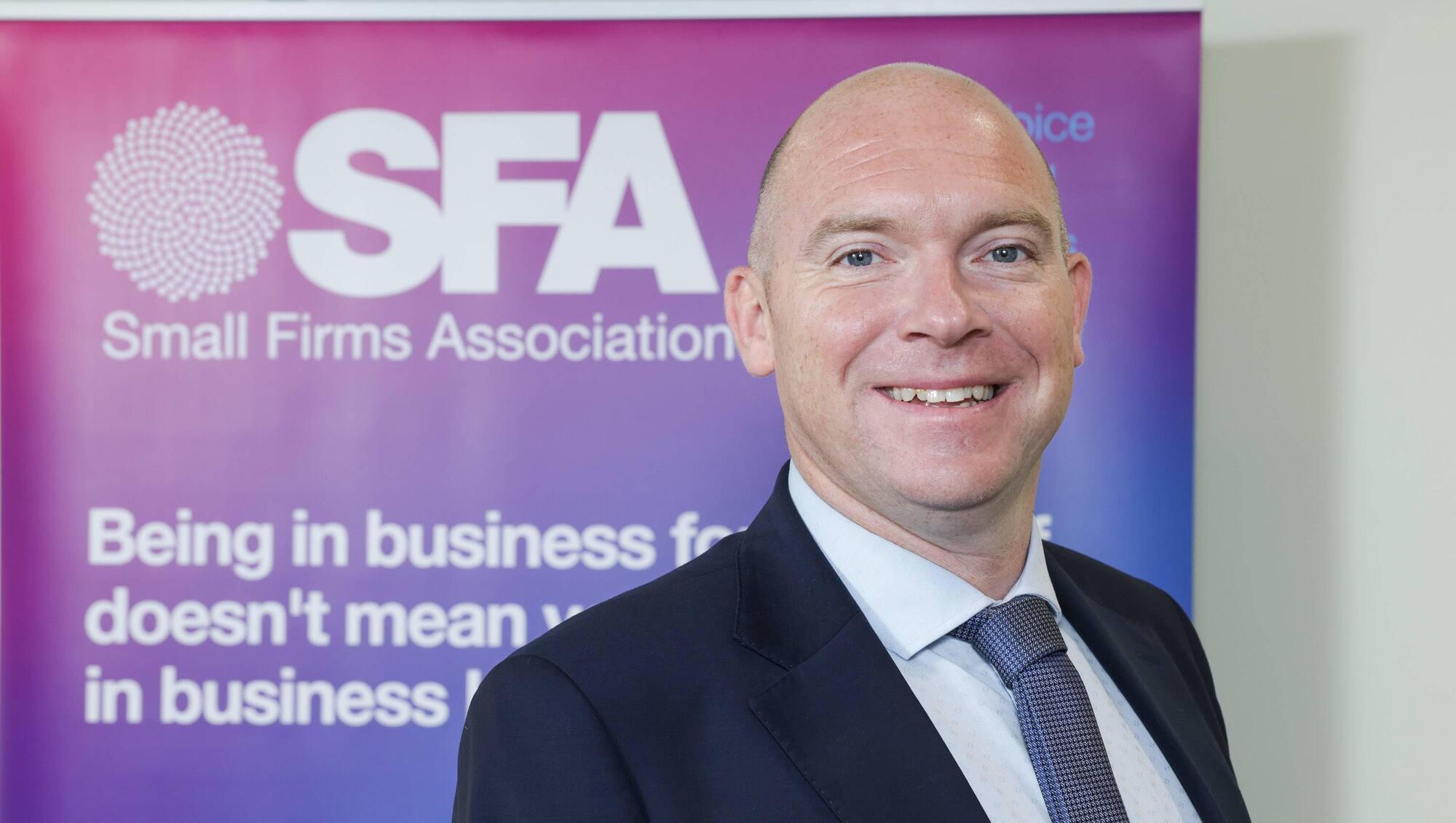
David Broderick, director of the Small Firms Association.
Small firms need hybrid work and flexibility options that are tailored to their scale of business, says David Broderick, director of the Small Firms Association (SFA).
In fact, this is just one of the existential challenges currently facing the SME sector in Ireland, ranging from geopolitical unrest and AI uncertainty to spiralling fuel, energy and almost all other costs.
Mr Broderick says that a number of measures urgently need to be taken by Government to help protect jobs in a sector that is a hugely important employer in the domestic economy.
The SFA is one of many EU employer associations that have been lobbying the European Commission in recent months, and welcomes the Commission’s stated intention to reduce administrative reporting burdens by 25% across all businesses and 35% specifically for SMEs, targeting €37.5 billion in total savings.
In this Q&A interview, Mr Broderick outlines actions that the SFA is promoting in a bid to both protect jobs and to improve the security of all those working within the SME sector.
Small firms require a more tailored approach to remote and hybrid work than large corporations. They typically operate with tighter margins, smaller teams, and more limited HR resources, while many are in sectors such as retail and hospitality where physical presence is essential. Flexibility therefore cannot be one-size-fits-all and must reflect the needs and operational realities of each business.
This is where programmes such as MentorsWork can provide practical support. Delivered by the Small Firms Association, the programme gives owners and managers access to one-to-one mentoring across areas including people management, workforce planning, productivity, and business processes. This can help smaller employers identify an approach that works for both their people and their business.
Small firms need to offer appropriate flexibility to remain competitive, but policies must be practical, proportionate, and workable for businesses where on-site roles remain fundamental.
Of those small firms that are taking full advantage of AI’s potential, investing in targeted AI training is vital. While 65% of small firms report efficiency gains from using AI, lack of technical expertise (31%) and insufficient time to explore the technology (28%) remain key barriers to wider adoption.
Read More
MentorsWork provides a practical route to help address this gap. Through tailored one-to-one mentoring and expert-led masterclasses, it helps time-poor business owners identify where AI can add real value, build their confidence and capability, and apply the technology to specific business challenges. This kind of practical support is particularly important for small firms that do not have specialist technology teams.
The SFA is calling for unlocking the National Training Fund surpluses to broaden access to AI masterclasses through existing channels such as MentorsWork, alongside on-site expert advisory teams and a dedicated €10,000 AI training grant for small businesses.
The Small Firms Association strongly welcomes EU initiatives to simplify regulation and prioritise competitiveness. Small business owners face a "perfect storm" of spiralling costs and compounding compliance demands across pension auto-enrolment and labour laws. The SFA, through its Brussels office, has been advocating for the European Commission to prioritise the needs of the small businesses community.
Standardisation and regulatory proportionality are critical to ensuring small firms are not overwhelmed by administrative burdens. The EU simplification agenda offers an essential opportunity to level the playing field and the SFA has been actively advocating for reduced regulatory friction to give ‘time-poor’ small business owners the ability to focus on business growth.
To protect jobs in low-margin sectors, the Government should reform penalty and interest structures on PAYE. Crucially, the State must introduce a targeted, temporary PRSI rebate via PAYE Modernisation for lower-earning staff, freeze the National Minimum Wage, and postpone planned 0.3% PRSI hikes.
Additional key job-protection measures include reducing Enhanced Reporting Requirements (ERR) compliance to monthly filings, expanding the Small Benefit Exemption to €2,000, subsidising fixed energy costs, and lowering commercial property Stamp Duty to 4%. These measures would help reduce the cumulative labour, energy, tax, and administrative pressures facing small employers and give businesses greater scope to protect employment.
CONNECT WITH US TODAY



Be the first to know the latest news and updates