Eamon Quinn: McGrath bets on economic prosperity 
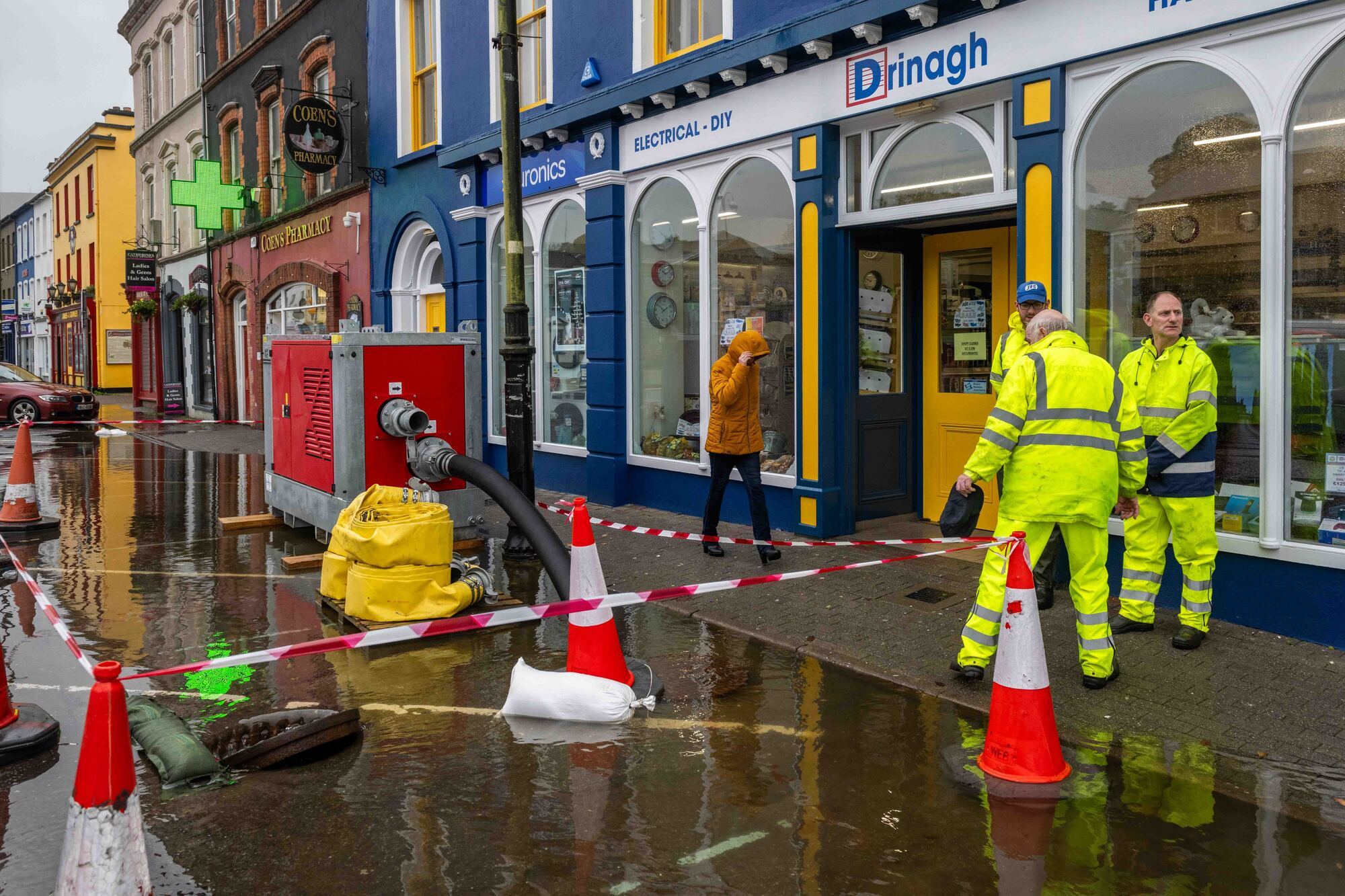
Flooding in Bantry following Storm Agnes last month. The Infrastructure, Climate and Nature Fund has been set up to meet the demands of spending under the National Development Plan, and to ensure that the huge amounts of spending that will be required to close Ireland’s infrastructure deficit will be at hand.	Picture: Andy Gibson

Flooding in Bantry following Storm Agnes last month. The Infrastructure, Climate and Nature Fund has been set up to meet the demands of spending under the National Development Plan, and to ensure that the huge amounts of spending that will be required to close Ireland’s infrastructure deficit will be at hand. Picture: Andy Gibson

Michael McGrath has set out plans for not one, but two distinct investment funds, marking something of a wager on long-term prosperity despite concerns over whether the State will continue to tap the huge tax revenues from the multinationals.

A similar confidence 20 years ago led to the State taking its first-ever step to set up a sovereign wealth fund, and the test of success of these latest proposals will only come when the government starts to draw down the funds to deliver on the enormous capital spending commitments in the years ahead.

The first fund proposed by Mr McGrath goes by the intriguing name of the Future Ireland Fund, but is in truth a conventional sovereign wealth.

Almost 25 years later, it also marks a second attempt to replace the ill-starred original sovereign fund that didn’t last beyond the financial crisis. That fund, the National Pension Reserve Fund, was raided to help meet the demands of refinancing the broken Irish banks under the conditions of the international bailout.

The Future Ireland Fund will also gobble up most of the Rainy Day Fund which was set up only a few years ago to siphon off some of the bounty from the corporation tax receipts.

All going well, the Department of Finance projects around €4.5bn of tax revenues being diverted, and adding in investment returns, the Future Ireland Fund is expected to grow to €100bn by 2035.

The fund is designed to meet the future spending demands of an ageing population, including pensions and healthcare, preparing the economy for the transition to climate change.

Significantly, however, the fund “is not intended to be specifically targeted and its use is a matter for the government of the day when it is being drawn down”, the department says.

Minister for Finance Michael McGrath and Minister for Public Expenditure Paschal Donohoe arrive at Leinster House in Dublin, to unveil the Government's Budget for 2024. Picture:  PA

That suggests that any future government could decide to tap the funds for its own changing priorities — investing, say, in developing productivity and promoting the all-Ireland economy comes to mind.

The second proposed fund, the Infrastructure, Climate and Nature Fund, will also be funded on an annual basis and will tap the funds left in the Rainy Day fund. It is designed to amount to €14bn by 2030.

It has been set up to meet the demands of spending under the National Development Plan, and to ensure that the huge amounts of spending that will be required to close Ireland’s infrastructure deficit will be at hand.

The Government is looking to avoid the stop-start nature of capital spending projects when any return of strain on the public finances inevitably led to the cuts in infrastructure projects.

“This fund ensures that the State has resources available in a future economic or fiscal downturn to support capital expenditure,” the Department of Finance says, with a quarter of the fund potentially being used should there be “a significant deterioration in the public finances”.

To protect climate projects, Mr McGrath has also proposed a set of conditions over how much can be drawn down.

Business reaction

The new infrastructure fund closely matches the proposal of business groups; Ibec in a pre-budget submission had called for the setting up of a €10bn fund that the business group said would ensure much-needed capital projects would get built, no matter how the economy performs in future years.

Ibec said its proposal would ensure capacity constraints facing employers would be tackled by ringfencing spending for key infrastructure such as housing, healthcare, and transport.

It envisaged that the “spectacular” amounts of tax revenues flowing in recent years into the exchequer would ensure that capital projects would get built, regardless of the economic conditions.

“The huge tax flows were an incredible opportunity that would allow the Government to run huge budget surpluses, as long as the enormous funds from corporate tax receipts continue to flow,” Ibec had said in its submission.

An infrastructure fund would help send a signal to international companies that Ireland was on course to solve its infrastructure deficit, according to the business group.

However, Ibec had also said in its submission that funding commitments, including on pensions and for climate change, would still require tax increases elsewhere.

There was, however, some debate about the wisdom of setting up a specific infrastructure fund when the proposal first emerged this year.

Seamus Coffey, the UCC economist, had authored studies by the Department of Finance into the large corporation tax receipts that had started flowing into the exchequer a few years ago.

Writing for the Irish Examiner, Mr Coffey said at the time that the proposed infrastructure fund would likely be a spending fund by another name, and shouldn’t be confused with a sovereign wealth fund, a national pensions fund, or a national savings fund.

A sovereign wealth fund, he said, made sense because the economy was operating at or close to capacity and could not absorb all at once the many billions of euro entailed in additional spending.

Infrastructure spending needs to be increased, but he said he had noted the many calls that had already been made to tap the infrastructure fund even before it has been established, for housing, transport, agriculture, and to prepare the economy for climate change. All of this entailed spending, and not saving, he pointed out.

Better then to nurture the capacity of the economy to absorb the spending, he said.

Mr McGrath’s plans for the two funds, the Future Ireland Fund and the Infrastructure Fund, shows confidence that that the revenues from the multinationals and, hopefully from an ever-prosperous domestic economy, will continue to flow.

The budget projects the Government will continue to collect large amounts of corporation tax revenue despite the slowdown of recent months.

Setting up two funds are a marker of growing confidence in the longer term.

CLIMATE & SUSTAINABILITY HUB

More in this section

The Business Hub

Newsletter

News and analysis on business, money and jobs from Munster and beyond by our expert team of business writers.

Cookie Policy Privacy Policy Brand Safety FAQ Help Contact Us Terms and Conditions

© Examiner Echo Group Limited