ECB’s Lane urges ‘steady pace’ of rate hikes to minimise risks
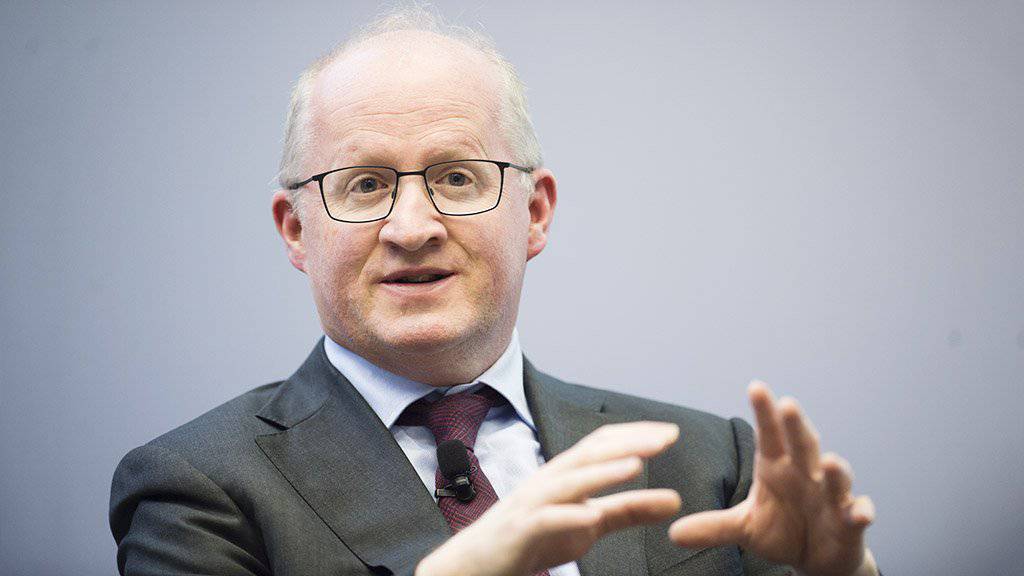
Philip Lane is one of the 25-strong Governing Council’s most-dovish members.
European Central Bank chief economist Philip Lane urged a “steady pace” of interest-rate increases in fighting record inflation to minimise negative consequences — seeming to push back after some of his colleagues floated a 75 basis-point hike at next week’s meeting.
Mr Lane, one of the 25-strong Governing Council’s most-dovish members, said the same overall boost to borrowing costs was less likely to generate adverse effects in the form of a “multi-step calibrated series rather than a smaller number of larger rate increases”.
“A steady pace, that is neither too slow nor too fast, in closing the gap to the terminal rate is important,” Lane said, in a panel discussion in Barcelona.
The comments feed into a debate over the best way forward after the ECB raised rates for the first time in more than a decade last month. While euro-zone inflation is running at more than four times the 2% target, a recession is seen as increasingly likely as Russia limits energy supplies to the continent.
Officials attending the Federal Reserve’s Jackson Hole gathering signalled the ECB is prepared to at least repeat the 50 basis-point hike enacted in July, with some not excluding an even larger increase.
Executive Board member Isabel Schnabel urged “strong determination to bring inflation back to target quickly”.
While Lane did not spell out whether he would oppose a 75 basis-point step, his comments suggest officials would need to see the need for a higher “terminal rate,” or high point of the current hiking cycle, for him to support such a move.
Mr Lane said a “multi-step adjustment path towards the terminal rate also makes it easier to undertake mid-course corrections if circumstances change”. If new data called for a lower terminal rate, “this would be easier to handle under a step-by-step approach”, he said.
Among the more cautious voices on the Governing Council is Executive Board member Fabio Panetta, who said last week the policy maker must tread carefully as a significant economic slowdown would ease inflationary pressure.
During Monday’s panel discussion, Mr Lane also said the deteriorating economic outlook made it more difficult to plot the appropriate course.
“We have the risk that high inflation takes on its own momentum, on the other hand, we do have significant headwinds for the economy,” he said.
“Developing the kind of policy path that allows for both risks in terms of how they affect the inflation dynamic is going to be clearly a major issue for us.”
The latest reading for euro-area price growth is due Wednesday, with economists expecting an acceleration to an all-time high of 9%.
• Bloomberg
CONNECT WITH US TODAY



Be the first to know the latest news and updates