John Whelan: Trade war leaves Ireland's booming aviation sector vulnerable
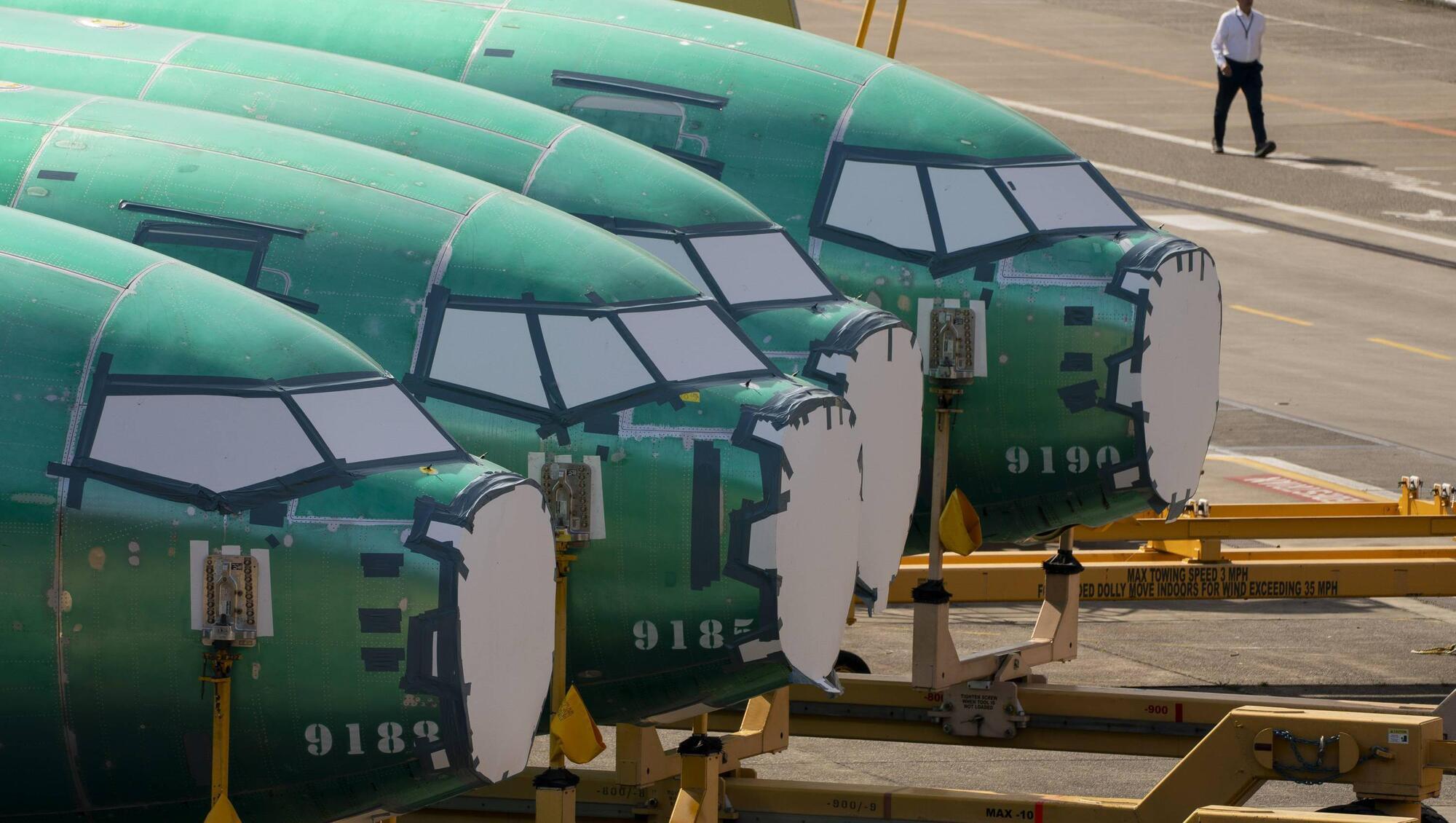
Boeing 737 Max fuselages at the manufacturing facility in Renton, Washington. A 30% import duty would significantly increase the cost of acquiring new planes. Picture: David Ryder

US president Donald Trump's threat of a 30% tariff on EU goods from August 1 puts Ireland’s continued growth narrative at risk. Exporters of pharmaceuticals, medical devices, food and drink, and aviation services consider a 30% tariffs on their sales to the US would be very damaging and, in many instances, make supplying their customers across the Atlantic unsustainable.
However, having been caught off guard by a letter threatening the 30% duty on EU goods the weekend before last, the European Commission last week quickly tabled a plan to put counter tariffs worth €72bn on imports of US goods.
Inevitably, this will hit the European Union’s own economy, with Ireland potentially being one of the most impacted.
The proposed EU retaliatory tariffs target imports of industrial goods from the US, including aircraft and aircraft parts, machinery, automotives, chemicals and plastics, and medical devices and equipment. Potential EU countermeasures on aircraft imports, coupled with retaliation from the US administration, could risk Ireland's position as a world-leading hub in aviation.
Aviation is a highly important part of the Irish trading base, covering aircraf and parts and set to be heavily impacted by EU countermeasures. Potential EU import restrictions on these goods, worth nearly €14bn, according to a document from the Central Statistics Office, would be very damaging to many companies in the sector, including the lucrative aircraft leasing sector. A recent report by aviation investment group Irelandia said the industry in Ireland accounts for 37% of the global commercial fleet, making Ireland a central player in the world’s air transport infrastructure.
Within the EU member states, the country with the biggest US aircraft imports in 2024 was Ireland, followed by France, the Netherlands, and Germany.
Ryanair, Europe's largest airline, imports new aircraft on a regular basis. A 30% import duty would significantly increase the cost of acquiring these new planes.
Increased import costs would also likely lead to higher operating expenses for Ryanair. This could affect their ability to maintain their low-cost model and potentially lead to fare increases or reduced profitability.
If the cost of new aircraft becomes prohibitive, it could also delay Ryanair's expansion plans, potentially affecting the addition of new routes and increased flights on existing routes. Furthermore, increased costs might lead to a reduction in the number of aircraft available for service, potentially impacting their operational efficiency.
Ryanair has already threatened to cancel orders for hundreds of Boeing aircraft if a US tariff war leads to materially higher prices, and said it could look at alternative suppliers, including Chinese plane maker COMAC.
However, this will still leave Ryanair exposed to higher costs on Boeing-related maintenance, repair, and overhaul, all increasingly critical with the growth of their fleet. A new import tariff would add to these challenges, potentially exacerbating existing operational difficulties.
Aviation between the US and EU is a highly interconnected sector. French multinational aerospace and defence company Thales with a manufacturing base in Northern Ireland, and supplies US-based Boeing and European competitor Airbus with flight management systems and cockpit displays. In exchange, US aerospace giant Honeywell provides flight management systems for Airbus.
Hence, the EU’s potential retaliatory tariffs on US-made aircraft could escalate the trade war to impact a wider range of aviation products exported to the US. Eurostat figures show Boeing earned €7.5bn of its revenues from Europe in 2024. Airbus had sales of €16bn to the US last year. Future sales would likely be caught in the crossfire.
Ireland is already facing a serious hit to its economy due to potentially high tariffs on exports to the US after the August 1 deadline. After Germany, Ireland could be the most affected economies in the EU. Retaliatory actions by the EU could then be more damaging than increased US tariffs on exports.
Brussels says it is still seeking a deal to avoid a tit-for-tat escalation in the trade war but is poised to retaliate if needed. Preparations for retaliation are underway.
Some commentators believe it is time for the EU to put its guns on the table in the tariff spat and show strength and determination. But there may be extensive consequences. Brussels-based think tank Bruegel has estimated that Ireland's cumulative real GDP loss, due to the total impact of US tariffs, could be 3% by 2028.