Jim Power: Economic future looks good, but the risks are very real
Given the volatility generated by US president Donald Trump, it is quite a feat that 2025 can be described as another good year for the economy
Jim Power: Economic future looks good, but the risks are very real

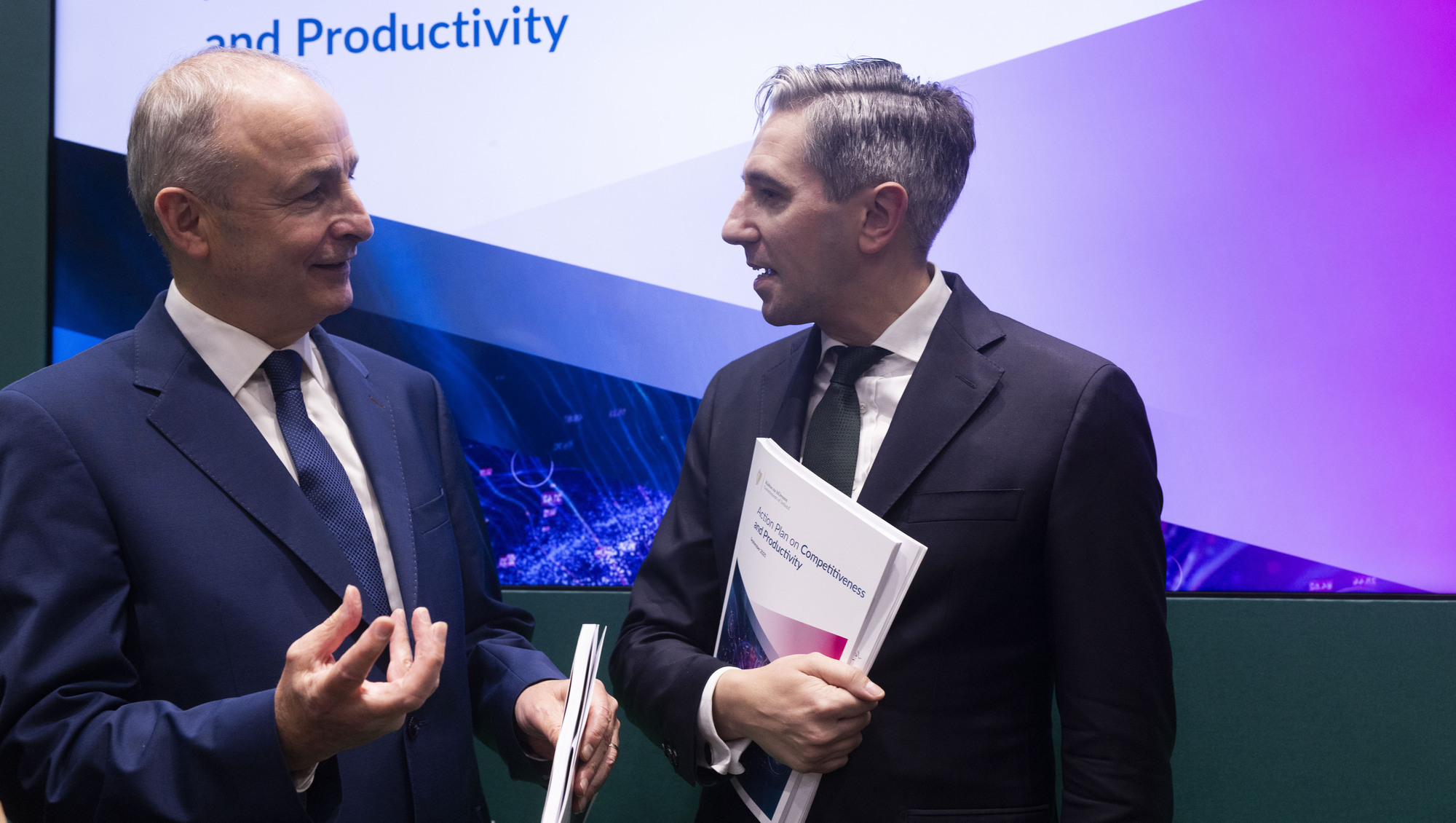
The Government recently published Action Plan on Competitiveness and Productivity which identifies much of what needs to be done to enhance the performance of SMEs and make them more sustainable.

As we approach the end of another successful year for the economy and look ahead to 2026, we can do so with a reasonably high degree of confidence, peppered with a realistic dose of caution.

Given the turmoil, volatility, and uncertainty generated by the utterances and actions of US president Donald Trump, it is quite a feat to be able to describe 2025 as another good year for the economy. This is testament to the resilience of Irish business and its workforce.


This is particularly the case for SME owners, who seem to largely survive despite, rather than because of, government policy. For the SME sector, Budget 2026 did little other than add to its cost base next year. Hopefully the bulk of SMEs will survive next year, but some casualties seem inevitable in the face of an incessant rise in their cost environment.

Concentration risk in Irish economy

A couple of weeks ago, the Department of Finance published a report demonstrating Ireland’s fiscal vulnerabilities. There were no earth-shattering or new revelations, but it did summarise nicely the concentration risk in the Irish economy.

The headlines are stark for 2024: 88% of tax revenues flowed from Vat, income tax, and corporation tax; 57% of corporation tax derived from 10 multinationals; manufacturing accounted for one third of corporation tax and is 97.6% multinational; ICT accounted for one fifth of corporation tax and is 99.7% multinational; and finance accounted for one seventh of corporation tax and is 84.2% multinational.

The top 10% of earners contributed 40% of income tax and 60% of USC. I could go on, but our inordinate dependence on foreign-owned companies is obvious. This is why what Mr Trump says and does really matters; why investment in infrastructure is essential; and why Ireland needs to preserve its status as a good country in which to do business. That is under considerable pressure.

ESRI outlook a useful exercise

On Friday, the ESRI published its latest medium-term outlook, which outlines possible growth scenarios out to 2025. 

As an economist, I learned years ago that economic forecasting is a waste of time on a one-year time horizon, not to mention 10 years. 

Despite these reservations, it is a useful exercise to provide macroeconomic projections and scenarios of potential future paths for the economy over a 10-year horizon. 

The ESRI was quick to point out that it is not a forecasting exercise, but rather projections of what might happen subject to a range of underlying assumptions.

The central baseline scenario projects an annual average economic growth rate of 2.3% in modified gross national income (GNI) out to 2030 and 2.1% from 2031 to 2035. Such an outcome would describe a mature economy delivering solid levels of growth. 

If things turn out like this, we’ll be able to look back in 10 years on a good decade for the economy. The ESRI builds in scenarios based on risks that include a global slowdown, a further loss of competitiveness relative to our trading partners, and a contraction of the multinational sector.

It then looks at domestically owned firms, which are characterised by significantly lower average productivity than the multinational sector. It provides a carrot by pointing out that improving productivity within the indigenous sector could improve their share of economic activity significantly.

In the face of the concentration risks associated with the multinational sector, it is essential to devote time and effort to the indigenous economy. The recent action plan on competitiveness and productivity identifies much of what needs to be done to enhance the performance of SMEs. It is vital that this plan is acted upon.

Between the Department of Finance and the ESRI, we have a clear understanding of the economy’s vulnerabilities and the dynamics of how economic shocks play out. The reports set a very important backdrop to the management of the economy, public finances in particular. It is time for action to create the future the ESRI baseline scenario outlines.

x

More in this section

Cookie Policy Privacy Policy Brand Safety FAQ Help Contact Us Terms and Conditions

© Examiner Echo Group Limited