Jim Power: Trump's shadow looms over Ireland and the world in 2026
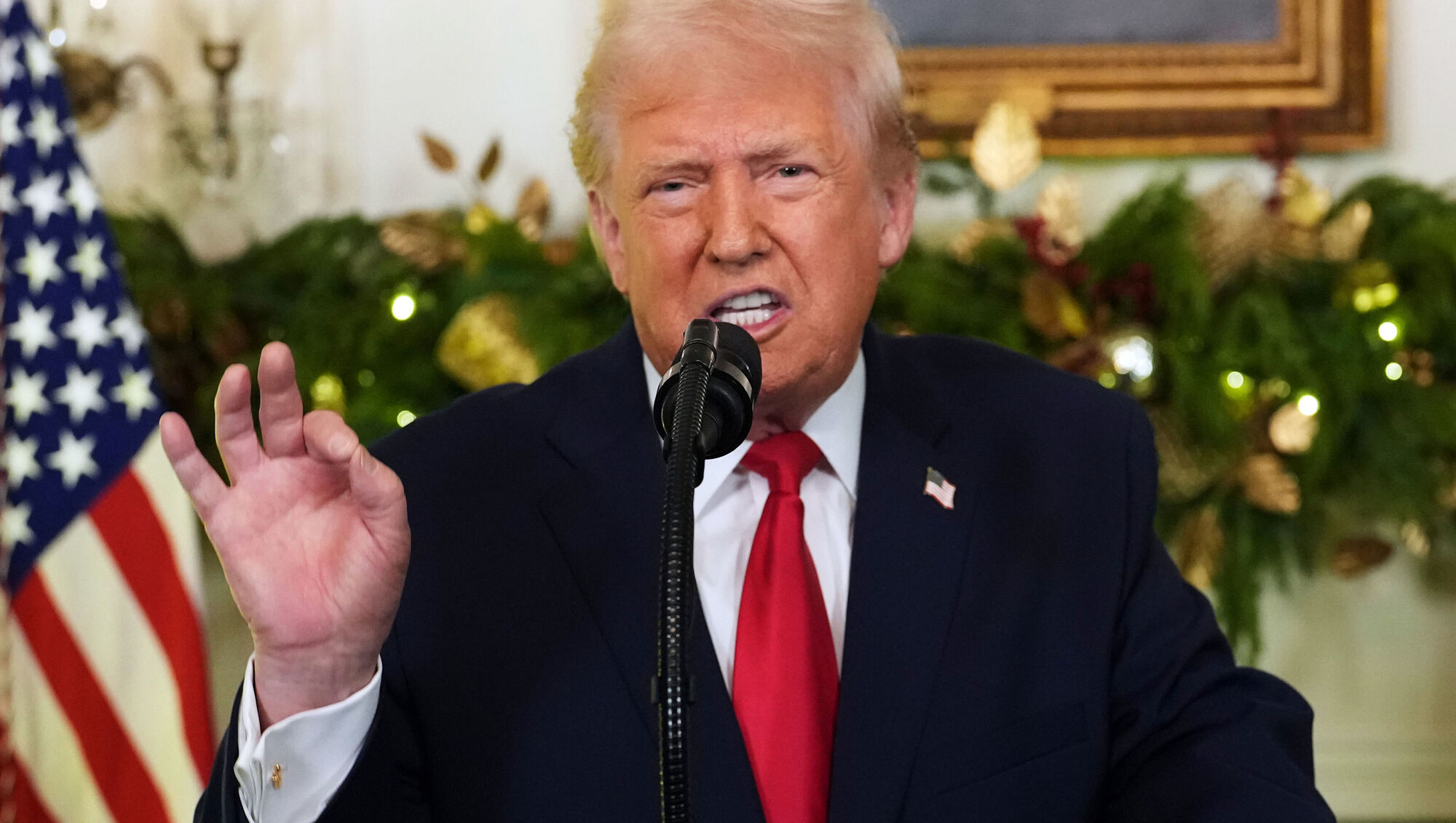
It seems certain that Trump's utterances and actions will continue to cast a shadow over global economics and global politics for the foreseeable future.
It would be difficult to conjure up a more unusual year than the one just past, so let’s hope 2026 does not come close to emulating it or, horror of horrors, surpassing it.Â
One word dominated 2025, that word being ‘Trump’. The constant barrage of tariff threats and announcements caused global consternation and instilled significant uncertainty into business planning. However, the resilience of business came to the fore, and globally the economic performance was nothing like as weak as might have been expected.
As we look forward to 2026, it is hard to believe normality will suddenly return and President Trump will start behaving in a predictable and rational manner. It seems certain his utterances and actions will continue to cast a shadow over global economics and global politics for the foreseeable future.
The general expectation from forecasting agencies such as the IMF and OECD is that global growth in 2026 will be slightly weaker than in 2025, largely reflecting the impact of tariffs. Apart from tariff policy, there are several other issues that will need to be watched closely over the coming year.
It is the nature of shocks that we can rarely predict them with any degree of certainty, but based on what we know now, there are several issues that will warrant close attention over the coming year.
The sustainability of equity markets is probably the most significant vulnerability. The AI investment boom that is propelling the ‘magnificent seven’ stocks to new highs almost on a weekly basis might just run out of steam. If there was to be a re-evaluation of the return on investment in AI, this could lead to a significant correction in equity markets.Â
The bond market is arguably the most important market of all. The potential for market volatility is significant. Such volatility could be sparked by concerns about fiscal deficits in countries such as the US, France and the UK. Domestic politics are rendering it virtually impossible to tackle those deficits. The appointment of the next Federal Reserve chairperson in May will be interesting. A poor choice could generate considerable problems.
The possibility inflation could edge higher would cause a major dilemma for central bankers, as tightening monetary policy in an environment where growth is below potential is never straightforward. Food, energy and service sector inflation will warrant close attention.
On the geo-political front, the relationship between China and Taiwan and how it impacts the rest of the world is a real threat. Other areas of concern include the Russian reaction to ongoing EU support for Ukraine; the relationship between the US and Venezuela; the requirement to increase defence spending everywhere, but the EU in particular; and growing anti-immigrant sentiment around the world.Â
From an economic and business perspective, immigration is essential for many countries, but it does complicate the provision of housing and is increasingly eliciting a negative backlash in many countries.
There are some important elections coming up over the coming year. The US mid-term elections on November 3 will attract most attention, but important elections are also being held in Sweden, Brazil, Colombia, Hungary, and local elections in the UK. The performance of more extreme political actors will be watched with interest, such as Reform in the UK.
The increasing sophistication of cyber terrorism, which is being increasingly driven by AI, is becoming an alarming international threat, as is climate change. More extreme weather events and the increasing move away from climate change policies in some countries will potentially cause significant problems.
For Ireland, these global issues will matter enormously. However, from a domestic perspective, housing will or at least should occupy a prime position for policymakers.Â
Other domestic issues will include the cost environment for SMEs on many different fronts, none of which the Government seems too concerned about. Energy costs are likely to be a big challenge for this segment of the economy, but wages and auto-enrolment will exacerbate the cost pressures. The minister with responsibility will have to step up to the plate and provide real rather than verbal support for SMEs.
We will also continue to hear a lot about FDI concentration risk, and particularly the vulnerability of corporate tax receipts. However, my sense is that 2026 will see another record being achieved in terms of corporation tax receipts. Hopefully, this will not cause the Government to continue its path of unsustainable current expenditure.
When all is said and done, the economy looks set to deliver another solid year in 2026, although some weakening of the labour market is likely. Growth of about 2.5% in the real economy looks achievable, which would represent a solid outturn. Meanwhile, we must hope for some real long-term strategic planning to come to the fore.