Fed divisions clear after December meeting

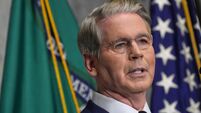
Trump-appointed Fed governor Stephen Miran continued to vote for a 50bps reduction in rates at the December meeting. Picture: Daniel Heuer/Bloomberg

The US Federal Reserve cut rates last week by 25 basis points (bps) but there now is a clear division within its voter base.
This was the third rate cut from the central bank in 2025, totalling 75bps. The Fed has now reduced rates by 175bps since its started to ease policy in September 2024 with interest rates now at 3.50-3.75%.
However, the voting breakdown showed sharply differing views within the Fed. Three members dissented, the highest in six years. Recent Trump-appointed governor Stephen Miran continued to vote for a 50bps reduction in rates, while two regional Fed presidents voted to hold rates steady. Moreover, the economic projections showed that four other non-voting officials were also in favour of a hold.
Aside from the key policy announcements, the meeting statement for December contained a few other subtle yet important changes. The committee continued to describe the economy as “expanding at a moderate pace”. However, it removed its comment that unemployment “remained low” from the October statement, suggesting a slight dovish tilt towards labour market concerns, further emphasised by Fed chair Powell’s remarks at the press conference. Its characterisation of the inflationary backdrop was that inflation remained “somewhat elevated”.
Despite the dispersion of views within the Fed, the median view on rates remains unchanged since September. That is for a further 25bps cut in 2026, less than the 50bps still priced in by markets. For 2027, rates are seen as declining to 3.00-3.25% by year end. Further out, the “longer run” view was unchanged at 3.0%. The uneasy consensus is not surprising given the Fed is inching towards its neutral rate. Indeed, its dual mandate (stable prices and maximum employment) is in some tension, given the recent deterioration in the labour market and continued sticky inflation. However, while US president Donald Trump might favour lower rates, it looks like the Fed will continue to have a bulwark of hawks against unnecessary easing for the foreseeable future.
Although Powell may be replaced as chair by a potentially dovish pick by Mr Trump, that chair will be just one of 12 voters. Of the four rotating voters among regional presidents, the class of 2026 might prove even more reliably hawkish than the outgoing 2025 contingent. So, while erosion of the Fed’s independence remains a risk heading into 2026, the institution has significant inbuilt safeguards against overreach by the US government.
This week, the monetary spotlight will turn to the European Central Bank. The ECB is widely expected to leave rates on hold for a fourth consecutive meeting. Indeed, the main focus will likely be on the updated ECB staff macroeconomic projections, which are expected to show stronger GDP forecasts, and possibly higher inflation too. Indeed, with the market pricing out any further cuts, some investors are now betting that the next move from the ECB may well be a hike.