John Whelan: Government may have left €81m on the table exiting AIB 
Booming Irish banks make most of macroeconomic 'sweet spot'
John Whelan: Government may have left €81m on the table exiting AIB 

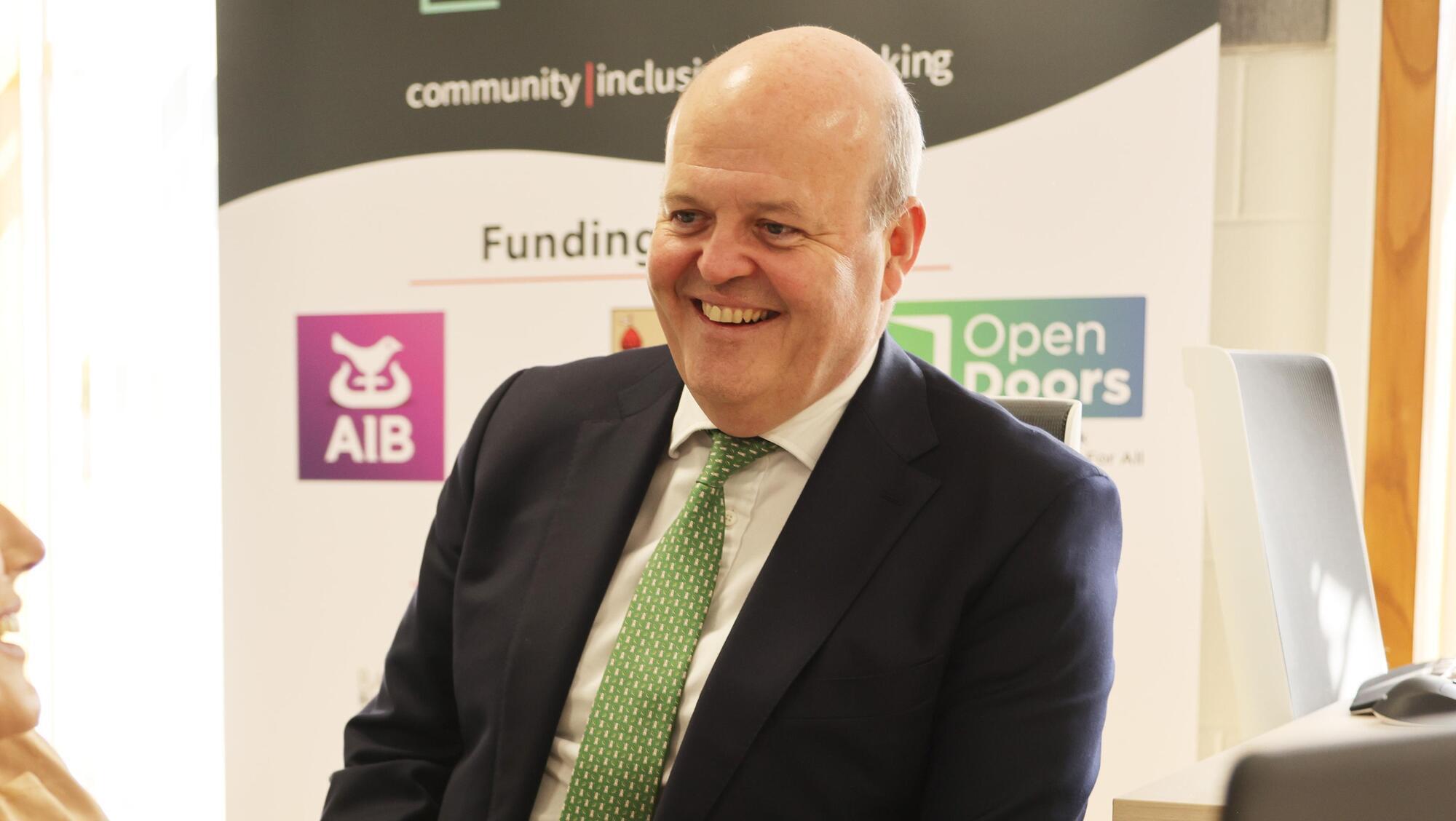
AIB CEO Colin Hunt. Throughout 2025, there has been significant growth in AIB’s share price. The Government exited its ownership of AIB shares in June 2025. Picture: Miki Barlok

Irish bank shares delivered a historic rally in 2025, marking one of the strongest years on record for the sector and signalling a decisive shift in investor sentiment, fuelled by resilient growth, high margins, and capital returns.

Throughout 2025, there has been significant growth in AIB’s share price. The stock's performance for the year to December 18 was plus 77%. The Irish government may have exited a little early, leaving an estimated €81m on the table at today’s price, when they fully exited its ownership of AIB shares in June 2025.


Bank of Ireland managed to beat AIB with share price increasing 87% across the year. The exceptional growth of the two pillar banks was however exceeded by PTSB with a phenomenal growth of 111% in share price. PTSB, the last of the State-invested banks, has now been put up for sale, in a push to get all the banks fully into the private sector.

The sector benefitted from what many strategists describe as a macroeconomic “sweet spot”. Interest rates remained high enough to support margins, economic growth proved strong enough to protect asset quality, and capital buffers were ample enough to reward shareholders.

The European Central Bank (ECB) halted its rate-cutting cycle in June 2025, but kept the deposit facility rate at 2% ever since, which has proved a boon to the retail banks as Irish households hold a very high percentage of their deposits in instant access accounts with low interest rates below 0.25% . A significant portion of the profits of the three main Irish banks comes from its deposit accounts, benefiting from the net interest income generated by the difference between the interest it earns on funds lodged with the ECB and the low interest it pays on customer deposits.

Global rating agency, Standard & Poor’s, in upgrading the credit rating of the Irish pillar banks, points to the relatively low-risk domestic residential mortgages as the major driver for growth and expecting Irish banks to expand into the SME, corporate, and niche market segments as the lower interest rate environment may support some expansion and investment activity.

The ringing endorsement of S&P's is mirrored by two other global credit rating agencies - Fitch Ratings stated that Irish banks are well-positioned to face macroeconomic challenges from heightened uncertainty about US tariffs and trade policy while Moody's cited improved financial performance, high profits, and reduced risk profiles for Irish pillar banks as reasons for the positive rating actions.

Irish banks now compare favourably to the rest of the EU in terms of strong capital and liquidity positions and improved asset quality but historically faced challenges with lower profitability and higher operating costs. Recent performance in 2024-2025 has shown significant improvements in profitability, bringing metrics more in line with or above some EU peers, as operating cost-to-income ratio fell from 70% in 2021 to about 50% over the past few years.

S&P anticipates AIB and Bank of Ireland will further advance their digital capabilities and proposition to further ramp up efforts to contain costs. The announced upgrade of their mobile application and the launch of Zippay, a new mobile payment service, both expected in early 2026, should close gaps with European peers and neobanks operating in Ireland. Also, AIB's and BOI's diversification into insurance and the wealth management business should add some resilience to the banks' earnings capacity over time.

The up rating of Irish banks has not gone unnoticed with Goldman Sachs’ retail bank Marcus reportedly in discussions with the Central Bank of Ireland about a prospective launch in the Irish market. Undoubtedly, they will be running their slide rule over PTSB, now that it is in play.

New entrants to the mortgage market are expected to be attracted by the sector’s healthy profitability, which is supported by some of the lowest deposit pass-through rates in western Europe, favourable mortgage market prospects due to housing shortages, and the limited number of established banks.

Of the so called neobanks, the biggest threat is likely to come from Revolut. The online Lithuanian bank has more than 3m  customers in Ireland and plans to launch mortgage financing in 2026, taking on the three Irish banks that accounted for 92% of €12.6bn of mortgages issued last year.

Nevertheless, after a historic 2025, Irish banks enter 2026 no longer as the under-performer in Europe but well placed for investors.

x

More in this section

Cookie Policy Privacy Policy Brand Safety FAQ Help Contact Us Terms and Conditions

© Examiner Echo Group Limited