With a cloudier economic horizon has enough gone into the business sector?

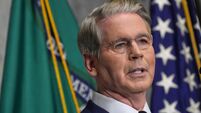
'Risks remain high, with company closures more likely and job losses more permanent on the horizon.' Picture: Gareth Chaney
Last year’s Budget was framed in the shadow of Brexit, this year's is amidst the worst global pandemic in living memory.
The devastation created by Covid-19 across the hospitality and transport sectors left Minister Paschal Donohoe searching for levers that would enable a broader sustainable economic recovery, across all sectors rather than just relying on the juggernaut export sector which bounced back by mid-year to exceed last year’s record level and bolstering the exchequer tax take.

He reached deep announcing €24.5bn in the total value of support, eight times larger than last year’s budget plan. Much of the added expenditure has gone into the public sector, increasing the numbers of teachers, customs officers, public sector road and rail transport staffing as well as increases in nurses and doctors.
Minister Donohoe, stated he was focusing the support only on the rest of this year and next year, with the objective of trying to "prevent this recession becoming a depression", but the increases in the public sector will not be easily reversed.
Business leaders and their representative groups expressed themselves please with many aspects of the Budget. Top of the approval list for trading companies not affected by Covid-19 is the announcement of no increase in taxes on income or profits. For the wide range of small and medium-sized businesses damaged by the pandemic, the €3.4bn recovery fund to stimulate business is widely welcome.
The multinational sector who have been making extensive use of what is referred to as the Knowledge Development Box, since its introduction in 2016, were given a green flag to invest deeper in Ireland, with the Minister extending the scheme for another two years. The relief entitles companies to a 50% reduction in their qualifying profits. Hence, qualifying assets such as copyrighted software and inventions will be taxed at 6.25% corporation tax rate.
Working from home has become the ‘next normal’ for many and hence the incentive offered in the Budget, whereby an employer can offer up to €320 to assist in setting up a home office without any benefit in kind (BIK) charge, will be widely welcomed.
Entrepreneurs starting up new businesses and seeking investors were promised a new €30m equity fund to be managed by Ireland’s Strategic Investment Fund. In addition, the Minister Donohoe announced the overdue improvement in the EIIS Employment Incentive and Investment Scheme (EIIS), which has failed to attract investors in its current form.
Whereas additional government spending efforts at this juncture were clearly required to prevent long term damage to the economy, the question must be whether too much has gone into increasing the public sector and not enough into the business sector. A cloudier economic horizon clearly beckons, with Brexit kicking in January and the second wave of Covid-19 across many countries forcing a return to lockdowns, while the prospects of a vaccine to prevent repeat surges seems a long way off. Risks remain high, with company closures more likely and job losses more permanent on the horizon.
Perhaps the Minister is right to end his budget speech by quoting Seamus Heaney, "Winter this out and we can summer anywhere".
- John Whelan is managing partner at the Irish and international trade consultancy, The Linkage-Partnership