John Whelan: Irish plants unlikely to escape Pfizer's latest round of cost-cutting
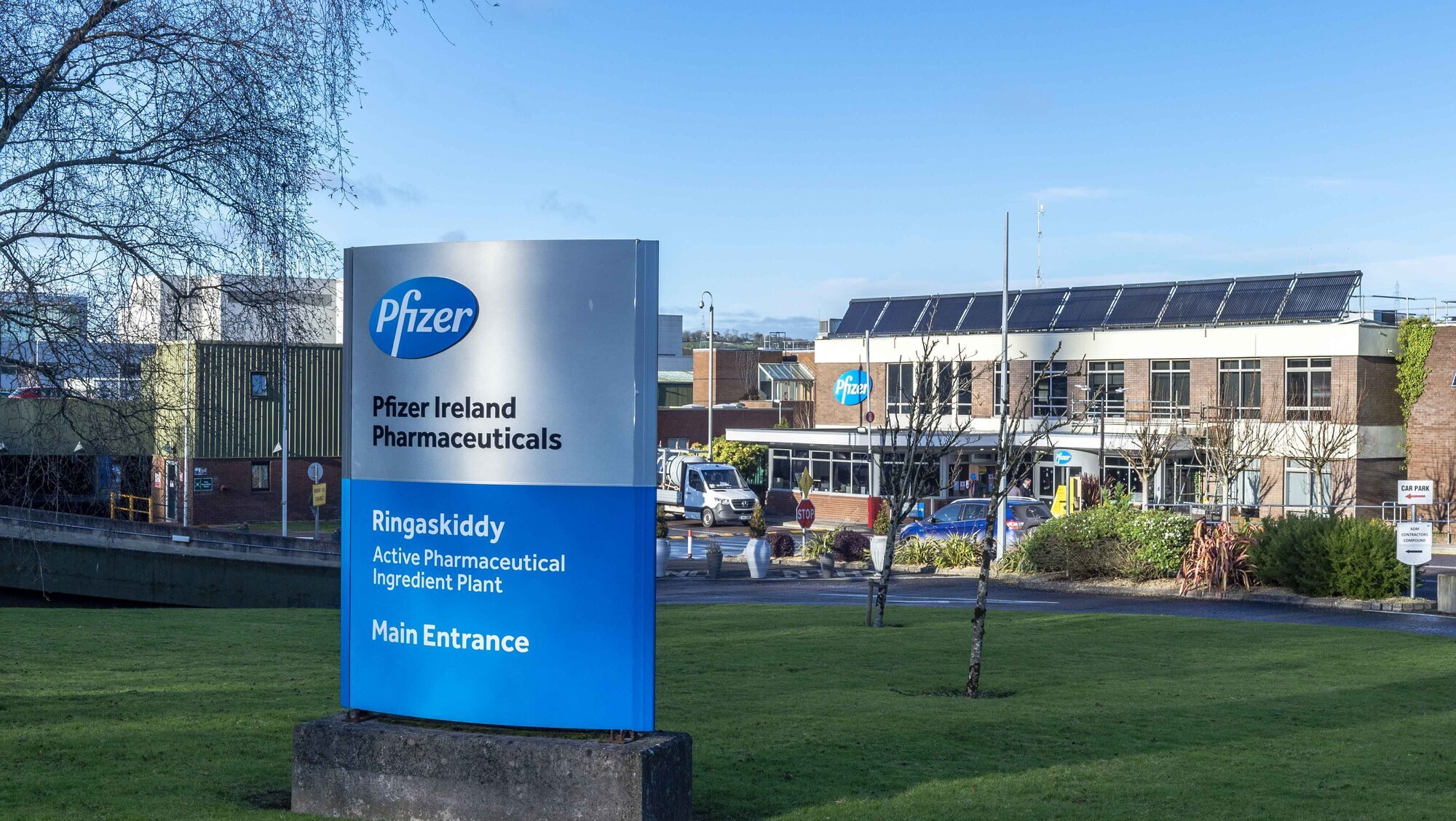
In April of this year, the pharmaceutical giant announced that over 100 jobs would be cut at its plant in Ringaskiddy.
Following the release of its second quarter financial results last week, pharmaceutical giant Pfizer announced it will reduce costs by $2.5bn (€2.17bn) in another round of cutbacks, which will kick in next year and run through 2029.
The savings effort comes amid a quarter in which Pfizer topped expectations with a 3% revenue increase to $15bn.
The company raised its 2026 sales guidance at the midpoint by $500m to a range of $60.5bn to $62.5bn.
The second-quarter revenue growth was driven primarily by two products manufactured in Pfizer plants in Ireland: Eliquis, the blood-thinning medicine manufactured in Newbridge, which blew past analysts’ estimates, growing by 21% and raking in $2.43bn in sales in the quarter, and Prevar, another of Pfizer’s blockbuster drug families used to treat meningitis, pneumonia, and blood infections.
Prevar’s vaccines are supplied globally from Pfizer’s plant in Grange Castle, Dublin, adding to the sales growth with a 9% jump to sales of $1.30bn in the quarter.
The growth in these products helped to counteract the struggles Pfizer is experiencing in its covid business, which has been on a downward path for the past few years.
The business is projected to lose $1.5bn in revenue from its covid products in the current year.
The additional cutbacks bring Pfizer’s total cost-savings target to $9.7bn through 2029. Of the new $2.5bn effort, $1.5bn is earmarked for optimising the company’s manufacturing operations, with the remaining $1bn added to Pfizer’s “cost realignment programme’’.
Unlikely Ireland will avoid being hit
The full details of the cutbacks have not been announced; however, it is unlikely that Pfizer’s extensive range of manufacturing facilities in Ireland will avoid the cuts.
The company expects to stabilise its covid sales following the announcement in July by the European Commission that Pfizer has been granted marketing authorisation for its covid 2026-2027 vaccine formula for people of six months and older.
Pfizer has already initiated manufacturing of the new variant XFG-adapted covid vaccine, to ensure supply readiness in anticipation of the respiratory disease season, when the demand for covid vaccination is expected to increase.
Pfizer previously announced that it remains on track to deliver anticipated net cost savings of approximately $5.7bn by the end of 2026.
With the additional $1.0bn of expected added savings by the end of 2027, the company now expects total net cost savings of approximately $6.7bn from the realigning of its cost base programme through 2029.
The company has not announced the full details of where the cost cuts will land, but it would be unrealistic to assume the Irish plants would escape the cost-saving programmes.
Loss of market exclusivity for Eliquis
Adding to the concerns for the Irish management team is the loss of market exclusivity for Eliquis, which commenced in May across the EU, as patent protection was ended.
This has opened the door to competition from copycat generic manufacturers.
This will be followed by patent ending in the US in November, but it is anticipated that patent litigation settlements secured by makers Pfizer will delay overall US generic market entry until April 2, 2028.
Also, US government negotiations, such as US Medicare provisions, will delay full generic release, as market pricing is agreed.
Besides the Eliquis loss of patent protection over the coming year, they are also facing another “patent cliff” later in the decade.
Between 2026 and 2028, the company is expected to see a loss of about $17–18bn in annual revenue as several blockbusters lose exclusivity.
Key Pfizer drugs with US patent expirations on the horizon include Inlyta, for the treatment of renal cancer; Xeljanz, which treats rheumatoid arthritis; Ibrance for breast cancer treatment, and Xtandi for prostate cancer.
Importantly for the Irish facilities, Pfizer’s biggest vaccine franchise the Prevnar 20, the newer variant of pneumococcal vaccines is protected longer — into the 2030s.
Pressure for new product development
Overall, Pfizer’s near-term patent cliff is somewhat softer than some peers.
However, the expirations looming over the years to 2030 are putting pressure on Pfizer to invest in new product development to refill its pipeline well before then.
Its pipeline has not produced a game-changing drug since it helped to develop the covid vaccine early in the decade.
This is driving the company’s goal to save more than $6.7bn annually through 2027 as it tries to control costs, while it develops another global sales blockbuster, or buys in to refill the pipeline, such as last month's $10bn of Metsera, to gain a foothold in the fast-growing obesity market.