Democratic Republic of the Congo reports large one-day increase in Ebola cases
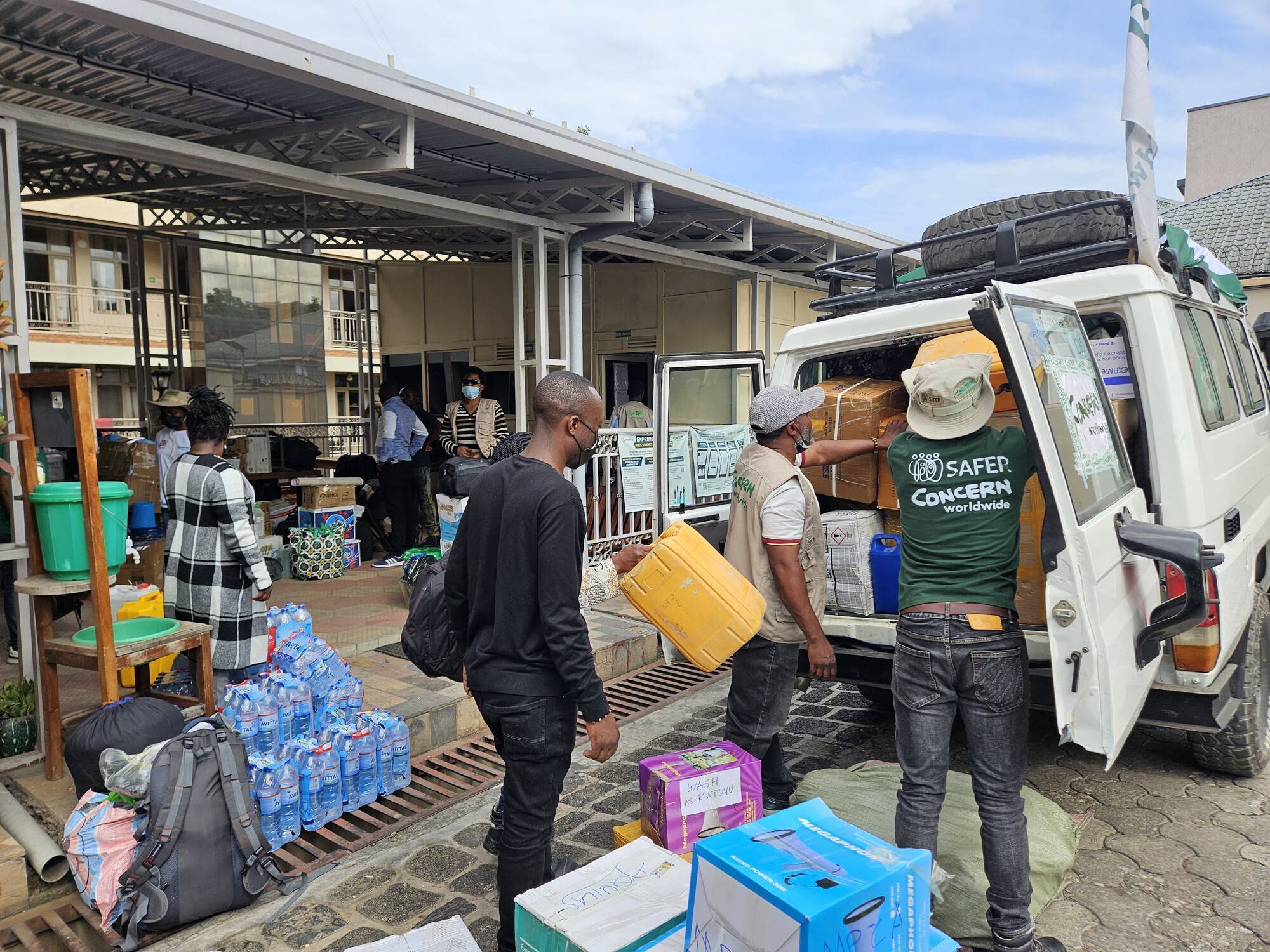
Concern staff load vehicles with the equipment and supplies required for field activities before the teams depart for the targeted communities. Photo: Samuel Isenge/ Concern Worldwide EBOLA NIAMH GRIFFIN COPY
Authorities in the Democratic Republic of the Congo have reported one of the highest daily increases in Ebola cases in a month-old outbreak as the virus spreads quickly in a remote region whose shifting population challenges efforts to find those exposed.
The Ministry of Health said on Sunday 72 new cases were reported in a 24-hour period, bringing the total number of confirmed cases to 782.
This includes 181 confirmed deaths after 29 new deaths were confirmed.
“One month on, the Ebola disease outbreak is outpacing the response effort,” Kate White, emergency medical co-ordinator for Doctors Without Borders in the country, said on Monday.
“No-one knows the true scale or exactly where the disease is spreading in Congo.” The medical charity said treatment centres in the epicentre of the outbreak are overwhelmed, many patients arrive in advanced stages of illness and most were not identified as contacts of infected people before seeking care.
Read More
The Ministry of Health said that while the numbers show the outbreak is spreading rapidly, they also reflect more active surveillance.
“Community members are reporting suspected cases, and response teams are investigating them,” it said on X.
The number of cases in what could become history’s worst Ebola outbreak is believed to be higher because the outbreak was confirmed on May 15, weeks after it is suspected to have begun.
The outbreak is caused by the rare Bundibugyo virus, which was not tested for in the early days.
The more common Zaire virus, which now has a vaccine, was responsible for most of the Democratic Republic of the Congo’s past 16 outbreaks of the disease.
The Democratic Republic of the Congo said the contact tracing coverage rate is 56%, a sharp decrease from last week, as authorities hurry to find people who may have been exposed.
There was no immediate explanation for the drop.
Health authorities in the country have previously said contact tracing has been hampered by community resistance in some areas and by the rapid expansion of the outbreak into new health zones, increasing the workload for surveillance teams.
The ministry also said 40 people have recovered since the start of the outbreak, and the current fatality rate of the outbreak is 23%.
Life goes on, including nightlife, as the population adjusts.
The World Health Organisation (WHO) said it is intensifying testing and contact tracing and treatment.
Tons of supplies from the WHO have arrived in the Democratic Republic of the Congo.
And Africa’s top health body said it is deploying technical expertise and supporting laboratory systems, case finding and community engagement efforts to accelerate the response.
“We remain committed to supporting affected countries until transmission is stopped. We call on partners and donors to urgently mobilise resources to strengthen the response and save lives,” said Jean Kaseya, head of the Africa Centres for Disease Control and Prevention.
The outbreak is concentrated in the Democratic Republic of the Congo’s eastern province of Ituri, which accounts for more than 90% of the cases.
Cases have also been recorded in the North Kivu and South Kivu provinces and have spread across the border to Uganda.
Nearly a million people have been displaced by years of conflict in Ituri, according to the UN humanitarian office, making contact tracing difficult as people flee attacks or move frequently in the vast province with dense forests, poor roads and remote villages that can take days to reach.
Tracing is also difficult among the thousands of miners who regularly move among remote sites in the mineral-rich region.


CONNECT WITH US TODAY



Be the first to know the latest news and updates