British gunman loses appeal against conviction for Kinahan cartel murder of Michael Barr
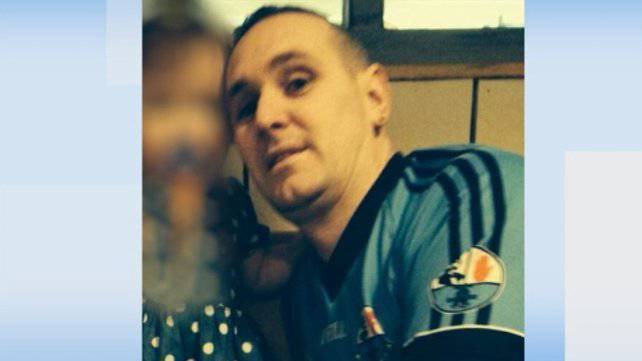
Michael Barr: Shot seven times after two armed men wearing boiler suits and full rubber masks entered the Sunset House pub in Dublin's north inner city on the night of April 25, 2016.
A British gunman who carried out the Kinahan cartel murder of dissident Republican Michael Barr in a Dublin pub a decade ago has lost a bid to overturn his conviction, with the Court of Appeal ruling that the trial court was correct to dismiss the evidence of a witness concerning the height of one of the shooters.
In dismissing the appeal by David Hunter, aged 47, Mr Justice John Edwards said on Monday that the assessment of eyewitness evidence by the Special Criminal Court was both "cogent and rigorous".
He said the court had expressed its concerns about the reliability of one witness, who said the gunman was over 6ft tall; Hunter is only 5ft 10'.
Liverpool native Hunter, with an address at Du Cane Road, White City, London, had denied the murder of Michael Barr, aged 35, at the Sunset House pub in Dublin's north inner city on the night of April 25, 2016. He was found guilty by the Special Criminal Court in September 2020.
Barr was shot seven times after two armed men wearing boiler suits and full rubber masks entered the Sunset House pub at around 9pm. He was shot five times in the head, once in the leg and once in the shoulder.
At his trial before the non-jury Special Criminal Court, presiding judge Mr Justice Alexander Owens found that evidence had been heard in a "compelling way" that Hunter was one of the two gunmen who entered the Summerhill pub and murdered Mr Barr.
Mr Justice Owens noted that the murderers had failed to burn out the silver Audi getaway car, which had been abandoned at Walsh Road in Drumcondra a few minutes after the killing, while the pair had also dropped a burner phone at that site.
He said the major part of a DNA profile taken from a ski mask recovered from the car during the investigation into the shooting of Mr Barr matched the profile of Hunter.
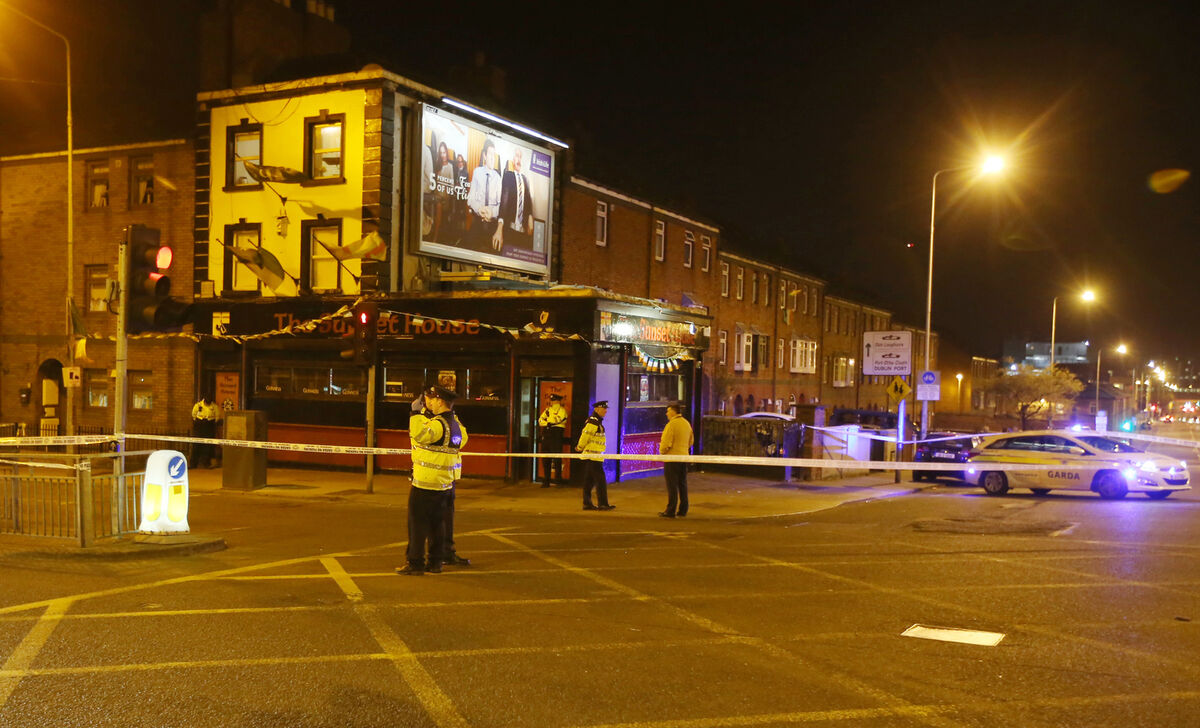
In a voluntary statement to gardaí, Hunter said the ski mask was his but that he had dropped it in a car driven by another man when he visited Ireland two months before the murder on a car-stealing exercise.
Mr Justice Owens said the circumstantial evidence in the case "pointed inextricably" to Hunter's guilt and that no other rational explanation could be drawn.
Last year, Hunter launched an appeal against his conviction, arguing that the trial court erred in rejecting the evidence of witnesses present in the Sunset House who said there was a difference in height between the two assailants who entered the pub and killed Mr Barr.
Michael Bowman, for Hunter, said that a witness in the pub was very clear in the physical description he gave, identifying a distinction in height between the two men.
This witness had said the gunman was wearing a ski mask under a latex mask, but Mr Bowman said the trial court had refused to acknowledge what the witness had seen. He said that witness identified the gunman as being 6ft 1' or 2', while Hunter is 5ft 10'.
Concerning the ski mask from which a DNA profile of Hunter was obtained, Mr Bowman said that in February 2016, Hunter, “on the spur of the moment”, came to Ireland for a two-day period to steal cars, bringing the covering with him for this purpose.
Hunter’s legal team also raised a ground of appeal concerning the mobile phones in the case, arguing that even if the appellant accepted or refused ownership of one of the phones, he was entitled to challenge the phone evidence on the basis of a breach of his privacy rights.
It was submitted that the trial court erred in finding that the mere fact the material in question may pertain to criminal activity meant it could not attract privacy rights.
Concerning the testimony of witnesses present in the Sunset House, Mr Justice Edwards on Monday said he was satisfied the assessment of this evidence by the Special Criminal Court was both "cogent and rigorous".
He said the trial court was best placed to assess what testimony it regarded as credible and reliable, and equally, what testimony it has "un-allayed" concerns with.
Noting that the trial court had identified and clearly articulated a number of "unallayed" concerns on the issue of the reliability of the testimony provided by one witness, Mr Justice Edwards said he could find no error in the court’s approach.
Concerning the DNA evidence, Mr Justice Edwards noted that it was not until shortly before the trial that the appellant stated the DNA matching his profile found on the ski mask was due to him heaving it in a car during a prior visit to Dublin.
He went on to say that no explanation had been provided as to how the appellant’s DNA also came to be on the latex mask.
Mr Justice Edwards said the Court of Appeal agreed with the Director of Public Prosecutions that it was for the trial court, who heard the witnesses give their testimony on oath and who considered the exhibits, to weigh the probative value of the DNA evidence and to reach such conclusions as it saw fit.
Concerning the mobile phone evidence, Mr Justice Edwards noted that it was now accepted by the DPP that the phone data accessing and data retention legislative regime which existed in Ireland at the relevant time was in breach of the Charter of Fundamental Rights of the European Union.
However, he said the trial court was entitled to determine the impugned evidence could be admitted, notwithstanding that it had been obtained illegally with consequential breaches of certain of the appellant’s rights.
“The gardaí acted reasonably having regard to Irish domestic law at the relevant time,” he said, adding that to the extent that fundamental rights possessed by the appellant may have been breached, such breaches were not deliberate and conscious.
In summary, the court dismissed the appeal.
CONNECT WITH US TODAY



Be the first to know the latest news and updates