'It’s a scary time': Irish people living in France fear far-right victory 'will further embolden racism'
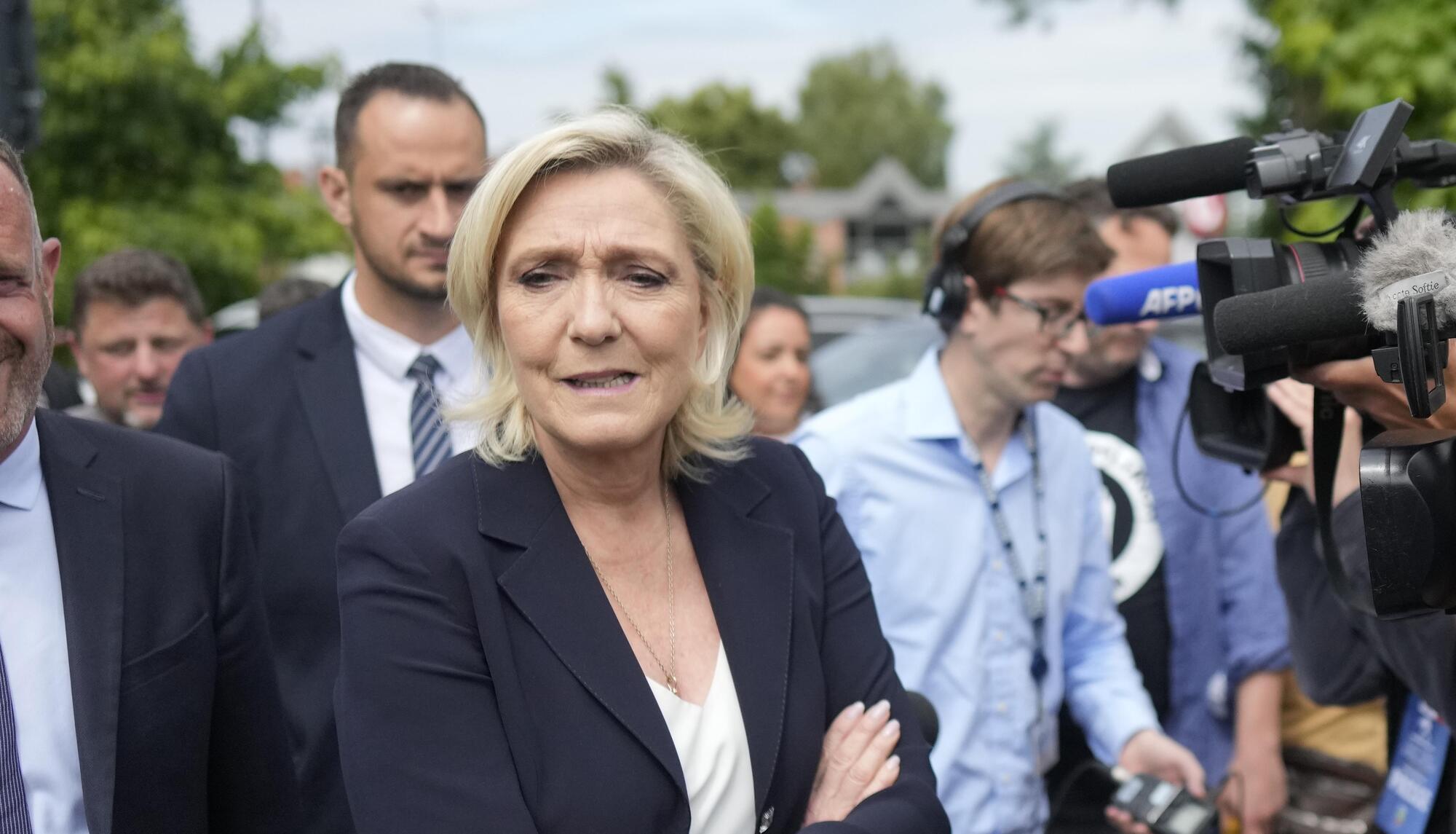
French far-right leader Marine Le Pen: Her National Rally party and its allies secured 33% of the vote in Sunday's parliamentary elections. Picture: AP /Thibault Camus
“It’s shocking. But someone is voting for them,” Irish filmmaker and actress Sonya O’Donoghue said after the far-right’s historic success in the first round of parliamentary elections.
In a guarded whisper at the hairdressers on Monday morning, her beautician leaned in and said: “It’s terrible, I want to get out of here now. I’m moving to Canada. It’s crazy here.”
Most people in France-based Ms O’Donoghue’s circle in Sète in southern France were horrified by far-right Marine Le Pen’s Rassemblement National or National Rally (RN) party’s historic win, gaining the most votes in the parliamentary election.
The RN and its allies secured 33% of the vote, followed by a left-wing bloc with 28% and President Emmanuel Macron's centrists coming third with 22%, according to the interior ministry.

But Ms O’Donoghue has noticed an ugly racism and RN narrative weaving its way into everyday conversations in France. A mother told her recently she could not enrol her child in a respected preschool because it was in “that” area, where a relatively high percentage of Arabs live. Her friend’s Parisian husband now extolls the virtues of ‘Frexit’.
A far-right government could unravel so many of the policies and regulations that make France a bastion of social protection, she said.
“People here don’t realise how lucky they have it. Childcare is incredible here, they have strong laws to protect people renting, they have strong employment law to protect workers,” Ms O’Donoghue said.
On Monday, political parties in France were forming pacts to try to block as many far-right candidates from gaining more seats in next Sunday’s election, when candidates who did not get 50% or more of votes in their district will contest the remaining seats.
Prime minister Gabriel Attal said there was a "moral duty" to prevent RN candidates from securing an absolute majority in parliament.
In the first round of voting on Sunday, 78 of the National Assembly’s 577 seats were won outright by candidates who secured more than 50% of the vote, 38 of whom were RN candidates, including Ms Le Pen, according to newspaper ’s analysis of interior ministry data.
Art historian Jane MacAvock, who is from Ireland but lives in Paris, said in constituencies where candidates did not pass that 50% threshold to be elected in the first round, the left-wing coalition has agreed to pull its candidate in each constituency where they came in third (with the lowest votes out of three candidates) and urge their electorate to vote for the non-RN candidate in the second round of voting this Sunday. The prime minister has suggested the centrists do the same.
“It’s scary. A lot of people are heartbroken. People are changing their plans to make sure they can vote on Sunday,” Ms MacAvock said.
Even pretty Provence villages have been sold a lie by the far right that they will be invaded by "foreigners" with many people there now voting RN out of fear, Ms MacAvock said.

But some 200 constituencies have yet to fill seats, so Sunday’s vote will be crucial in deciding how much power the far-right will wield, she said.
The final result will likely be a disunited coalition if not a hung parliament.
Although the president can continue to push through legislation due to Article 49.3 of the constitution without parliamentary consensus, Macron has been “the huge loser” in these elections, she said.
“It’s a scary time for everyone. If RN gets in, it will be more acceptable to be racist. I’m already hearing more people on the bus complain about women wearing the veil. This will further embolden racism.”