Anxious wait for US east coast as Hurricane Matthew approaches
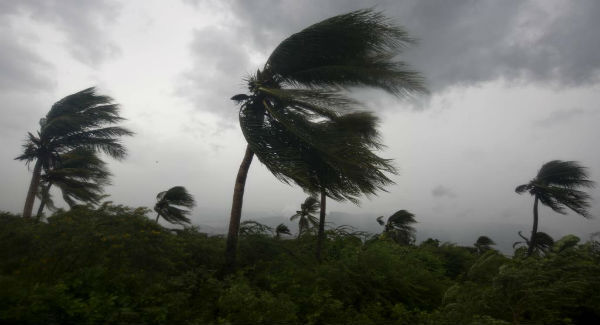
Anxious Florida residents have cleared supermarket shelves while North Carolina called for the evacuation of three barrier islands as Hurricane Matthew threatens a large swathe of the US east coast in the coming days.
The most powerful Atlantic storm in a decade roared across the Caribbean on Tuesday, slamming into the western part of Haiti.
While it is too soon to know if it will make a direct hit on Florida or somewhere else along the US coast, Matthew is expected to create dangerous conditions.
A hurricane watch is in place for parts of Florida, which is already experiencing bands of rain from the storm.
Simone Corrado and her husband tried to buy water at a Publix shop in their home town of Davie, about 20 minutes from Miami Beach, but mostly found empty shelves.
They were worried the roof of their garden-style apartment would leak during heavy rain.
"I got scared because all that was left at Publix was just the pricey water," Ms Corrado said.
"They really put the fear into you here. On the television screen every few minutes is the 'beep, beep, beep' storm alert."
Florida governor Rick Scott met emergency officials along the coast, starting out in the Keys and travelling north. At a news conference in Daytona Beach, he noted that the storm's predicted path can change quickly.
"We can rebuild your home, we can rebuild your business. We can't rebuild your life," Mr Scott warned.
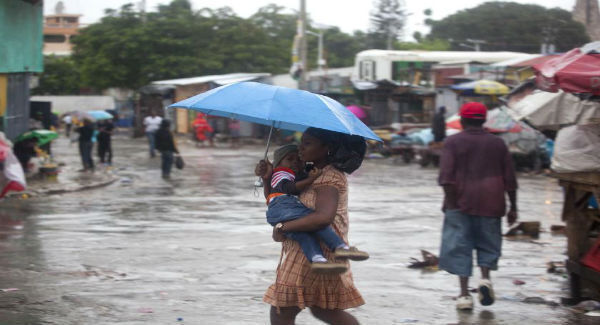
The dangerous Category 4 storm blew ashore around dawn in a corner of Haiti where many people live along the coast in shacks of wood or simple concrete blocks. At least seven people are known to have died from Matthew's march through the Caribbean so far.
The storm was headed north over the Bahamas and is expected to brush the Florida coast.
A tropical storm watch was issued from Seven Mile Bridge in the Florida Keys to Deerfield Beach, north of Fort Lauderdale. A hurricane watch is in place further north.
"We are preparing for the worst, hoping for the best and not taking any chances," Mr Scott said, as he visited emergency management officials in the Florida Keys.
The governor urged residents along the Interstate 95 motorway corridor to start making preparations, which include having at least a three-day supply of water, food and medicine.
He also asked residents to comply with any evacuation orders from local officials as the week progresses.
This is what #HurricaneMatthew looks like from the International @Space_Station https://t.co/EwQ0UOzRQA
— Sky News (@SkyNews) October 4, 2016
"Make sure you have a fully charged cellphone," Mr Scott said. "If we lose power, you cannot charge your cellphones."
Mr Scott also noted that many people have moved to South Florida since Hurricane Wilma hit as a Category 3 storm in 2005.
Matthew briefly reached the top classification, Category 5, becoming the strongest hurricane in the region since Felix in 2007.
US president Barack Obama was updated on the path of Hurricane Matthew and its potential impact in the Caribbean and the United States, White House spokesman Josh Earnest said.
Federal officials have been deployed to state emergency operations centres in Florida, Georgia, South Carolina and North Carolina and relief supplies have been sought in the region.
North Carolina governor Pat McCrory declared a state of emergency, in part to immediately help farmers clear their fields of crops already affected by heavy rain over the last two weeks.
He said he does not want other crops ruined, so restrictions on truck weights and hours of service would be lifted under the emergency declaration to allow farmers to take their harvest to market.
At Cape Lookout National Seashore in North Carolina, superintendent Patrick Kenney said more than 100 trucks were being taken off the island and about 45 cabins were being cleared.
Ferry operators told Mr Kenney it will take two days to evacuate everyone, meaning the islands should be empty sometime on Wednesday.
CONNECT WITH US TODAY



Be the first to know the latest news and updates