Farage aims for Ukip by-election win following Euro success
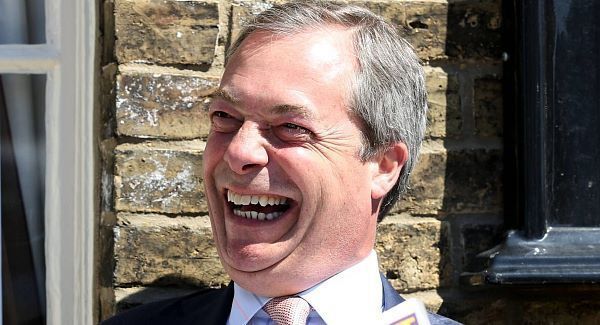
Jubilant Ukip leader Nigel Farage said his “people’s army” was on its way to Westminster after securing first place in historic elections for the European Parliament.

Farage aims for Ukip by-election win following Euro success

Jubilant Ukip leader Nigel Farage said his “people’s army” was on its way to Westminster after securing first place in historic elections for the European Parliament.

Mr Farage said that the eurosceptic party will “give it our best shot” in next week’s by-election in Newark – an area where it finished top last night despite trailing the Tories by 25,000 votes in the 2010 general election – and was hoping to secure “a good number” of MPs when the country goes to the polls in May 2015.

Liberal Democrat leader Nick Clegg insisted he would not resign, despite pressure for a change in leader from activists horrified by a disastrous night for the party, which lost all but one of its 12 MEPs and trailed in fifth in the national vote and sixth in Scotland.

Former MP Sandra Gidley said the Lib Dem brand had become “toxic”, while Lib Dem MP John Pugh said he wanted Business Secretary Vince Cable to take over as leader, warning that a fundamental cause of the Lib Dems’ “abysmal” showing was the fact that voters were no longer willing to listen to Mr Clegg.

“If we carry on as usual, we are like the generals at the Somme, because these losses are horrendous,” the Southport MP told the BBC News Channel. “Given the scale of the losses, to call for business as usual is frankly ludicrous.”

Speaking at Lib Dem HQ in central London, Mr Clegg said the results in local and European elections were “gutting and heartbreaking”, but insisted he would not resign, vowing to “finish the job”.

Following criticisms of his decision to take Ukip on directly over EU membership – including in a pair of TV debates with Mr Farage which he was widely judged to have lost – Mr Clegg said: “It didn’t work but it was right that we stood up for the values we believe in.

“Of course it is right to have searching questions in the wake of such a bad set of election results but if I’m honest the easiest thing in politics – just as in life – sometimes when the going gets really tough is just to walk away, to wash your hands of it. I’m not going to do that and my party is not going to do that.”

Arriving to address supporters at a victory party, Mr Farage made clear his eyes were on the Newark by-election on June 4, where Conservatives are defending a 16,152 majority.

“The people’s army of Ukip are on their way to Newark,” he said. “We are going to give it our best shot.”

Summing up the aftermath of last night’s results, he said: “Nick Clegg’s in the most trouble, Ed Miliband’s in quite a lot of trouble, David Cameron’s in some trouble.

“If we were to win Newark, David Cameron would be in even more trouble than Nick Clegg. If we were to overturn this massive majority they have got, it would be a very hot, long summer in the Tory Party.”

Asked whether his stunning victory was the result of a protest vote, Mr Farage said: “It’s beginning to look like a permanent protest.”

After votes were counted in all 11 of Great Britain’s constituencies, Ukip was dominant with 24 MEPs, including one in Wales and its first representative in Scotland. Its 27.49% share of the national vote was up 10.99 points from the last Euro elections in 2009, when it secured 13 seats.

It was the first time for more than a century that a national vote has not been won by either the Conservatives or Labour, as voters turned away from mainstream parties throughout Europe.

David Cameron came under pressure to consider an electoral deal with Ukip amid fears that the two parties could split the right-of-centre vote in the May 2015 general election.

Mr Cameron insisted he was not ready to countenance any pact with Ukip, saying that all-out victory for the Conservatives was “achievable” and was the only way to guarantee an in/out referendum on Britain’s membership of the European Union (EU).

Ed Miliband insisted that Labour was “in a position where we can win the general election”, despite disappointing results which saw the party perform strongly in London but barely scrape into second place nationally, less than two percentage points ahead of the Tories.

With counting completed in England, Scotland and Wales, Labour had 20 MEPs and a 25.4% vote share, the Tories 19 MEPs and a 23.93% vote share, the Greens three MEPs and a 7.87% share while the Lib Dems managed a solitary MEP and 6.87% of the national vote.

The Scottish National Party held onto its two MEPs and led the pack with a 28.9% share of the vote north of the border, ahead of Labour on 25.9%, Tories on 17.2% and Ukip on 10.4%. Liberal Democrats came sixth in Scotland.

Votes were being counted in Northern Ireland over the course of the day.

x

More in this section

Cookie Policy Privacy Policy Brand Safety FAQ Help Contact Us Terms and Conditions

© Examiner Echo Group Limited










