North Korea pulls staff out of factory
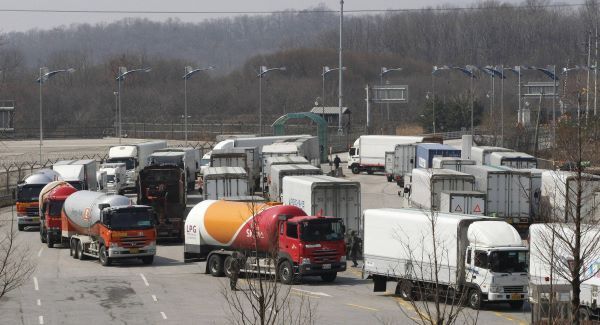
A factory complex that is North Korea’s last major economic link with the South was a virtual ghost town today after Pyongyang suspended its operations and recalled all 53,000 of its workers, cutting off jobs and a source of hard currency in its war of words and provocations against Seoul and Washington.

North Korea pulls staff out of factory

A factory complex that is North Korea’s last major economic link with the South was a virtual ghost town today after Pyongyang suspended its operations and recalled all 53,000 of its workers, cutting off jobs and a source of hard currency in its war of words and provocations against Seoul and Washington.

Only a few hundred South Korean managers remain at the Kaesong industrial complex, which has been run with cheap North Korean labour and South Korean capital and know-how for the past decade. The managers have not been forced to leave the centre just north of the Demilitarised Zone.

One manager said he and his colleagues were living on noodles but planned to stay and watch over the company’s equipment as long as their food lasted.

Pyongyang said yesterday it would recall all 53,000 North Korean workers from the complex and would decide later whether to shut it down for good. The work stoppage at the biggest employer in the North’s third-biggest city shows that Pyongyang is willing to hurt its own shaky economy in order to display its anger with South Korea and the United States.

Pyongyang has unleashed a torrent of threats at Seoul and Washington following United Nations sanctions punishing the North for its third nuclear test, on February 12, and joint military exercises between the US and South Korea that allies call routine but that Pyongyang sees as invasion preparation.

US and South Korean defence officials have said they have seen nothing to indicate that Pyongyang is preparing for a major military action that it would certainly lose. Analysts say North Korea’s rhetoric and actions are intended to force new, Pyongyang-friendly policies in South Korea and Washington and to boost domestic loyalty for Kim Jong Un, the country’s young, still relatively untested new leader.

The Kaesong complex is the last symbol of inter-Korean rapprochement projects from previous eras of cooperation. Other projects such as reunions of families separated by war and tours to a scenic North Korean mountain became stalled in recent years.

Kim Yang Gon, secretary of the Central Committee of the Workers’ Party of Korea, announced yesterday on a visit to Kaesong that operations at the complex would be suspended. He said the facility “has been reduced to a theatre of confrontation”.

Kim said in a statement released by state media that North Korea would now consider whether to close the complex permanently. “How the situation will develop in the days ahead will entirely depend on the attitude” of South Korean authorities, it said. The message did not say what would happen to the more than 400 South Korean managers still at Kaesong.

Some North Koreans who worked overnight shifts at Kaesong were still there this morning, but South Koreans said those scheduled for day shifts did not turn up. A North Korean woman at Kaesong said in a telephone call that she planned to return home now that her night shift was over.

One of the South Koreans who remained at Kaesong today said he planned to stay there until food ran out. He said he and four other colleagues had been living on instant noodles.

“We haven’t had any rice since last night. I miss rice,” he said Tuesday morning. “We are running out of food. We will stay here until we run out of ramen.”

In noting the shutdown, the US referred to a Central Committee of the North’s ruling Worker’s Party statement a little more than a week ago, in which it described the economy as one of the nation’s top two priorities. The other is building nuclear weapons.

State Department spokesman Patrick Ventrell said closing the complex “would be regrettable, given that more than 50,000 North Korean people are employed there, and it would not help them achieve their stated desire to improve their economy and better the lives of their people”.

South Korea’s Unification Ministry, which is responsible for relations with the North, issued a statement saying South Korea will act “calmly and firmly” and will make its best efforts to secure the safety of South Koreans at Kaesong.

North Korea has threatened to fire nuclear missiles at the US and claimed it had scrapped the 1953 armistice that ended fighting in the Korean War. Last week it told foreign diplomats based in Pyongyang that it will not be able to guarantee their safety as of Wednesday. Embassy workers appeared to be staying put. There have also been worries in Seoul of an even larger provocation from Pyongyang, including another possible nuclear test or rocket launch.

The barrage of North Korean threats has made North Korea increasingly isolated. China, its most important ally, expressed unusual disappointment when Pyongyang announced last week that it was restarting a plutonium reactor to produce more nuclear-bomb fuel.

Even before yesterday’s announcement, Pyongyang had been allowing operations at the Kaeson complex to wither. Last month it cut the communications with South Korea that had helped regulate border crossings at Kaesong, and last week it barred South Korean workers and cargo from entering North Korea.

Operations had continued and South Koreans already at Kaesong were allowed to stay, but dwindling personnel and supplies had forced about a dozen of the more than 120 companies operating at Kaesong before North Koreans were told to stop working there.

North Korea briefly restricted the heavily-fortified border crossing at Kaesong in 2009, but manufacturers fear the current closure could last longer.

x

More in this section

Cookie Policy Privacy Policy Brand Safety FAQ Help Contact Us Terms and Conditions

© Examiner Echo Group Limited