'Up to four terrorists' killed in blast

Forensic scientists were struggling today to analyse body parts from up to four Madrid bombing suspects who blew themselves up as police prepared to storm their apartment.

Forensic scientists were struggling today to analyse body parts from up to four Madrid bombing suspects who blew themselves up as police prepared to storm their apartment.

The Spanish Interior Ministry said the Islamic terrorists were probably among six men subject to an international arrest warrant in connection with the March 11 bomb attacks that killed 191 people.

The six include a Tunisian described as the leader of the cell.

The suicide terrorists, who set off a blast that also killed a special operations officer and wounded 15 other policemen, are also suspected of placing a bomb on a railway line on Friday.

Officials said that 12-kilo (26lb) device failed to go off because it was not wired properly.

The Spanish government had refused to speculate about who might be behind that failed attack 40 miles south of Madrid, although they confirmed that the explosives were the same kind used in last month’s attacks on the Madrid commuter rail network.

Interior Minister Angel Acebes said that at least three terrorists died in last night’s suicide blast but this figure might go up as authorities combed through the wreckage of the four-storey apartment building in Leganes, outside Madrid.

Investigators believe that as many as five terrorists may have been holed up inside the apartment. News reports said today that a fourth terrorist died, but the ministry said this had not been confirmed.

Forensic scientists examining body parts from the explosion faced a daunting task as they tried to identify the suicide terrorists, officials said.

DNA tests would require them to have a matching sample from a relative, but that is impossible if they do not know who the dead man is.

Police will probably have to rely on showing photographs of suspects to people who lived in the building, a ministry spokesman added.

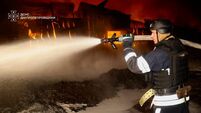
The blast gutted at least one floor of the building – a square structure with a central courtyard where children had been playing soccer until they were evacuated.

The explosion sent up a huge plume of black smoke and revealed rooms littered with concrete and wires dangling from ceilings. Architects will now decide whether it must be demolished altogether because of structural damage.

Police had approached the building at around 7pm to make arrests as part of an escalating manhunt for those responsible for the March 11 bombings.

The suspects spotted the police from a window and shot at them, shouting in Arabic, the Interior Ministry said. No police officers were hurt by the gunfire.

Over the next two hours, police evacuated as many people as they could from the building and surrounding area and prepared for an assault on the apartment.

The El Pais newspaper said special forces preparing the assault managed to communicate with the terrorists and gave them a deadline to surrender. But the terrorists shouted back “God is great, we are going to go out killing”.

The terrorists set off their bomb in a second-storey apartment after police blasted open the ground-floor entrance, the Interior Ministry said.

The investigation into the commuter rail attacks has focused on the Moroccan Islamic Combatant Group, which has links to al-Qaida and is related to a group suspected in last year’s Casablanca bombings, which killed 45 people including 12 suicide bombers.

Spain has been a major US ally in Iraq and has been warned previously by al-Qaida that it would be the target of terrorism for its support.

Judge Juan del Olmo, the investigating magistrate, has issued international arrest warrants for five Moroccans and a Tunisian, identified as Sarhane Ben Abdelmajid Fakhet and described as the leader of the bombers.

Another 15 suspects are already in custody. Six have been charged with mass murder and nine with collaborating with or belonging to a terrorist organisation. Eleven of the 15 charged are Moroccan.

Yesterday, the Spanish newspaper El Mundo reported that the Spanish Embassy in Egypt received a letter from an Islamic militant group threatening new attacks if Spain did not withdraw its troops from Iraq and Afghanistan.

x

More in this section

Cookie Policy Privacy Policy Brand Safety FAQ Help Contact Us Terms and Conditions

© Examiner Echo Group Limited