Germany mourns leading statesman Hans-Dietrich Genscher
Mr Genscher died on Thursday evening, at his home outside Bonn, surrounded by family.
“He was a statesman who influenced the fate of Germany like few others. He was a great European and a great German,” government spokesman, Georg Streiter, told reporters in Berlin.
Mr Genscher served as foreign minister, first of West Germany and then of the reunited nation, for 18 years, under chancellors Helmut Schmidt and Helmut Kohl.
He remained active and well-connected long after his retirement, working behind the scenes in his mid-80s to secure the release of former Russian oil tycoon, Mikhail Khodorkovsky.
Mr Genscher championed detente with the Soviet bloc in the 1970s and 1980s, and was at the vanguard of those who took Soviet leader, Mikhail Gorbachev, at his word when he declared Soviet aggression a thing of the past.
That trust, and West German insistence on reaching out to Moscow, hastened the end of the Cold War. It also positioned German reunification at the heart of an increasingly integrated Europe.
“European unity is the answer to the mistakes of the Germans and of European history,” Mr Genscher said when announcing his retirement from parliament in 1998. “It is the answer to a terrible world war. These reasons stand even today.”
Mr Genscher was centre-stage as cracks in the Iron Curtain opened up in 1989.
In September of that year, thousands of East Germans had packed into the West German embassy in Prague, the capital of the former Czechoslovakia, seeking to escape to the West.
This was a time when East German soldiers shot those who tried to flee across the Berlin Wall.
After weeks of diplomatic manoeuvering, Mr Genscher told the East Germans they could do so. Mr Genscher famously said from an embassy balcony: “I call you fellow citizens, and express a hearty welcome.” He told reporters outside it was “the most moving point of my political career”.
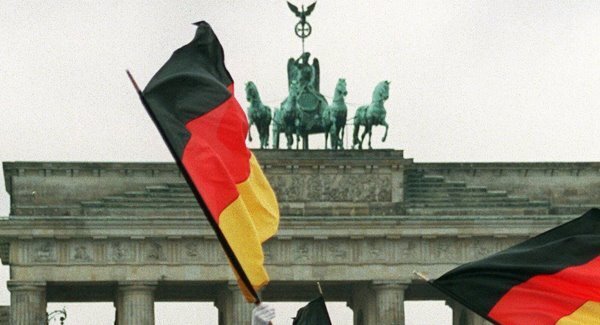
After the Berlin Wall fell, on November 9, Mr Genscher was at the forefront of efforts to bring together East and West Germany. The two were unified on October 3, 1990.
Mr Genscher was close to former US president, George HW Bush’s secretary of state, James A Baker III, awakening him the night before a six-nation treaty approving German unification was to be signed in Moscow, to help resolve a last-minute hitch.
However, Mr Genscher angered Ronald Reagan’s sceptical US administration by insisting on co-operating with Moscow early in Mr Gorbachev’s tenure.