Appeal for calm in Baltimore police mistrial of William Porter for Freddie Gray murder
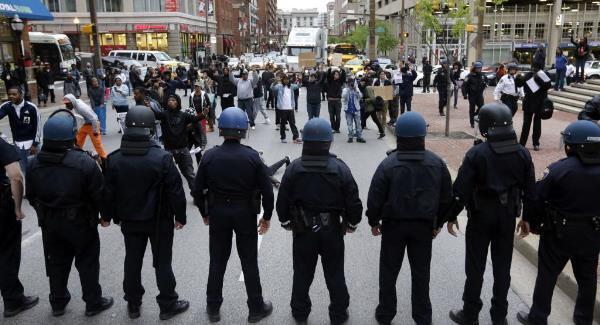
Crowds protested along streets in the Maryland city lined with police but the situation was quiet at the junction where the worst rioting happened in April as parts of West Baltimore were set on fire.
William Porter’s mistrial is a setback for prosecutors trying to respond to a population frustrated by violent crime and allegations of police misconduct.
Murders have soared and the pressure on authorities has been unrelenting since Baltimore City State Attorney Marilyn Mosby charged six police officers over the death of Freddie Gray, 25.
About 30 protesters chanting “send those killer cops to jail” outside the court changed gear after the mistrial was announced, chanting “no justice, no peace!” and “black lives matter”.
At least two activists were arrested.
Family of #FreddieGray asks Baltimore public to "remain calm" in wake of mistrial in cop case. https://t.co/oYpRkcj3P6.
— CNN Breaking News (@cnnbrk) December 16, 2015
The case hinged not on what Porter did, but what prosecutors said he did not do.
He was accused of failing to get medical help for critically injured Gray and was charged with manslaughter, assault, misconduct in office, and reckless endangerment, carrying maximum sentences totalling 25 years.
The judge was to discuss a possible retrial with both sides in his chambers.
Baltimore mayor Stephanie Rawlings-Blake and the new police commissioner she installed after April’s riots warned people against more violence.
“We will not, we cannot, be defined by the unrest of the spring,” she said.
Lawyer Billy Murphy, who obtained a $6.4m settlement for Mr Gray’s family from the city before Porter’s trial, called the mistrial “a temporary bump on the road to justice”.
The racially diverse jury of seven men and five women deliberated for about 16 hours over three days.
They indicated they were deadlocked on Tuesday, but Circuit Judge Barry Williams told them to press on, even as he denied their requests for help.
Gray was arrested while fleeing from officers and died on April 19, a week after his neck was broken inside a police van as a seven-street trip to the police station turned into a 45-minute journey around West Baltimore.
The young black man had been left handcuffed and shackled but without a seat belt in the metal compartment.
The autopsy concluded that he probably could not brace himself whenever the van turned a corner or braked suddenly.
Porter is also black, as are two of the other five officers charged.
It was not clear how the mistrial would affect the other officers.