Kerry: US will have to negotiate with Assad
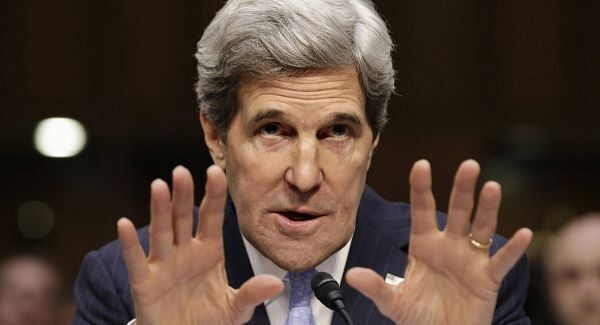
Washington has long insisted that Assad must be replaced through a negotiated, political transition, but the rise of a common enemy, hardline militant group Islamic State, appears to have slightly softened the Westâs stance towards him.
In the interview broadcast yesterday, Kerry did not repeat the standard US line that Assad had lost all legitimacy and had to go. Syriaâs civil war is now into its fifth year, with hundreds of thousands killed and millions of Syrians displaced.
âWe have to negotiate in the end,â Kerry said. âWeâve always been willing to negotiate in the context of the Geneva I process,â he added, referring to a 2012 conference which called for a negotiated transition to end the conflict.
Kerry said the US and other countries, which he did not name, were exploring ways to reignite the diplomatic process to end the conflict in Syria.
âWhat weâre pushing for is to get him (Assad) to come and do that, and it may require that there be increased pressure on him of various kinds in order to do that,â the secretary of state said.
âWeâve made it very clear to people that we are looking at increased steps that can help bring about that pressure,â he added.
The US led efforts to convene a UN-backed peace talks in Geneva last year between Western-backed Syrian opposition representatives and a government delegation. The talks collapsed after two rounds and no fresh talks have been scheduled.
Russia convened some opposition and government figures in January for talks on the crisis, but they yielded little progress and the main opposition coalition boycotted them.
âTo get the Assad regime to negotiate, weâre going to have to make it clear to him that there is a determination by everybody to seek that political outcome and change his calculation about negotiating,â Kerry said.
âThatâs under way right now. And I am convinced that, with the efforts of our allies and others, there will be increased pressure on Assad.â
Syria sank into civil war after a peaceful street uprising against four decades of Assad family rule began in March 2011. The revolt spiralled into an armed insurgency, which has deepened with the rise of Islamic State and other hardliners.
Assad seems more likely to survive the Syrian crisis than at any point since it began. Iranâs support for Assad is as solid as ever, with Russia showing no sign of abandoning him.
US-led forces started air strikes against Islamic State group in Syria and Iraq in the summer. Washington has said the campaign in Syria is not co-ordinated with the Syrian military, which also views the group as its enemy.
The war has killed more than 200,000 people and displaced close to half the population, according to the UN.