Kerry endorses new Iraqi PM as bridge-builder
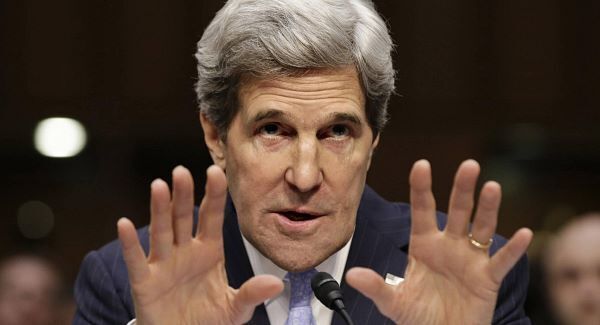
US Secretary of State John Kerry endorsed Iraqi Prime Minister Haider al-Abadi’s plans to mend Baghdad’s relations with Sunnis and Kurds, and said Iraq was a partner in the fight against Islamic State militants.

Kerry endorses new Iraqi PM as bridge-builder

Kerry, on a tour of the Middle East to build military, political and financial support to defeat the militants controlling parts of Iraq and Syria, said: “We all have an interest in supporting the new government of Iraq.”

“The coalition that is at the heart of our global strategy I assure you will continue to grow and deepen in the days ahead ... because the United States and the world will simply not stand by to watch as ISIL’s evil spreads.” he said, using an alternative acronym for Islamic State.

“A new and inclusive Iraqi government has to be the engine of our global strategy against ISIL. Now the Iraqi parliament has approved a new cabinet with new leaders, with representation from all Iraqi communities, it’s full steam ahead.”

Kerry’s visit came hours before a speech in which Obama sought to rally Americans behind another war in a region he has long sought to leave, backed by what Washington hopes will be a coalition of Nato and Gulf Arab allies committed to a campaign that could stretch beyond the end of Obama’s term in 2016.

“When the world hears from President Obama this evening, he will lay out with great specificity each component of a broad strategy of how to deal with ISIL,” Kerry said.

Kerry told Abadi he was encouraged by his plans for “reconstituting” the military and his commitment to political reforms reaching out to all of Iraq’s religious and ethnic communities.

Abadi formed his government on Monday in what was billed as a break from the more abrasive style of his predecessor Nuri al-Maliki, whose policies were blamed by many Iraqis for fuelling sectarianism and pushing the country to the brink of collapse. Islamic State fighters seized large chunks of Iraq’s north and west this year, welcomed by many of the Sunni Muslim minority, who blamed the government for targeting them with indiscriminate arrests and discriminatory policies.

Abadi faces multiple crises, from the need to convince the Sunnis they should stand with Baghdad against Islamic State to persuading minority Kurds not to break away and convincing his own majority Shi’ites he can protect them from Sunni hardliners.

Kerry highlighted Abadi’s readiness “to move forward rapidly on the oil agreements necessary for the Kurds, [and] on the representation of Sunnis in government.”

In a sign of the eagerness among Iraq’s political elite for a fresh start, new parliament speaker Selim al-Jubouri, a Sunni, told Kerry: “We are ... hopeful that we will be able to defeat terrorist organisations and establish democracy.”

Unlike his predecessor, Abadi enjoys the support of nearly all of Iraq’s major political groups, and the two most influential outside powers, Iran and the US. Officials hope he will present a unified front to weaken IS, which has seized a third of both Iraq and Syria.

But it will be hard to placate all the forces in Iraq. On Wednesday, cleric Moqtada al-Sadr, head of a powerful Shi’ite movement, said Iraq should not cooperate with “occupiers“, a reference to the United States.

Three car bombs exploded yesterday in a Shi’ite neighbourhood in eastern Baghdad, killing nine and wounding 29, a police officer said.

More in this section

Cookie Policy Privacy Policy Brand Safety FAQ Help Contact Us Terms and Conditions

© Examiner Echo Group Limited