Iraq asks US for air support in bid to halt rebels

Iraq has asked the US for air support in countering Sunni rebels, the top US general said last night, after the militants seized major cities in a lightning advance that has routed the Shi’ite-led government’s army.

Iraq asks US for air support in bid to halt rebels

However, General Martin Dempsey, the chairman of the US military’s Joint Chiefs of Staff, gave no direct reply when asked at a Congressional hearing whether Washington would agree to the request.

Baghdad said it wanted US air strikes as the insurgents, led by fighters from the Islamic State of Iraq and the Levant (ISIL), battled their way into the biggest oil refinery in Iraq and the president of neighbouring Iran raised the prospect of intervening in a sectarian war that threatens to sweep across Middle East frontiers.

“We have a request from the Iraqi government for air power,” Dempsey told a Senate hearing. Asked whether the US should honour that request, he said: “It is in our national security interest to counter ISIL wherever we find them.”

In the Saudi city of Jeddah, Iraqi foreign minister Hoshyar Zebari said Baghdad had asked for air strikes “to break the morale” of ISIL.

While Iraq’s ally, Shi’ite Muslim power Iran, had so far not intervened to help the Baghdad government, “everything is possible,” he said after a meeting of Arab foreign ministers.

The White House has said President Barack Obama has not yet decided what action, if any, to take following the rebel onslaught, and was due to discuss the options with leaders of Congress.

US officials said the Iraqi request had included drone strikes and increased surveillance by US drones, which have been flying over Iraq for some time. However, any air targets would be hard to identify because the militants did not have traditional supply lines or major physical infrastructure and mingled with civilians.

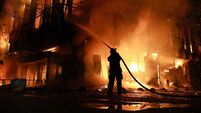
Sunni fighters were in control of three quarters of the territory of the Baiji refinery north of Baghdad, an official said there.

ISIL aims to build a Sunni caliphate ruled on mediaeval precepts, but the rebels also include a broad spectrum of more moderate Sunnis furious at what they see as oppression by Baghdad.

Some international oil companies have pulled out foreign workers. The head of Iraq’s southern oil company, Dhiya Jaffar, said Exxon Mobil had conducted a major evacuation and BP had pulled out 20% of its staff. He criticised the moves, as the areas where oil is produced for export are mainly in the Shi’ite south and far from the fighting.

Washington and other Western capitals are trying to save Iraq as a united country by leaning hard on Shi’ite Prime Minister Nuri al-Maliki to reach out to Sunnis. Maliki met Sunni and Kurdish political opponents overnight, concluding with a frosty, carefully staged joint appearance at which an appeal for national unity was read out.

But so far Maliki’s government has relied almost entirely on his fellow Shi’ites for support, with officials denouncing Sunni political leaders as traitors. Shi’ite militia — many believed to be funded and backed by Iran — have mobilised to halt the Sunni advance, as Baghdad’s million-strong army, built by the US at a cost of €18bn, crumbles.

Maliki announced yesterday that 59 officers would be brought to court for fleeing their posts last week as the insurgents seized Mosul, northern Iraq’s biggest city.

The Baiji refinery is the biggest source of fuel for domestic consumption in Iraq, which would give the rebels a grip on energy supply in the north.

x

More in this section

Cookie Policy Privacy Policy Brand Safety FAQ Help Contact Us Terms and Conditions

© Examiner Echo Group Limited