Joe Callaghan: The World Cup has become a land of conspiracy
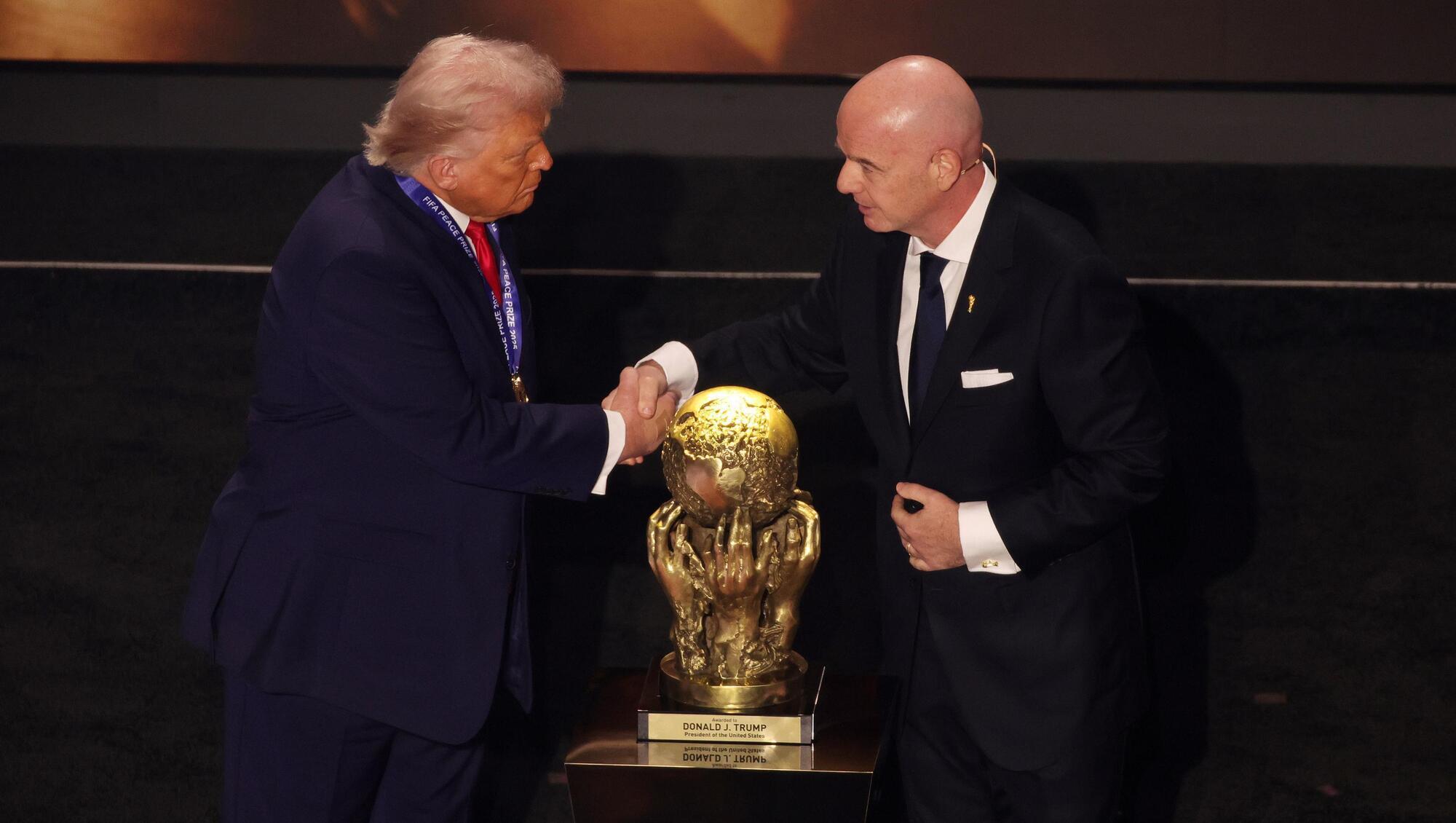
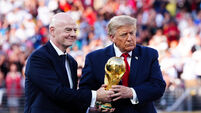
US President Donald Trump is presented with the inaugural FIFA Peace Prize award by FIFA President Gianni Infantino. Pic: Sam Corum/PA Wire.
The plaque drilled into the south-eastern wall of the Texas School Book Depository is black cast iron. It’s a material particularly resistant to abrasion, which is why it’s used for places where important history is retold.
Of the 185 words on the plaque, only one has been tampered with.
Through time and tenacity, enough people have done enough scraping and scratching to erase the black and create a silver box around the word which follows Lee Harvey Oswald’s name and precedes his crime. That word is ‘allegedly’.
In the home of the free world nothing runs freer than those minded to live in the world of ‘allegedly’.
Conspiracy theories have thrived on this side of the Atlantic for centuries.
The has swapped Dallas for Boston in recent days. After morning walks around Dealey Plaza we’re now a short drive south of Salem.
Somewhere in between is Washington DC, where more current day witch trials begin.
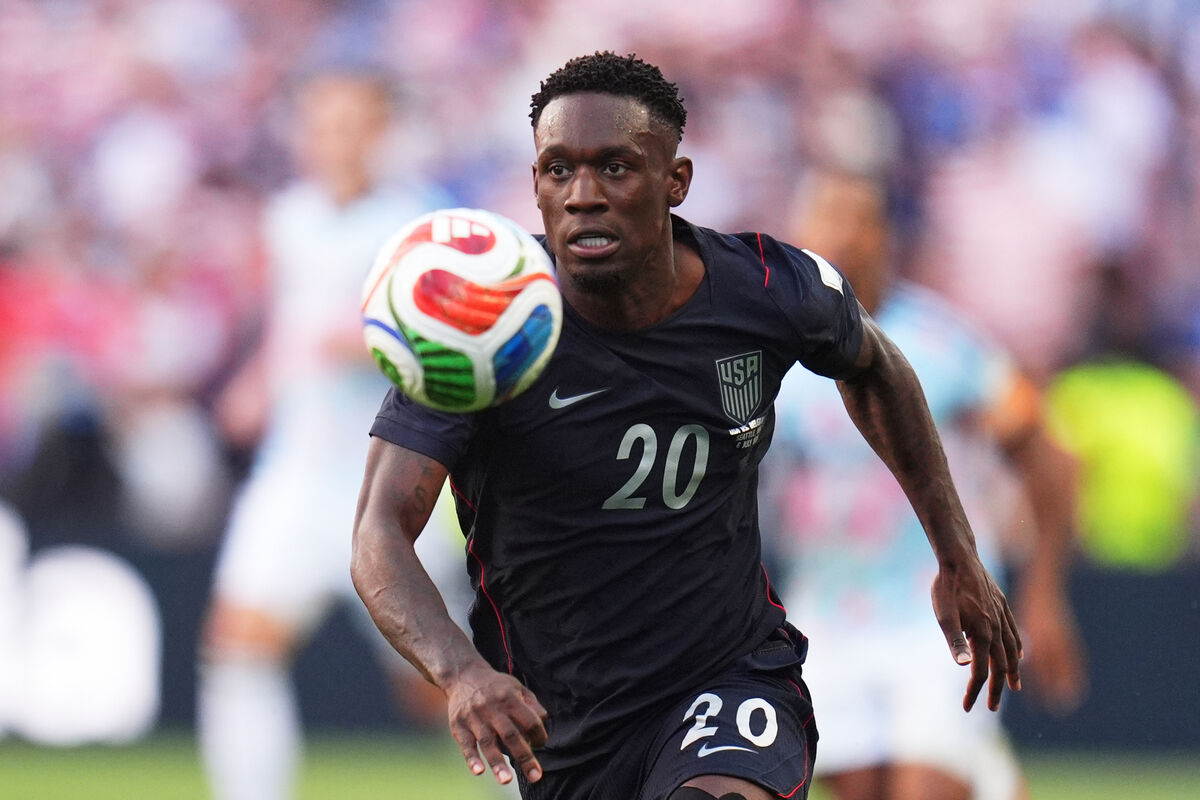
On Wednesday morning, the first off-day of America’s World Cup, the White House renewed attacks on Raphael Claus, the Brazilian referee who originally sent off Folarin Balogun, before the US striker’s ban was rescinded after intervention by Donald Trump via Gianni Infantino.
In the early hours of the furore over the unprecedented decision to free Balogun to play for the hosts, Trump had said Claus was “a little bit suspect if you check his past”.
Read More
In spite of America’s mortifying exit from their own tournament, or perhaps because of it, the administration doubled down on its smear campaign through wild and completely inaccurate claims from Andrew Giuliani.
They weren’t the only theories to float in an unprecedented few days of this tournament’s history. In fact, conspiracy is running wild across this World Cup and, as it approaches its most pivotal 11 days, threatening to undermine a breathtaking sporting spectacle.
It is entirely Infantino’s fault. While this country was always going to have some of its worst excesses seep into this global gathering, when FIFA bowed to Trump’s pressure campaign a pandora’s box was opened. There is no closing it now.
The clouds of the Balogun decision now hang over everything. It absolutely hung over Atlanta on Tuesday and poured out of Egyptian manager Hossam Hassan.
In the aftermath of Argentina’s barely credible comeback, Hassan railed against some of the decisions made, especially VAR’s intervention to rule out an Egyptian goal.
“It’s all about money. [FIFA] want Messi to stay in the tournament,” Hassan, well, alleged. "In football, many things happen off the pitch because of interests. We have suffered injustice.”
The decision to disallow Mostafa Ziko’s brilliant goal was based on a foul which happened 100 yards away. If technically correct it went entirely against the thread of how games had been officiated here.
To Hassan and millions online, the ‘soft touch’ only stopped when Messi was in peril.
The algorithms of social media create the worst kinds of echo chambers. When FIFA used Snicko technology last week to rule out Josko Gvardiol’s injury-time equaliser to send Cristiano Ronaldo and Portugal through to the Last 16, Croatians raged.
In the detection spikes and slow-mo replays Croatia had their ‘back and to the left’ video. Ronaldo, of course, was the original recipient of an Infantino stroke when his ban for elbowing Dara O’Shea was wiped clean so he could come here and fuel extortionate ticket sales.
All of these decisions would be hotly-contested at any previous World Cup but at none of them had FIFA so explicitly and publicly rigged a decision to benefit a powerful entity. So that shapes all discourse now.
Referee appointments for the quarter-finals were drip-fed out before, during and after Argentina produced their own kind of witchcraft to haul themselves back from the dead.
The selection of almost every crew of officials led to another wave of conspiracy. An all-Argentine panel for Thursday’s France-Morocco clash was, Twitter raged, surely appointed to screw over the French and ensure Argentina’s biggest hurdle is removed.
Michael Oliver and an English crew were handed Spain-Belgium which led to similar posts of plotting and paranoia. Running wild and untameable.
We’re entering the highest-stakes stretch of what has been a wondrous World Cup, one which somehow, someway has risen above Infantino and Trump and all of their meddling. Yet every decision the rest of the way will be viewed through an absurd 2026 version of the Eye of Providence, the one on the back of American $1 bills used as currency in the world of questioning everything.
The same eye appears on the cover of by Anna Merlan. Released in 2019, it's a great dive.
In it, Merlan notes how this country’s modern leap into conspiracy came because of people “shut out of the systems of power…facing uncomfortable questions in the process”.
Sounds familiar. As this World Cup of conspiracy rolls on, she may need to get working on an updated version.


CONNECT WITH US TODAY



Be the first to know the latest news and updates