'We should try to beat them at all costs, keep them down from qualifying': FAI motion on Israel games passes
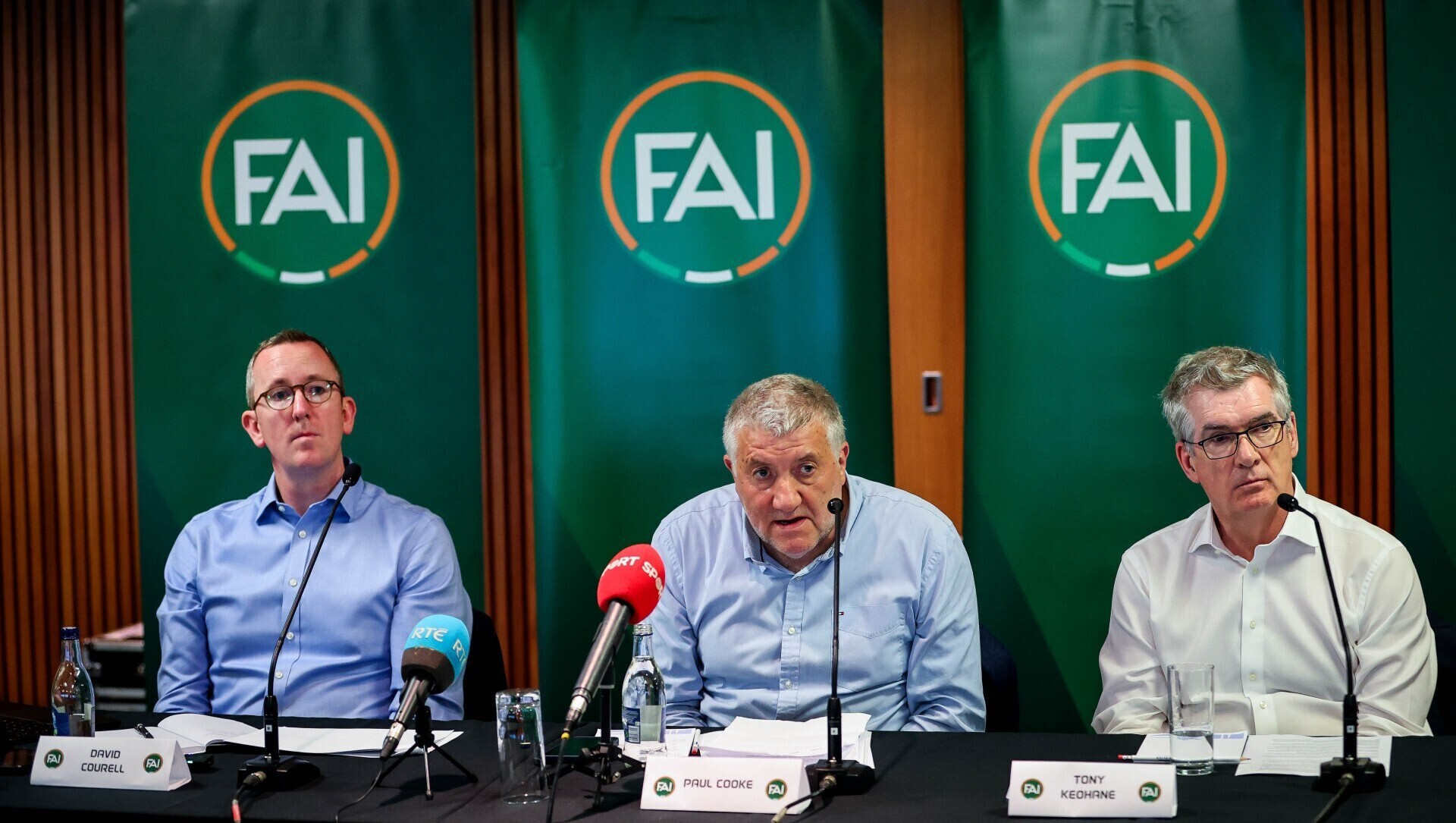
FAI CEO David Courell, FAI President Paul Cooke and FAI Independent Chairperson Tony Keohane. Pic: Ryan Byrne/Inpho
The FAI’s motion to progress with the Uefa Nations League matches against Israel was passed at Tuesday’s emergency general meeting by 75 votes to 32 – equating to a 68% majority.
Delegates at the meeting – a hybrid of in-person at Lansdowne Road (14 people) and remotely (100) - were requested to vote on the following motion, which was different to the wording submitted by a collective of General Assembly members.
“While acknowledging the strength of feeling regarding support for Palestine and the upcoming UEFA Men's Nations League fixtures, that the members recognise the profound impact that any non-fulfilment of UEFA fixtures would have on Irish football as a whole and on its future development, and accordingly endorses the Association fulfilling its obligations in respect of those fixtures.”
The EGM was preceded by a protest at the tunnel entrance of the stadium. Around 100 supporters gathered, displaying banners, Palestinian flags and chanting Stop The Game as passing cars beeped their horns in approval.
Both sides of the argument were given an opportunity to speak during the hour-long debate.
All four co-proposers, Bohemians, PFAI, Irish supporters partnership and CK (Carlow Kilkenny) United aired their concerns over the matches proceeding, highlighting the United Nations finding of genocide against Israel and their flagrant breaches of Fifa and Uefa statutes.
Their proposal was specific in seeking a boycott of both fixtures - rather than neutral territory, Serbia for Ireland’s ‘home’ game on October 4 - but it was deemed invalid due to the status of the two signatories.
It was later explained the decision to move that fixture from Lansdowne Road was belatedly taken in light of the tennis ball protest against Qatar in May – fearing the repercussions of the competitive match being abandoned by a similar demonstration.
Against that, Pat Kelly (Waterford), Andrea Clarke (Athlone Town), Derek Moore (Leinster FA) along with FAI board members Caroline Rhatigan and Packie Bonner spoke in favour of the games proceeding.
Former Ireland goalkeeper Bonner, currently the association’s international and high performance chairperson, was particularly passionate in pleading for a yes vote.
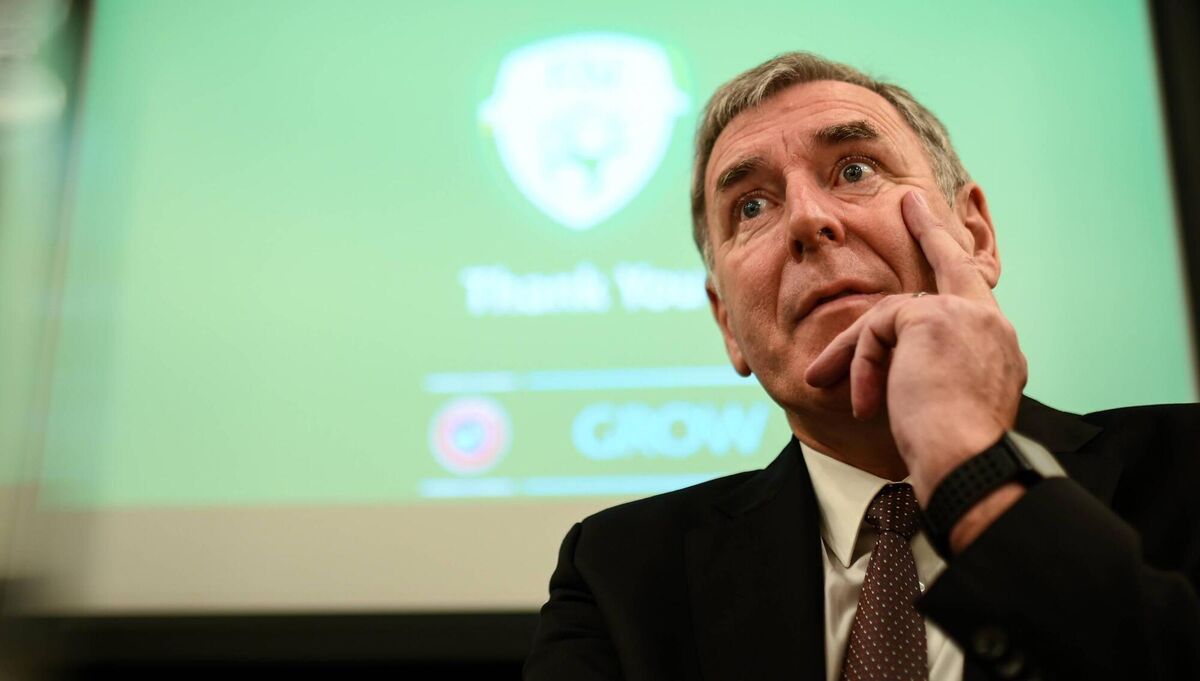
“I’d like to focus on football because I believe we’re at a pivotal moment for our men’s and women’s teams to strike gold,” he began. “Why should we give their opportunity to a country we’re discussing, positioning them in a situation where they can qualify for their first-ever Euros. That’s what will happen if we stop this game.
“We should try to beat them at all costs, keep them down from qualifying.”
He cited the examples of Scotland’s women and Norway’s men for the benefits of fulfilling fixtures against Israel, noting the latter would have been tied with with Israel and Italy in the table had they ceded six points in the World Cup qualifiers – rather than winning it to set up their current journey to the quarter-finals.
During the discussion, a supporter of the motion raised a scenario whereby a League of Ireland representative in European competition drew Israeli opposition.
Bohemians’ representative Daniel Lambert immediately replied that they would boycott any such fixture – an unprecedented step across the three competitions. Bohs return to European competition on Wednesday after a five-year absence.
FAI President Paul Cooke welcomed the outcome to a vote that could have produced an outcome to threaten her leadership. He said: “Over two-thirds of the football community are supporting the board’s decision.
“I would say that the EGM was conducted in a respectful and dignified manner – everybody who wanted to speak got an opportunity to do so.
“There were common themes that we as a board can take away to deal with the issues in the Middle East.
“Football is a democracy so we can’t do anything else about what happens in the future.”
Chief executive David Courell added: “Unfortunately the draw put us in the invidious position of making this difficult decision. We aspired to play at home – that’s important for everybody, the team, players and supporters – but we are where we are.
“Fear of abandonment was a key variable that resulted in the decision being made to take the fixture overseas. It wasn’t taken lightly, primarily at the risk of losing home advantage, but also the financial impacts on us.”
Both fixtures against Israel will be played behind closed doors – the first of which is in Debrecen, Hungary on September 27. Ireland also has Kosovo and Austria in their four-team group.
CONNECT WITH US TODAY



Be the first to know the latest news and updates