Reshaped Doonbeg links ready for ultimate Irish Open test
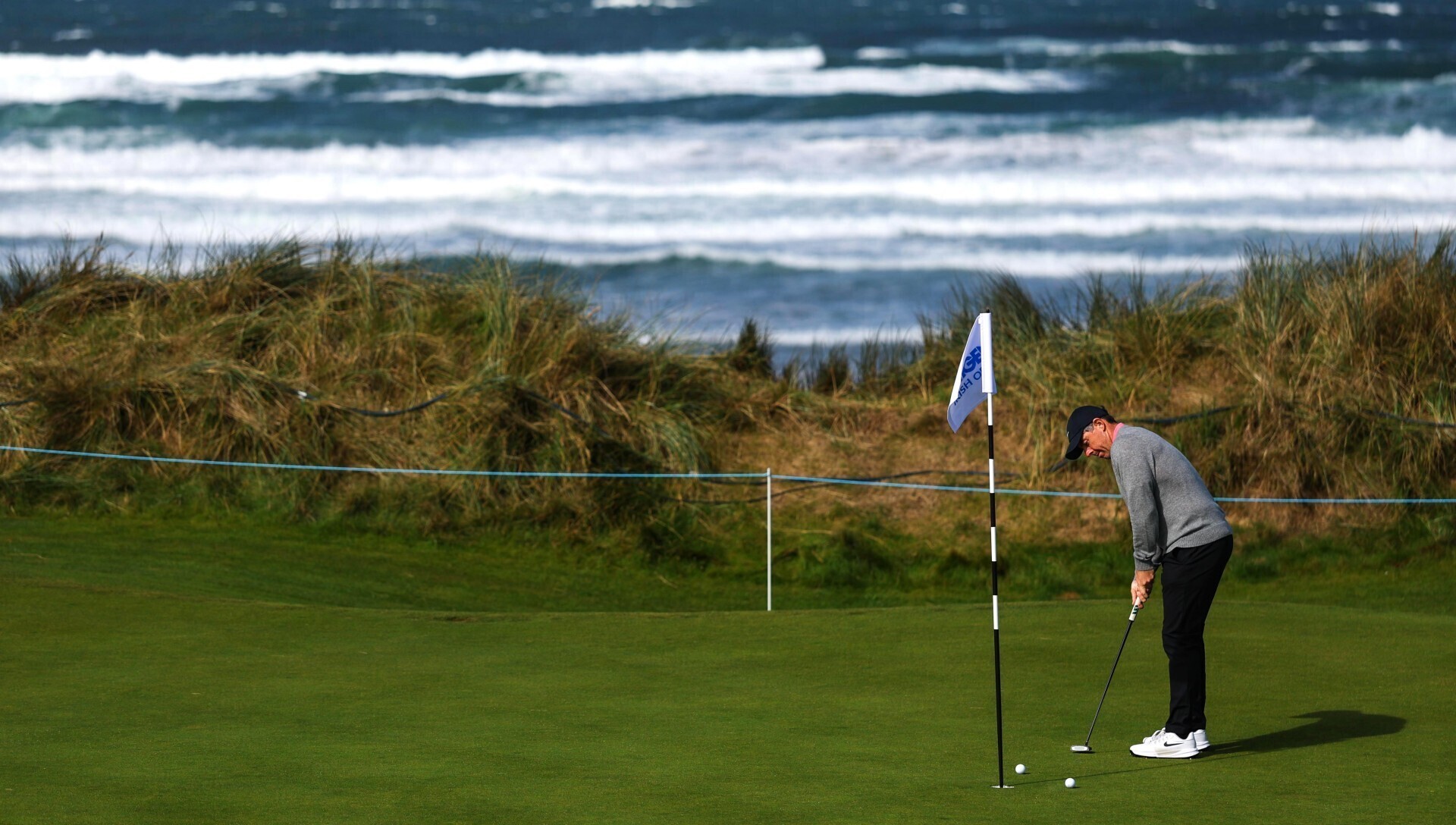
Rory McIlroy practices at the 15th hole ahead of the Irish Open at Doonbeg. Pic: ©INPHO/Ben Brady
It’s the reality of Donald Trump that the presence and the persona tend to act like a black hole, sucking in the environment and the events around him. If that influence is so often malign then the man has at times obscured even the good news stories that orbit him.
His purchase of Doonbeg Golf Club and resort 12 years ago came at a time when the business was in receivership, but it was a deal sidetracked by the furore of his arrival in Shannon when then finance minister Michael Noonan awaited him on the tarmac.
Trump wasn’t yet a US president, remember.
Skip forward to the here and now and his expected arrival, possibly mid-round in his Marine One chopper, at what is now Trump International Golf Links and Hotel for the closing stretch of the Irish Open will put talk of any actual golf firmly in the shade.
That’s a pity given the class of the field assembled and the quality of a links course that, it has to be said, has benefited from the almost constant and nips and tucks undertaken since 2014.
Martin Hawtree, the renowned golf architect who was key to the design of Trump International Golf Links in Scotland, was brought in shortly after the purchase of its sister course in Co. Clare. So were Esie O’Mahony and Jamie O’Reilly of GolfLink.
What the pros play here and now will be markedly different to the track that Greg Norman, who designed the original, and Padraig Harrington christened when they marked the 2002 opening with a matchplay contest.
“It was different back then,” says club head pro Brian Shaw. “I have been here from day one and the golf course was quite penal back in those days. It has evolved. Weather-wise we have had our issues with storms and things like that so we have had to bring in some protection and shape the holes a little differently.
“Again, with Martin Hawtree, his philosophy was very much being able to play the ball along the ground. Initially, with Greg, it was a bit more target golf, like a modern links, and Martin brought it back to before, trying to get the ball along the ground and giving you different ways to play the game.
“Little swales and things around the green like that was his forte. So I think it is a different skill that is needed here, definitely around the greens and how you pitch balls and stuff like that. So it will be fascinating to see – and hopefully we will get wind – the tour players trying to adapt here.“It is quite unique. It’s the skill levels around the greens.”
The rate of change has escalated in the last 12 months.
Paul Gillmon, the DP World Tour’s Irish Open director, and Miguel Viador, the tour’s senior tournament director, have both been to the course throughout that time with the rest of their team to fine tune things, and there was a stroke of luck to the preparations too.
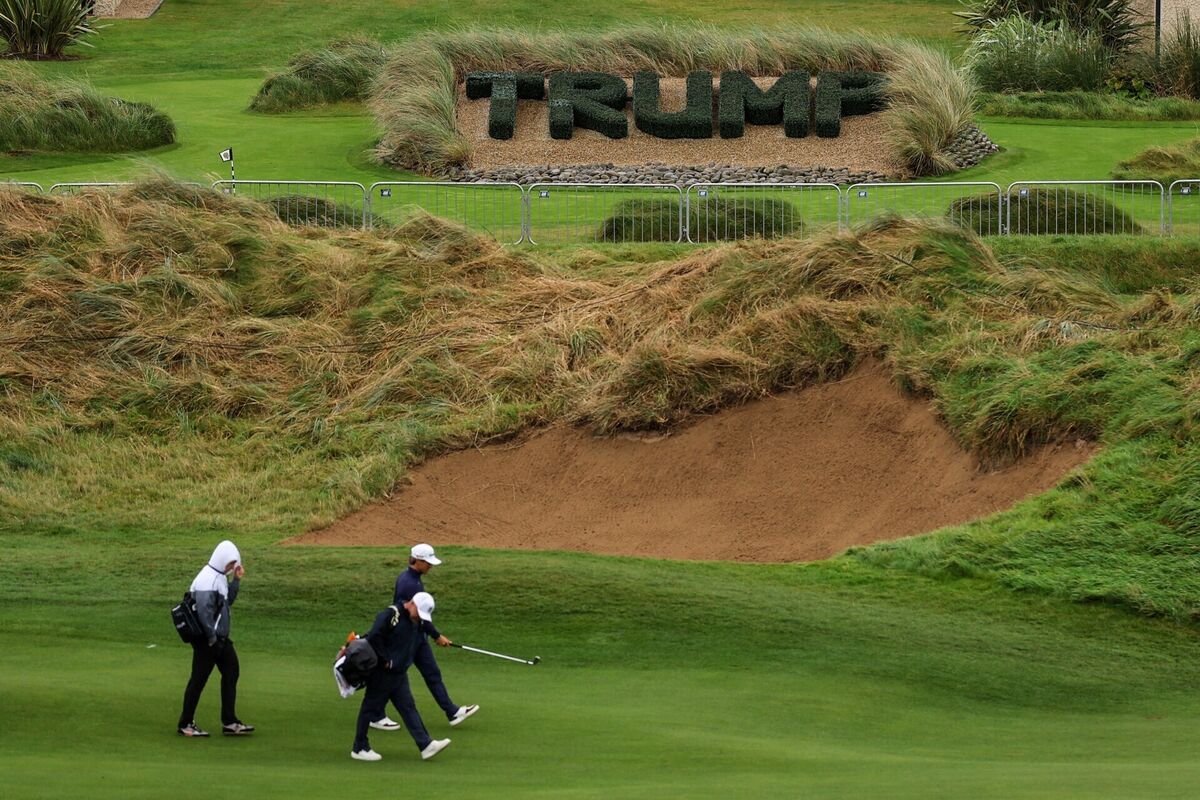
GolfLink had just finished a project on Birkdale for this year’s staging of The Open and had yet to start another, on Brittas Bay. That left a window open for O’Reilly and his team to lend their weight here with some work days stretching to 20 hours.
“Jamie O'Reilly's just gifted, absolutely gifted,” says Shaw. “That was just such a blessing to get him. He'd be considered probably the best shaper in the world, especially when it comes to links golf courses.
“He's the only fellow who has basically touched St Andrews over the last number of years. He’s from Cavan. Fascinating guy. Just has a feel. It's just little pockets that he puts in that kind of catches shadow as well.”
The changes aren’t small, with par for the week reined in from 72 to 70 on a stretch that will come in at about 6,900 yards.
They start at the 1st where the tee boxes have been moved towards the ocean to create a softish dog leg and catch the breathtaking vista of Doughmore Bay. It will play as a par-four, somewhere between 470-480 yards and generally downwind.
That’s one hole reduced from a par-five. The other is the 13th. The 5th, a short enough challenge, has had 30 yards added to it and the fairway brought back. Other tee boxes have been shifted back and enlarged with the 7th being rebuilt entirely.
The bunkers have come in for particular attention, strategically and cosmetically.
Some have been repositioned to roughly 280 yards off the tee – on the 4th, 8th and 12th - to make the players think a little more, but every single one of the 54 sand traps have been rebuilt to make them bigger and bolder, more visible, after growing a tad tired over the years.
“That was a big part of what we wanted to do, was get the visual going,” says Shaw. “It was a real labour of love, and then we came around to No.18, and 18 now is a is going to play as a 460-465 par four right into the prevailing breeze, coming up towards the clubhouse.”
The last is Shaw’s favourite of the 18, but, like the 1st tee, it will be a prime piece of real estate and one that is snapped up early across all four days by the galleries. Where else, then, might your discerning golf fan look to for a day’s viewing?
The course covers a total of 400 acres but links golf and dunes, allied to the long grass and the regular intervals of inclement weather, mean the choice of position for any spectator is every bit as strategic as the shots played inside the ropes.
“Out around 7,” says Shaw. “7 and 6. You're getting ocean. You're getting amazing dune land, and it's just so full of character out there. You'll see it when you get up to the 7th, but that area for me…
“It would be right in the middle of golf course as well. Your vantage points are fabulous there. I think all the par threes as well. The par threes are brilliant. Personally, when I go to watch them play links, par threes are where the skill is.”
CONNECT WITH US TODAY



Be the first to know the latest news and updates