Survey highlights massive resistance to black card in hurling
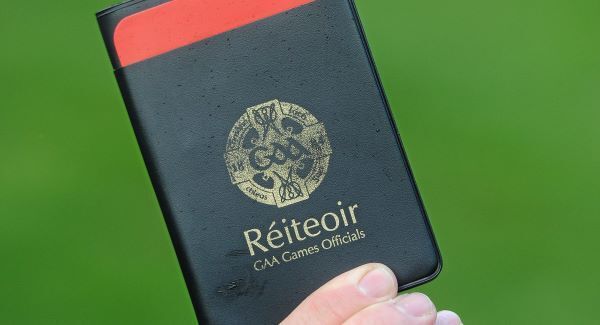
The GAA’s 2020 hurling committee is unlikely to recommend the introduction of the black card after survey results showed overwhelming resistance to the implementation of a third card.

Survey highlights massive resistance to black card in hurling

The 11-person committee convened at Croke Park on Monday night to discuss the results of their 26-question survey, with the hurling public voicing strong opposition to the introduction of the black card, a second referee during games and increasing the number of steps a player in possession is allowed to take, from four to six.

Instituting the five-second advantage rule received considerable backing, with refereeing inconsistencies also highlighted.

The survey was drawn up by Liam Sheedy’s group to gauge wider public opinion as to what alterations are required to enhance the game, but committee member Terence ‘Sambo’ McNaughton yesterday revealed: “People, going by the survey, don’t see a whole pile wrong with hurling and aren’t too keen for change.”

The former Antrim hurler and All Star is pleased at opposition to the black card, believing “there are enough cards in hurling already”.

McNaughton conceded Donal O’Grady’s tackle on Richie Power at the end of Sunday’s semi-final was the perfect example of cynical fouling, but insists there are alternative methods to punish professional fouls, expressing frustration at the recent rule change concerning 20m frees and penalties.

“There was no interest in the black card. There are enough cards out there without bringing in a third. Donal O’Grady’s foul on Richie Power may have been a cynical foul, but then reward the upended Kilkenny player by having only two players on the line for the resulting free.

“Personally, I don’t agree with the new ruling on 20m frees and penalties. It hands advantage back to the defending team. I would call for just two players to be allowed on the line when a 20m free or penalty is awarded.

“Do you think Donal O’Grady would have hauled down Richie Power if he knew only two men would have been allowed on the line for the resulting free? In this instance the advantage swung to Limerick, when that should not be the case.

“That rule change came in the middle of the survey so we were not in a position to gauge people’s view on it the way we’d have liked. This committee is a voice for the people so of course we will discuss the rule.”

He added: “There was strong opposition to increasing the number of steps you can take when you have the ball. At present four steps is the rule, but nine times out of 10, players are getting away with six. You increase that to six and they will get away with eight. That would cause chaos. There is no need to regulate for six steps.”

All-Ireland winning manager Davy Fitzgerald earlier this year called for a second referee inside the whitewash to police off-the-ball incidents, an issue that will not feature on the committee’s agenda moving forward.

“There was little interest here. It simply wouldn’t work at club level and if you were going to bring it in, you would have to do so across the board. You couldn’t have two referees at inter-county level and then only one at club level. That wouldn’t work. There aren’t the referees out there to make this a reality at club level.

“Those who completed the survey did highlight the inconsistency of officiating. You watch inter-county games on television and then you attend a local club game and it is like watching a different sport. The refereeing at local level can be poor and that is not fair on club hurlers. The game is constantly evolving and referees must keep pace.”

The 2020 committee will meet regularly over the coming months to analyse further the survey results, with a view to tabling motions to the 2015 Congress. One of the motions is likely to call for the regulation of the five-second advantage rule.

“Now it is not in the rulebook but the advantage rule is employed by a lot of referees at inter-county level. People want open, free-flowing games. The advantage rule allows that. Sunday’s semi was a prime example. The number of frees was very low.

“I don’t want to drive from Cushendall to Croke Park to watch a game filled with rucks. I want to see games similar to last year’s All-Ireland finals, open, attractive hurling. The advantage rule encourages such hurling.”

More in this section

Cookie Policy Privacy Policy Brand Safety FAQ Help Contact Us Terms and Conditions

© Examiner Echo Group Limited