Tommy Martin: From Keegan to Bezos, Liverpool carve-up a deal too far
Liverpool’s owners have given another example of how far the game has travelled from working class opera to tradable commodity.
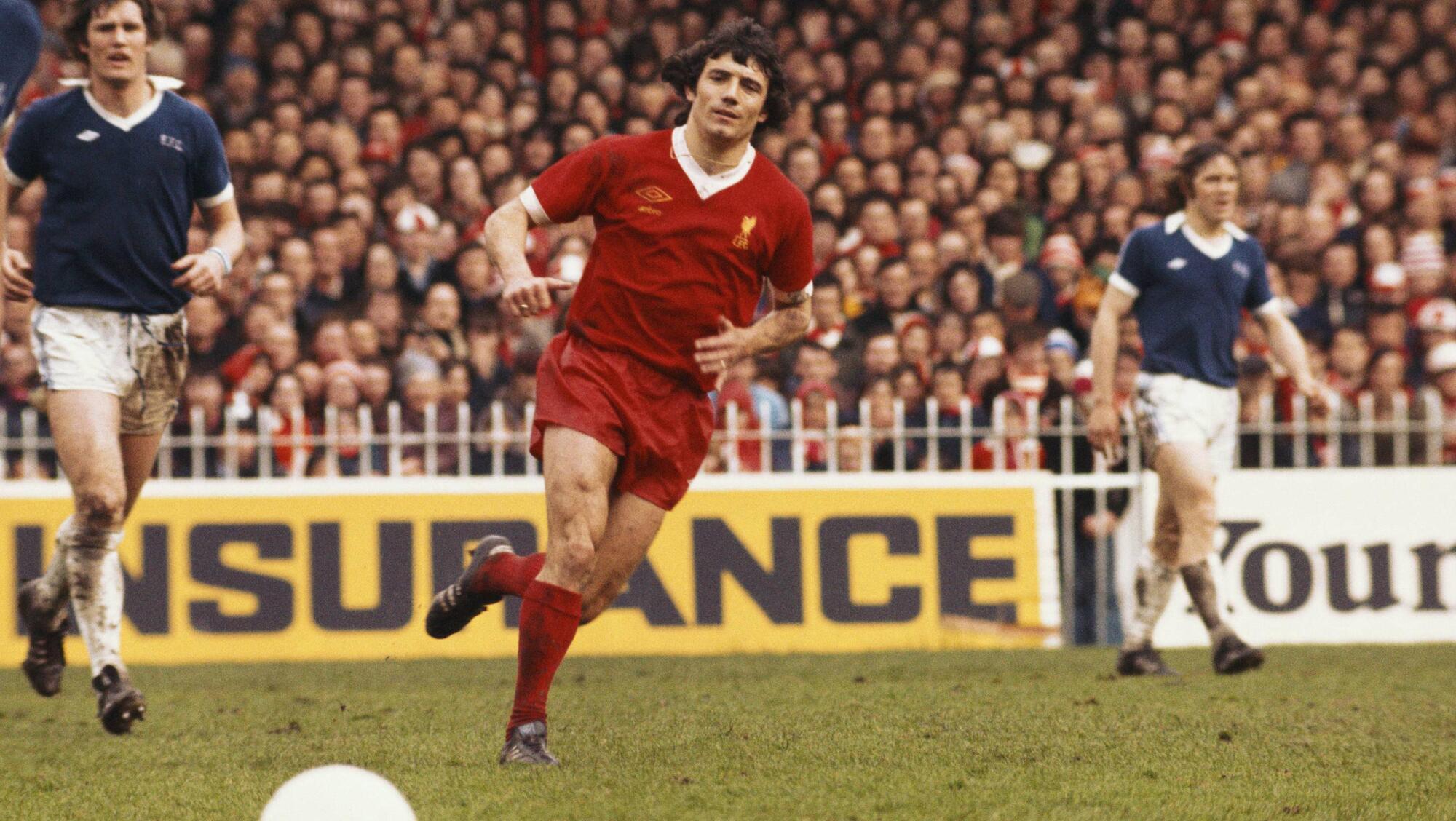
KING KEVIN: Liverpool's Kevin Keegan in action as Everton defenders Mike Lyons (l) and Mike Pejic look on during the 1977 FA Cup semi final match at Maine Road. Photo by Tony Duffy/Allsport/Getty Images)

KING KEVIN: Liverpool's Kevin Keegan in action as Everton defenders Mike Lyons (l) and Mike Pejic look on during the 1977 FA Cup semi final match at Maine Road. Photo by Tony Duffy/Allsport/Getty Images)

If anything could plunge you headfirst back into club football and all its works and pomps after the extended World Cup break, it’s the news that Jeff Bezos is being lined up to take a slice of Liverpool FC.

The very sound of it is enough to make you feel in need of a good scrub. Bezos, the quintessential dastardly modern tech billionaire baddy and Liverpool, the venerable football institution in a traditionally socialist city, albeit an institution long carved up and sold off in parcels to various funds and financial vehicles. Welcome back to the beautiful game, club version.

Not that the World Cup was an oasis of virtue. Anything that Trump adjacent is bound to stink, and you had the business with the ticket prices and the hydration breaks and the stupid half-time show and all the rest of it. But on the flipside, there were enough crying Cape Verdeans, rowing Norwegians, carousing Scotsmen and Argentine madmen to cut through and remind you of international football’s untouchable fundamentals.

But barely had Rodri hoisted the golden trophy and Lionel Scaloni’s mongrels been carted off to the New York City pound than you were brought back to the essentially transactional nature of the sport’s day-to-day affairs.

And yes, it is naïve to think of Liverpool as some sort of shining city on a hill when they are currently hawking themselves around the USA on a preseason earner. They sat fifth in the most recent Deloitte Football Money League in terms of revenues generated, bringing in €836.1 million last count, which they hardly achieved by selling pies and Bovril. And yet, the thought of the Shankly Gates being in the hands of world’s fourth richest man, whose most recent contribution to humanity was sending his wife and her celebrity mates into space in his rocket, still feels a bit ick.

Granted the Bezos headline only reflects a possible role in a mooted consortium that may take a minority stake in the club off the hands of its current owners, Fenway Sports Group. Bezos-to-Anfield may be no more genuine a transfer story than that time on April 1st 1989 when Shoot magazine reported that Ian Rush was signing for Everton.

But, in playing footsie, even indirectly, with the ultimate billionaire plutocrat, Liverpool’s owners have given another example of how far the game has travelled from its status as the working class opera to becoming a tradable commodity for the venture capitalist classes. 

The consortium in question is led by Amit Bhatia, son-in-law of Indian steel magnate Lakshmi Mittal, who have reportedly offered FSG £1.35 billion for a 30% stake in the club. FSG already sold off 10% to something called RedBird Capital Partners in 2021 and a reported 4% to investment firm Dynasty Equity in 2023. Jeff, you want a piece too?

Liverpool fans would be right to be alarmed if Bezos got a chunk of the club, given the job that he did with the Washington Post, the last major cultural institution he got his hands on. Earlier this year the Post announced it was laying off a third of its work force, gutting its sports coverage and famed foreign reporting after subscribers left in their droves when Bezos forced the paper to skew rightwards in the name of sucking up to Trump.

Bezos claimed the cuts at the Post were brought on by financial losses, but he could still find some pocket change to bankroll a disastrous documentary about Trump’s wife Melania to the tune of a reported $75 million, including a worldwide theatrical release. We look forward to Steve Nicol: The Movie popping up on Amazon Prime sometime soon.

The link to Bezos comes in the week that brought the sad news of the death of Kevin Keegan, one of the defining figures of late 20th century English football and a man who seemed forever preserved in the boyhood, comic book innocence of that period.

Keegan made his name at Liverpool in the 1970s under the tutelage of Bill Shankly, the legendary managerial firebrand whose rhetoric spoke to his belief in the collective power of the people’s game. “Our football was a form of socialism,” Shankly once said of the team Keegan starred in, making him unlikely to get a Washington Post op-ed were he alive today.

The tributes to Keegan often focused on that unadulterated enthusiasm for the game that drove him to work ferociously to overcome his shortcomings as a young player and inspired a management style which, were he be to operating in today’s game, we might describe as being fuelled by glorious, industrial quantities of vibes.

Thinking of Keegan reminds people of the pure, beautiful thing that the game once seemed to be, before it became a resource to be mined and extracted to increase the portfolio value of various hedge funds. If that ‘thing’ that they want to suck the goodness out of had human form, then it would be Keegan, tearing about in Liverpool red in 1970s Match of the Day footage, leaping into a helicopter to take his leave of St James’s Park as a player, jabbing his finger into the camera in the unhinged “I would love it” madness of the 1995/96 title race.

It seemed that if there was a symbolic opposite to all those who see the game in terms of market share, earning potential and soft power, then Keegan, forever permed and in our hearts, was it.

But Keegan knew about earning potential too. Many of the tributes have also noted how he was ahead of his time in realising the commercial power of his own brand. His mug and signature were omnipresent during his late 1970s and early 1980s playing heyday such were the scale and breadth of his endorsements, most famously bantering with boxing legend Henry Cooper in a 1980 TV ad for Brut aftershave.

He also made skilful use of release clauses, insisting on a £500,000 fee in his Liverpool contract which allowed him to negotiate a better wage deal with Hamburg, with whom he would become the only Englishman to win the Ballon d'Or twice. In his control of his own career destiny and earning power, he represented a staging post between the indentured servitude of previous generations of players and the modern, post-Bosman free marketeers.

When we saw Keegan appearing alongside the Honey Monster in an ad for Sugar Puffs, we didn’t think the game had gone. Who could blame the players and managers for making a few bob off their celebrity, we thought? But while it seems a long way from Kevin Keegan to Jeff Bezos, maybe it was always going that way. During Keegan’s time, Liverpool were controlled by the Moores family, who made most of their money from the Littlewoods mail-order catalogue, a revolutionary retail empire that offered mass distribution of goods direct to customers’ doorsteps. Sound familiar?

The Moores family’s ownership interests in Liverpool and Everton, while allowing them to lord it among the top-hatted magnate classes of the day, were mainly driven by local pride and the desire to protect and nurture a city’s treasured sporting institutions. Under FSG, Liverpool have thrived, winning trophies and redeveloping their stadium and training ground. But Bezos doesn’t strike you as a nurture kind of guy. Popping a chunk of Liverpool into his Amazon shopping basket would be a transaction too far.

More in this section

Sport

Newsletter

Sign up to our daily sports bulletin, delivered straight to your inbox at 5pm. Subscribers also receive an exclusive email from our sports desk editors every Friday evening looking forward to the weekend's sporting action.

Cookie Policy Privacy Policy Brand Safety FAQ Help Contact Us Terms and Conditions

© Examiner Echo Group Limited