Tommy Martin: 'Where we all belong' rings hollow while Gaelic games remain divided
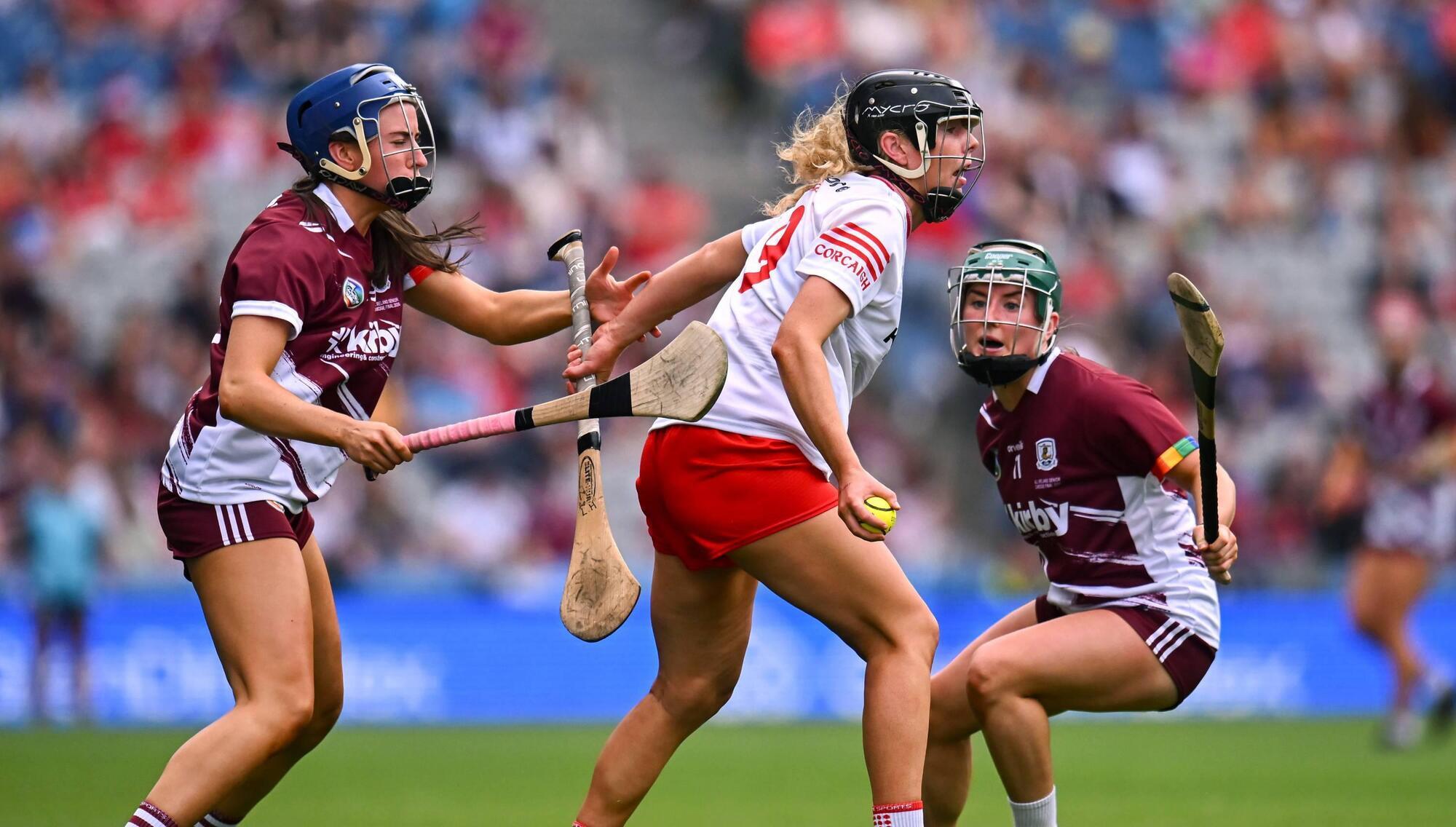
Integration is clearly hard, and when you hear grassroots stores of camogie and LGFA scheduling matches and training against each other, you get a small sense of the territorial conflicts at play. Pic: Piaras Ó Mídheach/Sportsfile

It can’t be a coincidence that the GAA have pushed out the timelines for the integration of their association with their camogie and ladies’ football equivalents on the same week that a top researcher at Anthropic claimed there is a greater than 10% chance that AI could kill all humans within the next decade.
The wiping out of humanity would be unfortunate, but it would resolve at a stroke all the issues reportedly holding back the uniting of the three Gaelic games codes into one. Human extinction would also see a welcome easing of the demands on GAA pitches, though would do little to reverse the negative impacts of rural depopulation.
Every cloud, etc.
Some in the GAA might have yearned for the sweet relief of obliteration by a robot master race when former President Mary McAleese unleashed her blistering attack on the association’s plodding approach to amalgamation with the Camogie Association and the LGFA.
Resigning from her position as chair of the integration committee, McAleese slammed GAA top brass for blocking the process and lacking any vision or desire to see it through. She claimed the GAA’s commitment to integration had “evaporated” and even accused Croke Park of misogyny, claiming “that there are people who are not entirely happy about the idea of including women in decision-making at the top level of Gaelic sports.”
Read More
The contemporary Irish author Seamus O’Reilly came to prominence a few years back on Twitter when he told a story about working as a waiter at a function in which Mary McAleese was the guest of honour while off his head on ketamine. GAA leadership must have felt like they were suffering a similar grotesque psychotropic trip with the ex-Prez as McAleese rained down the bad vibes on the national airwaves.
Naturally, McAleese’s esteem, combined with the chance to give the GAA a bit of a kicking, saw the story dominate the agenda, even as news of the possible demise of our species emerged. Throw in the spicy sauce of culture war and here was a prominence being afforded the gnarled process of integrating three sporting organisations that it had hitherto not enjoyed.
In fact, many people might have been entirely oblivious to the existence of that process until McAleese’s bombshell. Some people, in fact, might have been oblivious to the fact the national games were divided into these bizarre, gendered constituencies at all, presuming that in the land of Gaelic milk and honey, all was unified and righteous in pursuit of the pride of the parish. The GAA’s current brand slogan is, after all, “Where we all belong.”
Perhaps this was McAleese’s gambit. Having thrown her hands in the air at being faced with handwringing and death-by-spreadsheet in her attempts to drive integration through, maybe she decided to go out with a bang to draw attention to the cause, like some democracy protester in a repressive regime dousing themselves with petrol and lighting a match.
Job done on that front, because the impact was to range the supporters of aggressive integration on one side and those who defended the GAA’s caution in the face of the labyrinthine governance and financial implications on the other.
On the face of it, this is a row about timelines, with McAleese championing the steering committee’s commitment to unifying the three tribes completely by 2027. Within the GAA, though, there had been a collective ‘haul yer horses’ on this in recent times, which came to a head this week when McAleese exited stage left after a verbal bloodbath of Tarantino-esque proportions.
There’s no doubt McAleese laid it on thick. Accusing GAA officials of high-level misogyny is strong stuff, particularly for an organisation that has nine women on its 19-person management committee (admittedly prerequisite for government funding these days). And tarring any genuinely held on-the-ground practical difficulties with the brush of the patriarchy protecting its territory seems unfair too.
But the GAA wasn’t wholly convincing in its defensive stance. Director General Tom Ryan refuted McAleese’s claim that the association was no longer committed to integration but said that issues around the future organisational structures had not yet been satisfied to the point where a unification proposal could be put to a special congress and have a chance of passing.
Seems fair enough, but then GAA president Jarlath Burns claimed it was all about the money, money, money. If the women want equality, Burns claimed, then that would see the annual bill for preparing intercounty teams double from the current eye-watering sum of €45m to €90m. And that’s a lot of golf classics and bake sales.
Burns’ “gotcha” moment seems disingenuous, however. It’s hard to believe that integration would be scuppered because camogie players and female footballers would immediately demand every cent the men spend on all manner of mind gurus, plyometric boffins and training jolly-ups to Quinta Da Lago. Indeed, the GPA came out with a figure closer to €11m to fund an acceptable initial level of integration at intercounty level.
Not nothing, but seemingly achievable given the profoundly societally important achievement that full integration would represent. Integration is clearly hard, and when you hear grassroots stores of camogie and LGFA scheduling matches and training against each other, you get a small sense of the territorial conflicts at play.
But the sense this week is of one side who feel the tough decisions and hard yards towards integration would be worth it and another side that don’t feel the juice is worth the squeeze, at least in the short term. And that does feel like fundamental difference in understanding about what equality means.
The incoming GAA president, Derek Kent, is an open advocate of slowed down integration and has said that he believes the GAA’s 150th anniversary celebrations could be a suitable date get the job done by. The three associations voted to unify in 2022. As a comparison, it took NASA seven years to put a man on the moon after President John F Kennedy told them to get cracking in 1962. Is pulling three sporting organisations together that much harder?
If Mary McAleese achieved anything this week, it was to show people embroiled in the administrative jujitsu how ridiculous all of this looks to those on the outside. The very existence of camogie and “Ladies’” football is a relic of a time in Irish life from which we have long moved on and the fact that some of us have to join separate associations just because of our birth chromosomes just seems plain silly and fundamentally wrong when you take a step back from it.
It’s why the One Club model – used by almost 800 clubs nationwide – has worked so seamlessly for most people. My daughter plays for the same club as my son, with the same access to games and pitches. We pay membership fees via the same online link, from which the money presumably gets siphoned off into its relevant administrative holes thanks to some Collison brothers-type fintech wizardry that makes the whole thing seem frictionless to us. If you ask her what she does on a Monday night, she’ll say she goes to GAA. It’s just the way it is.
She’s not that interested in sports administration right now but I really don’t want to have to tell her at some point that she’s not part of the GAA at all, because at one stage in history hurling and football were considered unladylike so her kind were not allowed in and had to set up their own sports and that yes, despite that fact we are heading for the fourth decade of the 21st century and she can do any job or achieve anything she wants, that’s still kinda the case.
Of course, by then maybe the killer robots might have come to integrate us once and for all.