Jack Anderson: We cannot allow tradition to get in the way of improvement
This year should be a warning for hurling. 
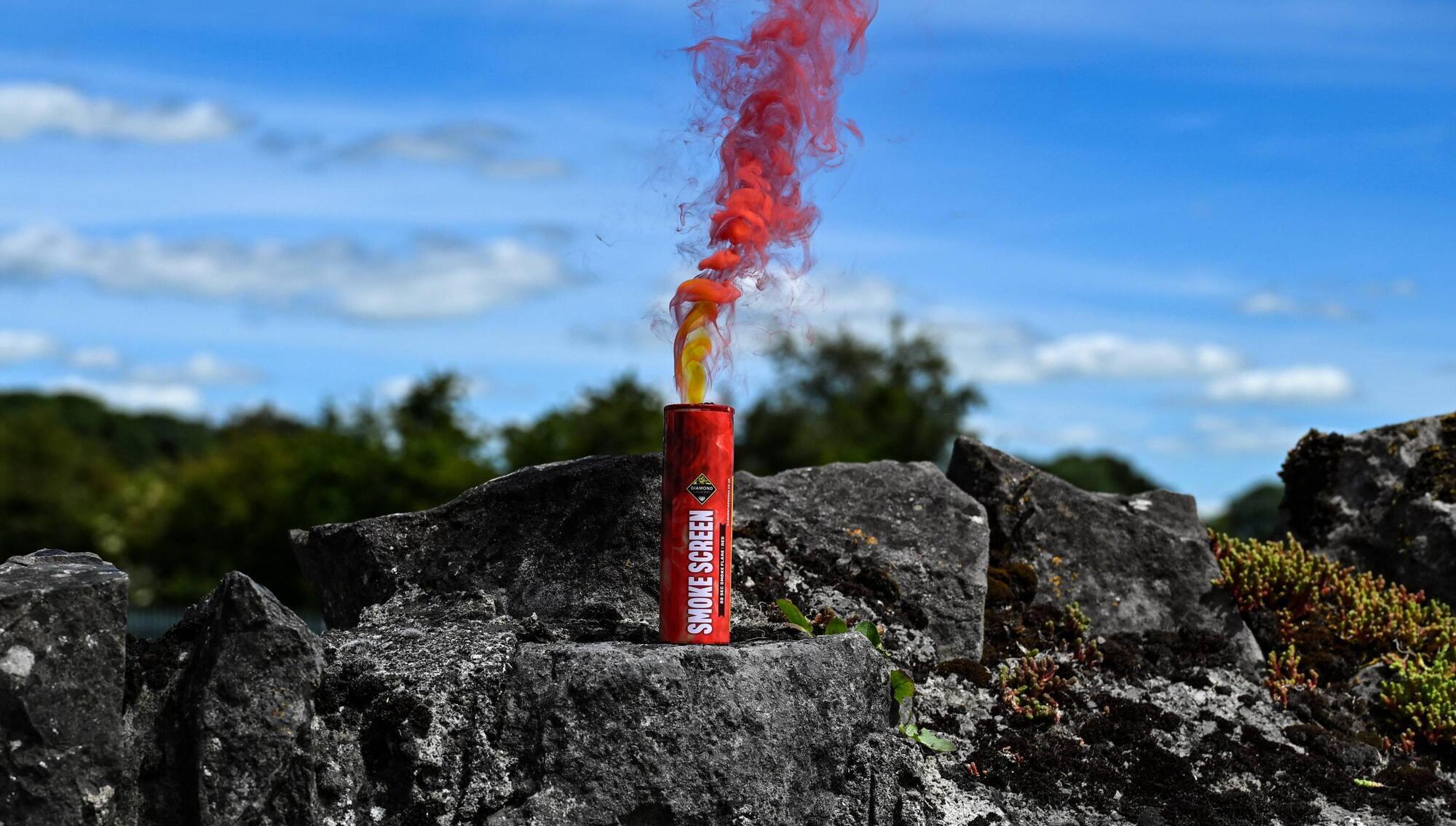
RED ALERT? A pyrotechnic flare before the All-Ireland SHC quarter-final between Cork and Offaly. Pic: Paul Phelan/Sportsfile

RED ALERT? A pyrotechnic flare before the All-Ireland SHC quarter-final between Cork and Offaly. Pic: Paul Phelan/Sportsfile

Vladimir Ilyich Ulyanov, otherwise known as Lenin, once said that during a revolution millions learn more in a week than they do in a year of ordinary, somnolent life. It’s not known what Lenin’s views were on the GAA but there is no doubt that the championship year in Gaelic football has been anything but ordinary. It’s been magnificent with the promise of more.

Semi-finals featuring Kerry v Dublin, 50 years after one of the great All-Ireland final battles. Louth v Mayo in only their third championship meeting. They first met in an All-Ireland semi in 1950 when Mayo were on their way to the first of a two in a row. Famously, Mayo has none since. Louth are one and done since 1957.


All Ireland semi-final weekend will be expectant and epic.

There are lots of reasons why the football championship has been so good. An evening out in three of the four provinces is one. Another is the presence of possibly the greatest player ever in David Clifford – if he keeps it up, the years in Kerry football will have to be known as BDC and ADC. We’ve had the inevitable disciplinary saga – earpiecegate – involving Dublin’s Ger Brennan. The men of Wicklow marching into the Tailteann Cup. Stories everywhere.

And give the “suits” in Croke Park, especially the CCCC, due credit. Scheduling games at good times – let’s leave the GAA+ debate for now – in packed provincial grounds has been a great spectacle and given something back to the towns where football’s heart beats strongest.

Last weekend’s quarter final between Louth and Monaghan was the season in a microcosm. The smallest county versus a county with one of the smallest populations. Here in Australia, I support (barrack for, in the local vernacular) Carlton in the AFL. When first deported here, Ciaran Byrne was on the books at Carlton. His career in Oz was blighted by injury but his cameo for Louth at the weekend – his fielding, his athleticism and his shooting – showed why many AFL clubs had been interested in him. With the best will in the world to Carlton, there’s little doubt that scoring for Louth in Croke Park on Sunday meant more to him than any mark at the MCG.

But the main reason football has been so good this year is that it has undergone a Lenin-like revolution. 2026 is the 140th senior men’s Gaelic football championship. For the first 115 or so, the format hardly changed – knockout, provincial winners meeting in rotation in the All-Ireland semi-finals. Twenty-five years ago, the “back door” was introduced, and the format has been tinkered with since; World Cup-like group stages (where it was harder to get knocked out than it was to stay in), to the current iteration.

But the real momentum came with Jim Gavin’s committee and the various rule changes. The hand the ball back and 50m penalty rules borrowed from AFL. The “tap and go” rule borrowed from hockey. The 3-up rule borrowed from netball and so on. Those awful, somnolent (yes, that word again) passages of play where the goalie would dribble a ball out to the corner back who would fist it back to the goalie who would transfer it to the other corner back, as the opposition turned their backs and retreated to their trenches behind their own 45. When even on the TV you could hear the bored, distracted hum of the crowd. All gone, for now.

Of course there are things that could still be improved. The provincials are like a vintage car: nice to look at; nostalgic; will occasionally give you a good trip on a sunny day but their day is gone. Better the provincials as a pre-season, feeding into the league, where finishing places help determine the seeding for the opening rounds of championship.

On the field, there is still quite a bit of slow, deliberate play when the defending team drops to just outside the 2-point arc and the attacking team meanders across the space between halfway and the opposition’s 45m line awaiting a gap. Maybe borrow from basketball and have a backcourt rule that once you cross the halfway you can’t go back.

Otherwise, the changes have been great. Watching some teams attack relentlessly, it reminds you of the quote by a French general on the Charge of the Light Brigade - it is magnificent, but it is not war: it is madness. The irony is that the most logical, organised coach in Gaelic football history, Jim Gavin, helped reintroduce the sport to its elemental madness and unpredictability.

For the past few years, GAA championship thrills were largely confined to hurling. This year not so much, and the hurling fraternity (as it is prone to do) has fallen into a bit of a funk and a sulk. One of the things you often hear in the GAA – and this was the case a few years back when Dublin dominated football and Kilkenny in hurling – is that there is no need to worry, as these things go in cycles.

The issue for hurling is that the most dangerous cycle is the one downhill. The sporting environment today is super competitive (for players, for eyeballs, for sponsors etc). And once a sport moves off-Broadway it is hard to get back centre stage. Hopefully, the hurling semi-finals this weekend will sparkle but hurling doesn’t always help itself either. The lack of cooperation from teams with the media this week – the build-up has been non-existent really – is self-defeating.

Flicking between channels last Sunday, I happened upon the Irish Derby; though better than last year, attendance still looked sparse and the Curragh windswept. Same with the Epsom Derby a few weekends ago. One of the things that was striking about the recent documentary on RTÉ about the kidnapping of Shergar was the image of him winning the 1981 Derby by 10 lengths. Watch it on YouTube: the crowds at the start; the crowds as the horses make their way up the hill; the crowds at Tattenham corner and all the way up the straight. Watch the 2026 edition and you mainly see grass on both sides of the rails.

It shouldn’t of course be all doom and gloom for hurling, but this year should be a warning. When Shergar won in 1981, Offaly and Galway competed in that year’s All-Ireland hurling final in a relatively competitive championship. Is today’s hurling championship any more competitive? Has hurling spread any more since? Not really, if we are to be honest. When Jarlath Byrnes said recently that it would take two decades for some counties to compete at the highest level, was that just putting hurling in the too hard basket?

And yes, you can fool around with championship structures and rule changes - moving the provincials to later in the year, limiting the hand pass etc, etc but what hurling really needs is its own Jim Gavin, to strategise and secure its future and yes, to Lenin-like intimidate or flatter Congress a little to effect the change needed. How about the equivalent of what they have in US college sports (Title IX) and link central funding of counties to a commitment to provide equal opportunity for all codes?

Hurling can’t always be left to rely on tradition; or as Lenin said, sometimes history needs a push.

More in this section

Sport

Newsletter

Sign up to our daily sports bulletin, delivered straight to your inbox at 5pm. Subscribers also receive an exclusive email from our sports desk editors every Friday evening looking forward to the weekend's sporting action.

Cookie Policy Privacy Policy Brand Safety FAQ Help Contact Us Terms and Conditions

© Examiner Echo Group Limited