Éamon O'Shea: Corkeconomics will not be around forever to save hurling
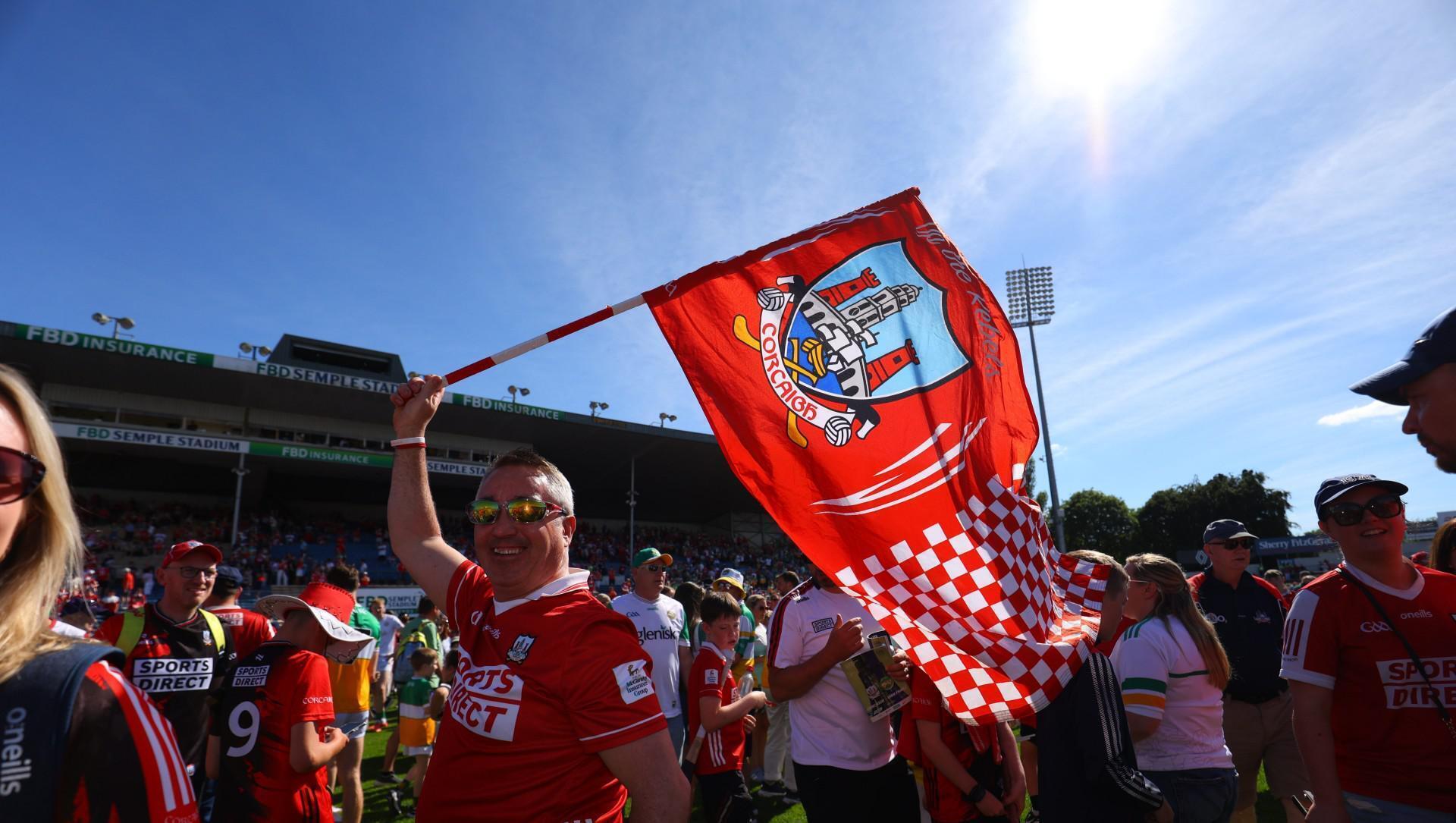
REBELS EVERYWHERE: A Cork fan after the game against Offaly. Pic: ©INPHO/Tom O'Hanlon.
The Summer Solstice is upon us and the long walk to winter has begun. Tipperary are out of the hurling championship. So too are Dublin, Offaly, Waterford, Kilkenny, Wexford and Kildare. Two more will be gone soon. The Joe McDonagh ended weeks ago. And everyone is talking about the football. But as Harry Nilsson sang ‘I can’t hear a word they’re saying, only the echoes of my mind’.
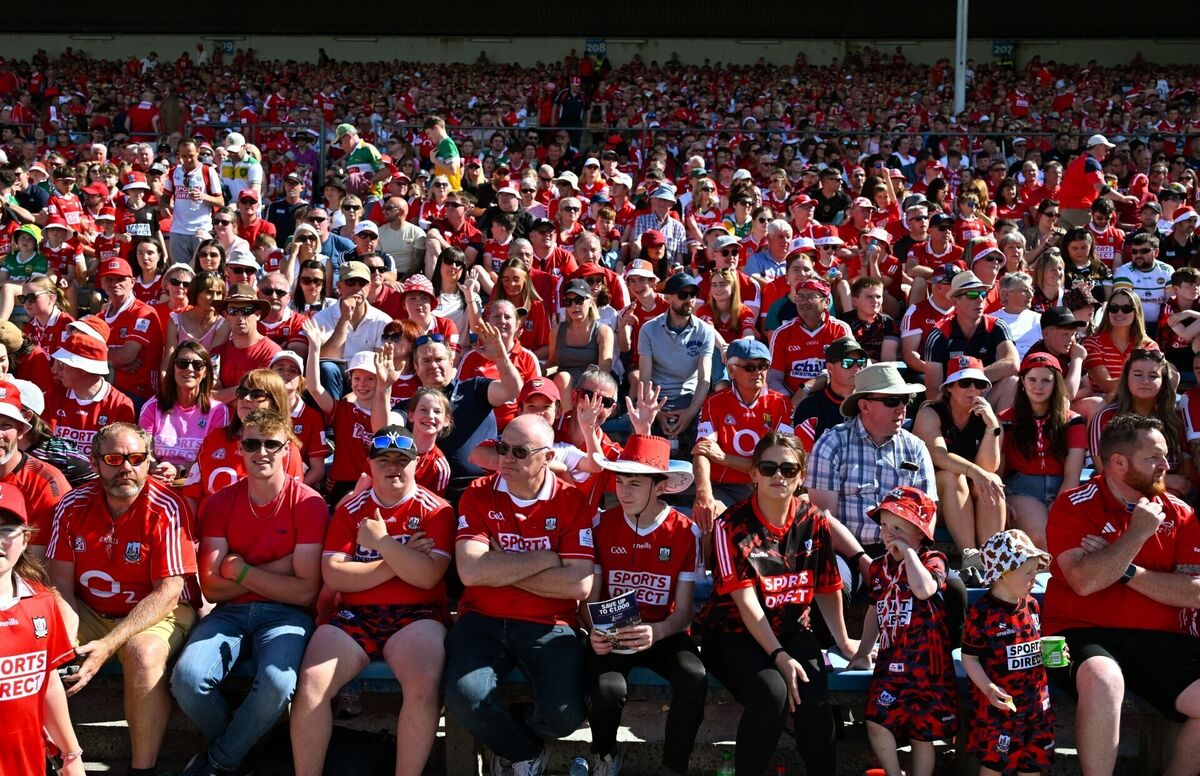
Soon hurling fandom will be fully owned by Cork, but I suppose so long as their supporters keep filling stadiums that’s ok. When I tire of the World Cup, I can head over to the Sunday Game to watch the two pointer chess games that are all the rage these days.
I was thinking about this as I was cycling through the Burren enjoying the last of the summer wine. Long cycle uphill to the Burren Perfumery near Carron, the birthplace of Michel Cusack, and a brief stop there to recover over an outrageously gorgeous, but over-priced, carrot cake. I had started early to be back home for the Cork Offaly match on TV, but my heart was low from early morning, too few hurling games left. The carrot cake was a welcome diversion.
Time to get going again. My spirits immediately lift as I breathe in the purified air coming in over the Atlantic. The colours of summer, the limestone pavement stones, the undulating turlough-laden landscape, the sea all hazy and mysterious in the distance. Sometimes you are indistinguishable in that landscape – a mere speck; sometimes you are looking in from the outside - a mere spectator. Mostly you are just there, as significant or insignificant as the beautiful four-petalled, yellow bloomed, Tormentil wildflower plant that permeates the creviced Burren landscape.
Read More
The Burren may have had a harsh and turbulent beginning, but it is a magical world of smells, sights and whispers. The silence provides refuge from the babbling of the outside world. A time to collect thoughts and drain the sludge from minds and hearts.
And as I descend towards Kinvara through the small hamlets of the Burren I take a short detour to visit the beautifully located hurling pitch in Tubber for a water-break. But perversely, as I rest, my mind begins to reflect on the potential demise of the game nationally.
For sure there are signs of progress. Kildare being the case in point this year. But it is a fair question to ask if hurling is sustainable in the long run? I am not talking about this year, or the next, or the next ten years, but in the decades to come. Are we in the downhill phase of the long decline? Corkeconomics will not be around to save the game forever.
I do not have the answers to this conundrum and maybe I am being too pessimistic. But if 13,000 in Thurles for an All-Ireland quarter final between the second team in Leinster and the third team in Munster isn’t some sort of cry for help then I do not know what is.
So, what should be the strategy to stabilise hurling, not in the face of competition from other sports, but as a game that is different and culturally significant? The game is, after all a UNESCO protected sport - designated as a key element of Ireland’s living heritage. And, in truth, we do make much of the game, though not so much that enough of us learn to play it.
We bring visiting foreign dignitaries to hurling matches to show off the uniqueness of our culture; we even presented Chinese President Xi Jinping with a specially designed hurl in 2012. But the problem is that the more often you treat the game as some kind of relic, the more likely it is to become one.
The GAA needs to significantly increase funding for the game. Scale matters. The government have recently coughed up an additional €750,000 in 2026 to support hurling in non-traditional areas, but hurling needs boosting in all areas. We have an excellent National Head of Hurling in William Maher and there are good people around that role in various advisory positions. But unfortunately, we have not yet reached the financial tipping point for change and will not do so without further investment.
That said, money alone will not solve hurling’s problem. Power needs to be devolved to the National Head of Hurling and downwards to designated and accountable leaders within counties to manage change, with penalties imposed for non-compliant behaviours and/or perfunctory engagement from county boards.
And, most importantly of all, the strong must help the weak. Solidarity requires more transfer of knowledge and resources from strong hurling counties to those that are struggling. Growth rarely occurs without investment, innovation, knowledge transfer and disruption of some sort; we have the capacity for all four in the hurling world. We can address our problems from within.
Change should also be driven with one eye on demography. We know that our population is growing and where it is likely to occur. Hurling attention and coaching needs to be focused on meeting future demands in urban areas. South Dublin has been particularly successful in promoting hurling and making it visible; hurling is no longer seen as the bogger’s game as it used to be when I lived there 40 years ago.
We need new urban-oriented hurling models for the likes of Galway city, Derry city, Belfast, Athlone, Castlebar and so many more big towns. If you can walk around Goatstown, Dalkey or Rathfarnham nonchalantly affirming your Irish cultural heritage through carrying a hurley it should be possible to do the same in other urban areas.
New ways of teaching the game should be imagined for urban areas, innovative structures and competitions developed, new alliances formed with local schools, coaching support shared across clubs and a public good approach to cultivating the game developed and rewarded centrally. Hurling, as played now, is ripe for rapid diffusion among the young – the game has never been as fast, skilful or safe.
We also need to promote the game through extending the inter-county season a little further into the summer. The arguments for the split season are well rehearsed, and I understand that the club player needs support and protection. But hurling is also the national game; it seeps into the lives of hundreds of thousands of people who do not play it, but for whom the game matters.
Even if you are inclined to dismiss my public good arguments, there are player welfare reasons for extending the inter-county season. You cannot recover, as an amateur player, with just one week break from a serious championship game. Two weeks minimum is needed between championship games; three weeks is optimal. Playing inter-county hurling (and football) in a condensed period is not sustainable athletically, aesthetically or economically.
In the meantime, take a walk or a cycle in the Burren. See, hear and feel the timelessness of it all. Value what is natural and ancient.
Hurling needs to grow, not gradually fade away.
A collection of the latest sports news, reports and analysis from Cork.
CONNECT WITH US TODAY



Be the first to know the latest news and updates