Jack Anderson: Player concussions nothing to snicker about with rugby lawsuits pending
The Geelong controversy shows once again that the law is no way to approach this issue. 
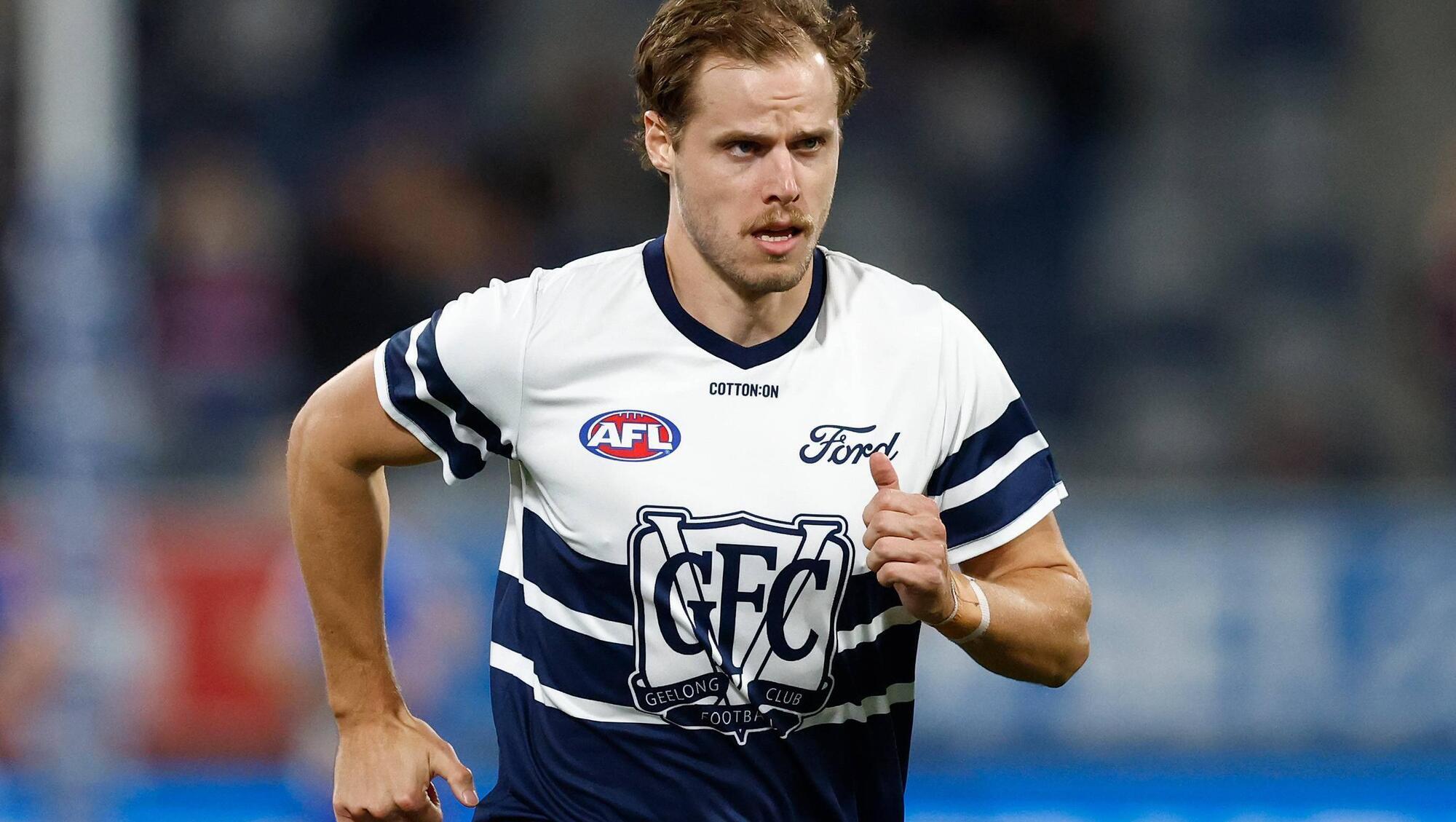
Jake Kolodjashnij, who was offered a renewed contract but with a clause in it that any risk relating to future concussions would lie with him. Pic: Michael Willson/AFL Photos via Getty Images

Jake Kolodjashnij, who was offered a renewed contract but with a clause in it that any risk relating to future concussions would lie with him. Pic: Michael Willson/AFL Photos via Getty Images

There is now easily a 30-year gap between me and the university law students I teach here in Melbourne. I was raised analogue; they are digital natives. I use terms and make cultural references that lead to facial responses that merge bewilderment, stupefaction and, occasionally, pity. It’s called the Gen Z stare.

In a class discussion about the recent governance shenanigans at Fifa, I mentioned in passing that I remembered the 1982 World Cup. Cue a collective and lengthy Gen Z stare. One of the students eventually roused himself and asked, was it played in black and white? Smart alec.


Another sign you were a child of the 1980s is that you remember when it was Marathon not Snickers. One of the most memorable TV commercials of the 1990s promoted that chocolate bar. It was set on an American football field.

The quarterback gets sacked and remains on the ground. A physio arrives, asks the player how he is and where he is. New York and I’m fine, comes the reply. The physio hesitates and asks the player who he is. I am Batman, is the response.

The concussed quarterback is duly benched where he chews on a chocolate bar while asking his teammate (a linebacker with just the right mix of latent hostility and stoicism) if he would like to be Batman’s assistant and fly with him. The linebacker does not envisage playing Robin as a future career path.

The ad gently poked fun at the impact of concussion on American footballers. Head knocks were seen as an occupational hazard but sit on the bench for a while, have something sugary to eat, and Batman or whatever superhero you still think you are, no matter; we’ll need you back on the field soon enough. Why wait, to quote the Snickers commercial’s tagline.

Twenty years after that ad, the NFL signed off on a US$1billion settlement arising from a class action taken by about a third of its then existing cohort of ex-players. The players had sued the NFL on the grounds that it had breached its duty of care towards them by not warning them fully on the dangers of the sport, by actively concealing the chronic neurological risks, and not putting adequate medical protocols in place to ensure that that were taken off the field when concussed and not returned until properly rehabilitated.

A settlement was reached without admission of legal liability by the NFL but with commitments to provide ongoing medical care and costs for past players and investment in better research and return to play protocols. Similar settlements followed in ice hockey and college sports in the US.

One of the reasons the NFL players resorted to litigation was that the insurance and pension provisions allocated by their former employers (the NFL and its clubs) were inadequate in the face of their now complex medical needs. Cumulative concussions while playing led, decades later, to chronological brain trauma in retirement.

A similar class action has been taken by a number of British and Irish players (who mainly played in the immediate era after the game went professional in 1995) against various rugby authorities. The action is taking an age, most recently due to problems associated with the players’ lead solicitor, not them. Like a referee with a scrum that keeps collapsing, the lead judge in the English High Court is getting more impatient with every preliminary hearing.

The case is essentially one of negligence i.e., that clubs did not adequately take medical care of the players and/or the authorities were too slow to adapt the rules of the game to prevent the known and rising incidence of concussive injury in the sport.

There are two huge evidential hurdles for the players to cross. They have to obtain club doctor records and treatment plans from three decades ago and each player that is part of the class action must provide a complete medical assessment of their current condition and needs. The first takes time. The second money.

Here in Melbourne, there is a limited class action involving former players in the AFL which is due to go to trial in mid-2027. It too has been an attritional case for the players to maintain. The AFL’s defence is partially based on consent i.e., that the risks of playing a contact sport were obvious, that the AFL did their best to mitigate the risk, and that, in any event, the players took on that risk.

In the last week the AFL has faced another related concussion controversy. It’s a complex case but in essence it involves a player from Geelong (Jake Kolodjashnij) who has a history of concussion.

The AFL have a medicalised, traffic light-like system for such players. If an independent medical (concussion) panel assesses you as red, you can’t play and if there is a danger of long-term brain trauma, you can be what is called “medically retired” and paid out the remainder of your contract and a lump sum. If you get a green, you can play. If it is amber, the decision is left to the player and the club’s medical staff to decide.

Jake Kolodjashnij, it seems, was assessed as amber. Kolodjashnij, coming to the end of his contract, was anxious to play on but Geelong were unwilling to take the amber risk. In a deal worked out between the club and the player’s representatives, the player was offered a renewed contract but with a clause in it that any risk relating to future concussions would lie with him. Put simply, the club wanted Kolodjashnij to sign a “concussion” waiver before it would re-hire him.

The clause became public (it must have been an awful week for the player to have his private medical history discussed so openly) and started a firestorm that the AFL is yet to control. It doesn’t help the AFL that the lead plaintiff in the class action against it is an ex-player called Max Rooke who played most of his career with Geelong. And that the CEO of Geelong when the clause was drafted, is now head of the AFL Commission.

The issue that most people have with the waiver is that it appears to exploit a player who is desperate to play on and allocates all of the risk onto the player alone. Geelong have also been accused of trying to contract-out of their basic legal obligations to provide their employee with a healthy and safe working environment.

Without getting into the legal weeds, the Geelong controversy shows once again that the law (be it in the form of class actions or overly clever contractual clauses) is no way to approach this issue. A negotiated settlement that provides for past players according to medical needs and commits sports bodies to the highest standards of protection and critical compensation is the preferred (and in both the UK and Australia) most likely outcome.

In 30 years when some of my Gen Z students are in their 50s, it will be their turn to teach law to a young cohort, and when they admit to remembering the era of contact sport and heavy head collisions, the scholars of tomorrow might look on in surprise and ask, by paraphrasing my smart alec student - weren’t the dangers right there in front of you all along; there in black and white?

x

More in this section

Sport

Newsletter

Sign up to our daily sports bulletin, delivered straight to your inbox at 5pm. Subscribers also receive an exclusive email from our sports desk editors every Friday evening looking forward to the weekend's sporting action.

Cookie Policy Privacy Policy Brand Safety FAQ Help Contact Us Terms and Conditions

© Examiner Echo Group Limited