Tommy Martin: Arsenal's end justifies means but is this the beginning?
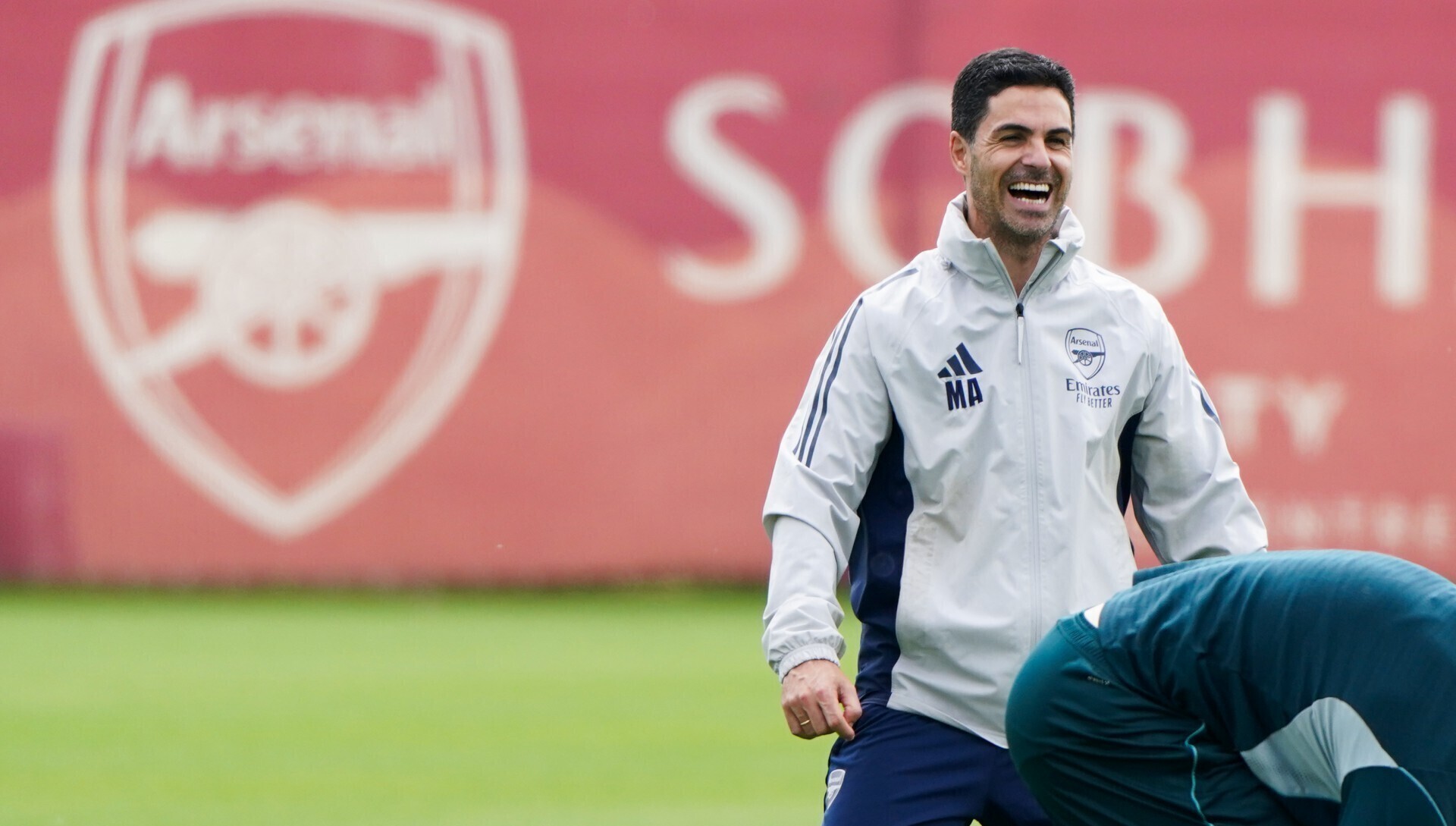
Mikel Arteta is 44 years old, the second youngest manager to win the Premier League after Jose Mourinho. Pic: Gareth Fuller/PA Wire.

They said Arsenal’s title triumph was all about the end justifying the means, but can the end ever have been so much more fun than the means?
A season marked by incessant grumbling about their methods gave way on Tuesday night to an explosion of pure joy, as if Arsenal’s fans said to their team, shattered after 37 games of hard running and corner kick MMA: “Thanks lads, we’ll take it from here.”
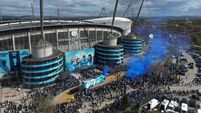
The crowds flocked to the Emirates Stadium even while Bournemouth were still in the process of wrangling Manchester City’s title challenge to the ground, numbering over an estimated 100,000 by the time Pep Guardiola and co ran out of road.
A handy timelapse video released by the club showed how a trickle became a flood after Junior Kroupi put Bournemouth ahead, fans later recounting being drawn to the ground as if by some hypnotic compulsion. They hopped on trains and buses from wherever they were in the Greater London sprawl, others spilled out of nearby apartments and council blocks, that great release of tension kicking off a giant, 22-year delayed party.
Read More
The players, in their regulation training gear and sliders, gathered around a big screen at London Colney training ground, roaring at Bournemouth to see it out. “4-4-2” shouts William Saliba as the Cherries hold the fort against City’s advances, and then it’s all muscular limbs, grappling in joy for once rather than attempting a half nelson on an opposition centre half.
They ended up in a plush London nightclub where apparently Noni Madueke took on MC duties and Mikel Arteta boogied the night away. Later, with dawn approaching and still buzzing, Declan Rice, Eberechi Eze, Bukayo Saka and a few others went back to the Emirates, where dazed fans caught them on camera just wandering around, soaking in the feeling.
Arteta wasn’t with them at the training ground, later revealing with a typical bit of blether that he didn’t feel he could bring the right emotion to the job of watching a match happening several hundred miles away. Instead, he was building a fire in the Arteta family garden, when his eldest son emerged in tears and said “Daddy, we are champions.”
All this is before the gloating and the insufferability really starts, before the video montages get too much and the YouTubers too annoying, when it is possible to forget tribal loyalties, boring football and Arteta’s touchline antics for a bit and just accept Arsenal’s title success for what it is: a beautiful, long-awaited moment for a proper football club with proper everyday people who love it.
Watching their football put you in mind of those Discovery Channel documentaries about building mega-structures, all giant clanking cranes swinging massive girders into place upon vast concrete columns somewhere in the Nanjing province. But in the last few days all that has dissolved and you remember that the whole point of it is giving people a happy moment in a hard world.
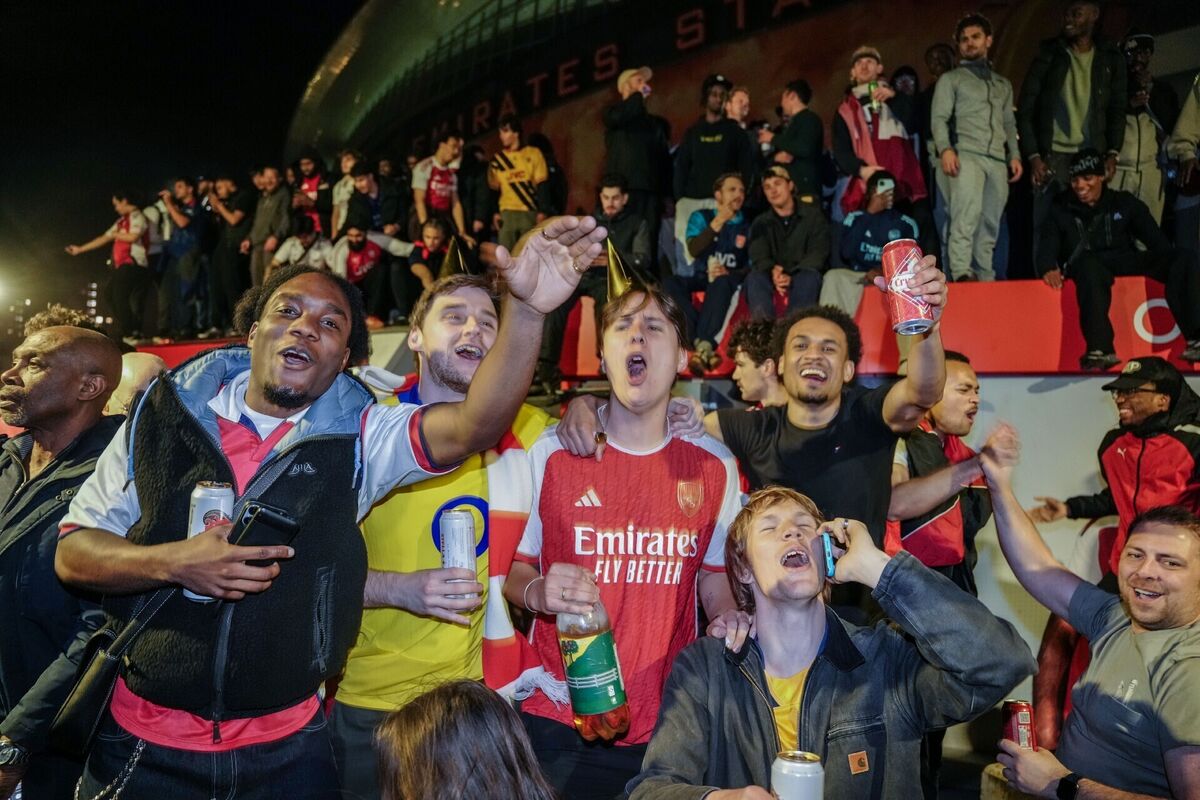
You could even look at the clip of Martin Keown drinking out of the infamous Arsenal bottle on Talksport and say: “Good for you Martin, good for you.” The end justifies the means and the winners write the history and the man whose every utterance about a month ago seemed more bonkers than the last is now the Premier League’s top dog, capo di tutti capi, or, to put it in a way he might prefer, CEO, Founder and Tactical Thought Ninja.
If it only seems like weeks since everyone was laughing at Arteta for his “bring your dinner” exhortation before the defeat to Bournemouth or his madcap “I’m on fire!” press conference ahead of the Champions League tie with Sporting, then that’s because it is. Can it have been so recently that people thought Arsenal and Arteta were going off the rails, ready to be devoured by the big sky-blue Gruffalo emerging from the woods?
We know now that, aside from being told by Eze to chill the hell out a bit, Arteta saw it out by doubling down, the league defeat to Manchester City providing a strange sort of release and allowing Arsenal to focus on what got them there: grinding out wins. They had four clean sheets and three 1-0 victories in their next four league games, the last of them against Burnley on Monday night, won by their 28th set-piece goal of the season and their 18th from a corner.
Arteta, rather than the Lego-headed pranny with the fondness for cringey gimmicks and an annoying habit of pogoing around his technical like a man whose trousers were on fire, was instead the inspirational empire builder; the embodiment of vision, long-term planning and resilience in the face of adversity. He had proven the value of sticking to what you believe in, even if people are pointing at you and laughing and insisting you are a bottler and your trousers are too tight.
What comes next? It is hard to escape the symbolism of Arteta not only besting his master in Pep Guardiola but seeing the great man off the Premier League premises. Winning a Premier League title doesn’t automatically earn you entry into the elite managerial club. A year ago, Arne Slot looked like the reincarnation of Bob Paisley. Now he feels like John Major, whose main triumph came off the fumes of a previous era, with a lack of credible opposition and who ended up undermined by the “bastards” in his own cabinet, or Mo Salah’s Instagram as we call it today.
But Arteta’s triumph and Guardiola’s accompanying departure for another chess-playing, three Michelin star-munching sabbatical throws the Premier League into one of its infrequent hinge points.
If you take the helicopter view and zoom out from all the ephemera, all the Barclaysmen and Jimmy Bullard wagging his finger and Keys and Gray and Stevie G and Kevin Keegan saying I would love it and Jose and Thierry Henry and VAR and ‘dilly-ding, dilly dong’ and pull right out, really the Premier League years can divided into two distinct historical eras, one dominated by Alex Ferguson and the most recent by Guardiola.
That is not to say that Arteta will be the equivalent or that there even will be a comparable figure who defines a huge swathe of whatever comes next in football history by their force of personality and their vision of the game.
But Arteta is 44 years old, the second youngest manager to win the Premier League after Jose Mourinho. He appears to have a singular authority at his club and the support of his superiors like that enjoyed by Ferguson and Guardiola. He has a young team and a strong squad and a position of strength from which to invest.
He has shown himself able to read the runes of where the game is going, riding out in search of set-piece gains, defensive rocks and robust physicality when others were still pressing high and totting up possession stats. As Ferguson was the epitome of 20th century football’s working-class adherence to hard-bitten authority, so Arteta speaks to a highly contemporary managerial sense of the exact point where data meets feeling.
It ain’t pretty but that argument is over. The end justifies the means, but it might be like Churchill said, that this is not the end and not even the beginning of the end, but, perhaps, the end of the beginning.