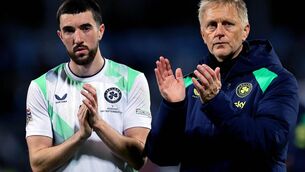
Colin Sheridan: O’Neill and Coleman united by an Irishness football still badly needs
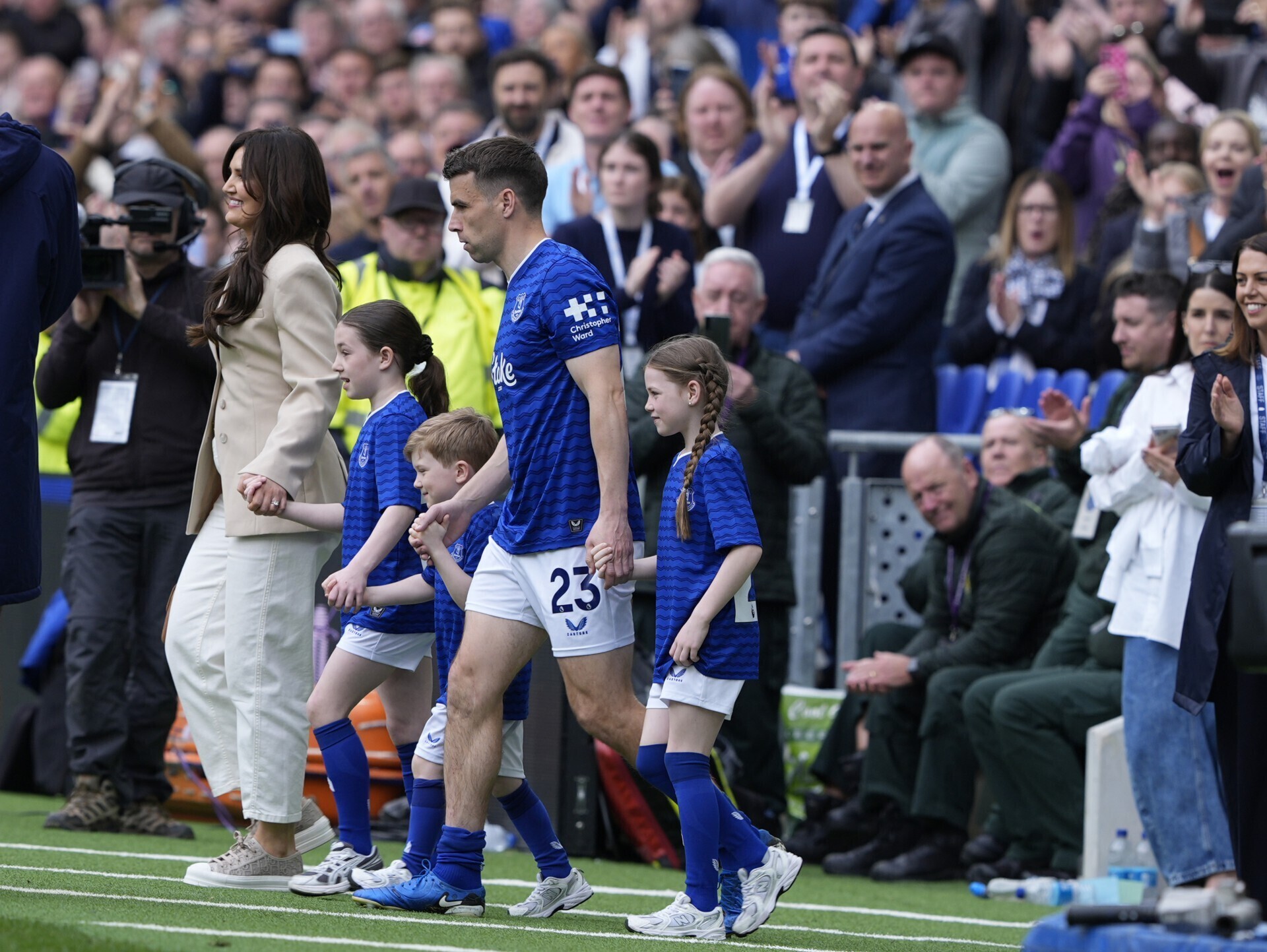
Seamus Coleman with his wife Rachel Cunningham and children on the pitch after his final home game for Everton. Pic: Peter Byrne/PA Wire.

Martin O’Neill and Seamus Coleman are separated by generation, by temperament, and by the shape of their careers. One was fiery, combative, intellectually restless. The other is understated, grounded, almost stubbornly ordinary in how he carries himself. Yet this weekend, as both men again found themselves in the headlines, it felt impossible not to view them as part of the same Irish sporting tradition.
On Saturday, O’Neill, dramatically guided Celtic to arguably the most improbable Scottish Premier League title they’ve ever won. Their rivals Hearts spent 226 days at the top of the league table, Celtic? Just one. Turning to O’Neill to reverse their fortunes seemed desperate because the noise around him in recent years had been less about glory and more about decline. His difficult final years with the Republic of Ireland left behind an uncomfortable narrative: that Martin O’Neill had become a relic. That football had evolved beyond him. That his methods, his confrontational edge, even his personality belonged to another era.
And perhaps that criticism was understandable. His Ireland tenure began with genuine optimism and ended amid exhaustion and drift. The modern game can be ruthless with reputations. It has little patience for yesterday’s ideas.
Yet there is something deeply satisfying about this Celtic revival because it reminds us of what O’Neill has always fundamentally been: an authentic football man.
That phrase is overused in sport, often lazily applied, but in O’Neill’s case it fits perfectly. From humble beginnings in Derry playing Hogan Cup football for St Malachy’s, to becoming a European champion with Nottingham Forest under Brian Clough, O’Neill always felt slightly unusual within British football culture. He possessed an intellect that at times made him appear almost continental in an era when British and Irish football often distrusted intellectualism. He could quote literature as easily as discuss pressing systems. He challenged journalists, players and executives alike. At times, that made him difficult to warm to.
But authenticity rarely arrives polished. What his latest success proves is not merely that he can still coach, but that his instinct for football - for dressing rooms, pressure, momentum and emotion - remains elite. The Scottish league may not be the pinnacle of the modern game, but football history is littered with supposedly outdated men who suddenly become relevant again because the core truths of leadership never really disappear.
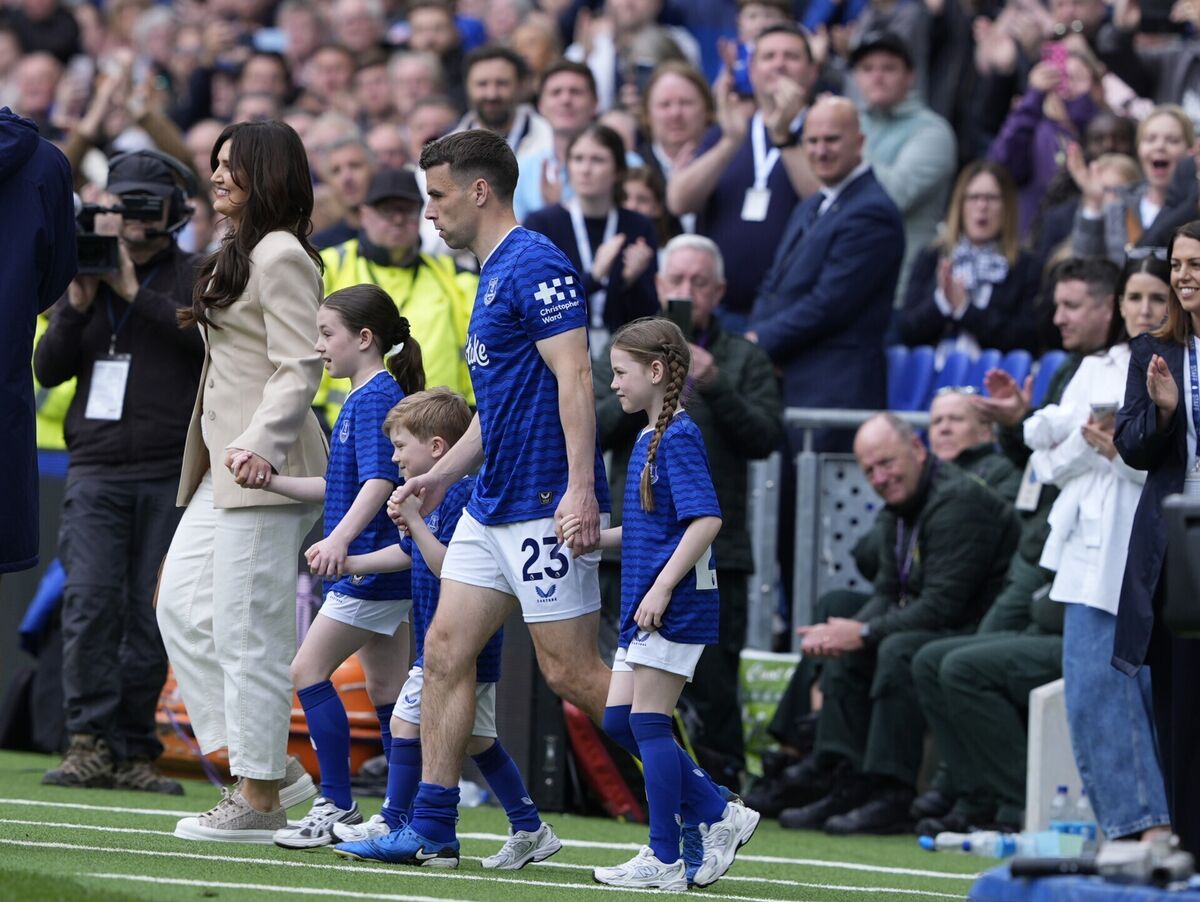
Seamus Coleman represents a different kind of greatness entirely.
As he leaves Everton after 17 extraordinary years, there is a sense not just of a football career ending, but of something rarer fading from the modern game. Coleman never became a global superstar. He never accumulated the medals or glamour that adorned O’Neill’s career. But few footballers in Premier League history have been so universally respected.
And perhaps that is because Coleman’s reputation on the pitch is only strengthened by who he appears to be away from it.
Humility. Consistency. Reliability. Example.
In an era where elite footballers increasingly feel manufactured - more brand than human being - Coleman remained unmistakably real. The same grounded young man from Killybegs who arrived from Gaelic football roots and quietly outworked everyone around him.
Like O’Neill, he was never the most naturally gifted footballer in the room. Nobody ever described Coleman as a genius technician. Instead, he became something more admirable: a man who maximised every ounce of ability he possessed. He overperformed. Overachieved. Over-excelled. That is, in many ways, a deeply Irish sporting trait.
For all Ireland’s struggles internationally in football over recent decades, we continue to produce personalities who matter enormously within the game. Roy Keane remains one of the Premier League’s defining figures. O’Neill continues to command reverence across Britain and Ireland. Coleman leaves Everton as one of the most beloved captains in their modern history.
Ireland may not produce Ballon d’Or contenders or go deep in major tournaments, but we still produce football men. Men shaped by small towns, GAA pitches, inner-city streets, community values and a certain stubborn resilience that cannot easily be coached into existence. Men who carry themselves with substance in a sporting age increasingly dominated by image.
That matters. Because long after tactical systems evolve and television money transforms the sport yet again, football will still fundamentally belong to personalities. To characters. To people supporters emotionally recognise themselves in.
Martin O’Neill and Seamus Coleman could hardly be more different. One intense and combustible, the other calm and selfless. Yet both represent versions of Irishness that football still badly needs. And perhaps that is why, even when Ireland itself struggles to remain relevant on the pitch, Irish football somehow never disappears from the conversation.
Mark English may never win an Olympic medal, but that should not define his career. His Diamond League victory in Shanghai this weekend - the first ever by an Irish male athlete - was another reminder of his remarkable longevity and resilience. At 33, English continues to compete with and defeat the world’s elite in one of athletics’ most unforgiving events. That alone deserves enormous respect. For over a decade, the Donegal man has operated at a level few Irish athletes ever sustain. Injuries, setbacks and changing generations have come and gone, but English remains. Not every great sporting career requires Olympic validation. Sometimes consistency, endurance and an unwillingness to disappear matter just as much. Mark English’s career has become a testament to persistence as much as talent.
When NBA veteran Jason Collins came out as gay in 2013, the reaction across American sport felt historic because, well, it was. More than a decade later - following his death from brain cancer last week at the age of 47 - it remains historic because so little has changed. In 2026, far more personnel serving in the American military identified as gay than those playing in any of their major sports leagues.
Collins was not a superstar. He was not an MVP or a cultural icon in the traditional sporting sense. He was a dependable NBA professional who carved out a respectable 13-year career. Pointedly, his revelation came out at the end of his career. Yet his legacy stretches far beyond basketball because he became the first openly gay active player in a major North American men’s professional league.
The uncomfortable reality is that Collins remains less a beginning than an exception. Across the NFL, NBA, MLB and NHL - leagues containing roughly 4,600 active athletes - there are currently zero openly gay active male players. Since Collins’ announcement, only one player, NFL defensive end Carl Nassib, has come out while active on a regular-season roste.
That statistic alone tells its own story. Men’s professional sport still presents itself as a hyper-masculine environment where vulnerability is often viewed as weakness and difference can still carry consequence. Research consistently shows many athletes fear homophobic abuse from fans, dressing-room alienation or commercial repercussions.
Women’s sport offers a striking contrast. The WNBA and women’s soccer, for example, feature extensive LGBTQ+ representation and cultures where sexuality is largely normalised rather than scrutinised. Even within Irish sport, the contrast is visible. A Gaelic Players Association survey found 99% of inter-county players said they would support a teammate coming out, yet only 10% of male players said they knew an openly LGBTQ+ teammate. The support exists in theory, but visibility still lags behind. That is why Collins mattered, but should’ve mattered more. He forced conversations many leagues preferred to avoid, and in doing so made future athletes feel less isolated.
His coming out should’ve proved that honesty and elite sport did not have to be incompatible. Progress in men’s sport has been painfully slow. But every conversation that exists now began with somebody willing to stand alone. Collins was one of those people. Maybe his death will remind others it’s ok to take the first step.
There remains something wonderfully compelling about watching Pádraig Harrington compete in major championships. At 54, while modern golf grows younger, longer and more athletic by the season, Harrington still manages to insert himself into relevance through intelligence, competitiveness and sheer bloody-mindedness. His impressive run at this weekend’s US PGA Championship was another reminder that greatness does not simply disappear with age. Before Rory McIlroy, before Shane Lowry, Harrington broke the ceiling. Three majors in 13 months transformed perceptions of what Irish golfers could achieve on the global stage. Everything that followed was built, in some small way, on the foundations he laid. That is why weekends like this still matter. Not merely for nostalgia, but because Harrington continues to embody the intelligence, resilience and competitive obsession that changed Irish golf forever.