The world is All Black after New Zealand win Rugby World Cup
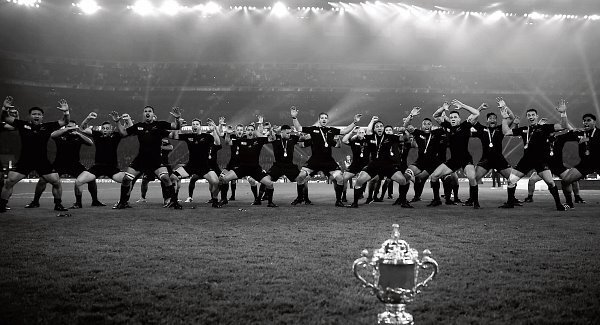

On this occasion his entire squad performed the traditional Ka Mate, having sought inspiration from their their own version the Kapa O Pango throughout the knockout phase, with their gold medals proudly dangling from their necks.
Tradition dies hard with this team who have always sought to the represent the best values of New Zealand rugby.
It can be a heavy burden attempting to emulate the great deeds of the past and one that proved too onerous for a vast swathe of very talented New Zealand players at World Cup tournaments between 1987 and 2011.
That pressure almost brought the 2011 squad to its knees but ever since McCaw lifted the Webb Ellis trophy in Eden Park on that nerve jangling night four years ago, New Zealand appear liberated and have played rugby from a different planet ever since.
Three defeats in 54 test matches at a time when every rugby nation in the world is chasing your scalp has marked them out as the greatest champions and probably the greatest team of all time. That is a mantle the new generation will now carry for the next four years.
From next June when they meet Wales in a three test series back home they will, in all probability, start that journey without a band of iconic players, amongst the greatest to have worn the famous black jersey on a collective 708 occasions in Conrad Smith, Ma’a Nonu, Tony Woodcock, Kevin Mealamu, Dan Carter and the greatest of them all, McCaw. Their legacy will be the most difficult of all to surpass, and that is saying something, but those left behind will accept the challenge with relish.
From a pure rugby perspective this has been an outstanding World Cup, in my opinion the best there has ever been, with all 20 sides playing their part and enjoying special moments of their own along the way. From the time Japan rocked the world order on the opening weekend when they beat the mighty Springboks in the most dramatic of circumstances, this tournament has delivered time and time again.
From an Irish perspective the overall feeling has to be one of major disappointment on the back of successive Six Nations Championship triumphs as that elusive semi final slot has been forced on the back burner for at least another four years.
If the spirit, resilience and character that shone through in the face of adversity against France when losing Paul O’Connell, Johnny Sexton and Peter O’Mahony was both heartwarming and inspiring, the harsh reality that our strength in depth wasn’t quite as rich as we thought when we arrived at the event was both stark and sobering.
While Japan captured the hearts and minds of all rugby followers worldwide after their three pool wins proved insufficient to advance to a quarter final — the first time that has ever happened — Argentina were also inspirational due to the sheer quality of their play.
The fact that they also played with a smile on their faces made them even more endearing. Their amazing young forwards were dynamic, powerful, athletic and ruthlessly efficient at the set piece and the contact area while the pace and enterprise of their attacking play proved far too potent a mix for Ireland to handle.
Yet like Ireland, they too ran out of steam even if it proved a week too late for us. The reality is that the rugby World Cup has become a brutal competition. Seven games in six weeks places an enormous physical and mental toll on a squad and only the best survive. It leaves no room for error and the increased physical demands, even since the last tournament, is proving a bridge too far for the majority of squads.
New Zealand win because they are capable of doing whatever it takes to win. Whatever the circumstances, whatever the challenge they find a way to master them. They have proved the best team in this tournament because they have the capacity to play in so many different ways. Against Argentina in their opening pool game they produced a delightful mix of controlled kicking, aggressive defence, quality set piece play and daring off loads that placed you on immediate alert that they were the team to beat.
In scoring nine tries in their quarter final annihilation of France, they delivered the most complete attacking performance of the tournament against a major nation. There has been a general acceptance for some time on this side of the world that France are nowhere near the force they were but no side in the Six Nations championship was capable of exposing their shortcomings with the ruthless efficiency New Zealand delivered that night in Cardiff.
In dogging it out in demanding weather conditions against an ultra physical South African side in the semi final, they showed just how resilient, powerful and durable they can be when circumstances demand it and outscored their great rivals by two tries to nil.
That incredible mental doggedness was tested in the most demanding stage of all on Saturday in the cauldron of a World Cup final. Their first- half display left a very good Australian side grasping at straws and, but for their impregnable defence and the ability of their remarkable back row to generate turnovers in the most demanding of circumstances, it could have been a landslide.
This New Zealand side has the ability to make even the best of teams look ordinary. Just when you think you have them, they strike and once again scored crucial tries in the two minutes either side of half time. They do this so often that it stopped being a coincidence a long time ago.
Rugby ceased being a 15 man game a few years ago but retaining the facility of introducing someone like Sonny Bill Williams off the bench is almost a form of cruelty. Ninety seconds after his introduction he delivered two peerless offloads, the second of which led to a game clinching try from Nonu.
One has to say that even the best of referees are often star struck by New Zealand and on this occasion the best in the business in Nigel Owens let the champions off the hook when he ignored a forward pass, a high tackle and a knock on at crucial times in the game. Australia suffered from all three missed indiscretions.
As is their wont, Australia refuse to lie down in any sporting contest and the manner with which they punished the yellow card shown to Ben Smith — it could well have been red — says everything you need to know about the character of Australian sports people. Fourteen unanswered points reduced the All Black lead to four at a time when they looked home and hosed yet there wasn’t the merest hint of panic to be seen anywhere in the New Zealand ranks.
In fact it was quite the opposite. In their hour of need Carter stepped forward and produced a series of match winning plays that stamped his authority on this amazing performance. A drop goal from nothing, a series of outstanding tactical kicks, a few monstrous tackles followed by a penalty from half way. His game management was exemplary when the need was greatest. .
On the final whistle both teams looked absolutely spent. They had nothing left to give. Even the great McCaw appeared as if there wasn’t a second of rugby left in him. Fourteen years after gracing the international stage for the first time he left nothing on the field and made a massive contribution to a classic final. Regardless of whether he stays or goes, he has become the ultimate symbol of New Zealand rugby. Indomitable. Relentless. Proud. There has never been more worthy world champions.
15. Ben Smith (NZ)
14. Adam Ashley-Cooper (Aus)
13. Ma’a Nonu (NZ)
12. Matt Giteau (AUS)
11. Julian Savea (NZ)
10. Dan Carter (NZ)
9. Aaron Smith(NZ)
1. Scott Sio (Aus)
2. Agustin Creevy (Arg)
3. Ramiro Herrera (Arg)
4. Brodie Retallick (NZ)
5. Alun Wyn Jones (Wales)
6. Schalk Burger (SA)
7. David Pocock (Aus)
8. Kieran Reid (NZ)