We need to talk about Liam (MacCarthy)
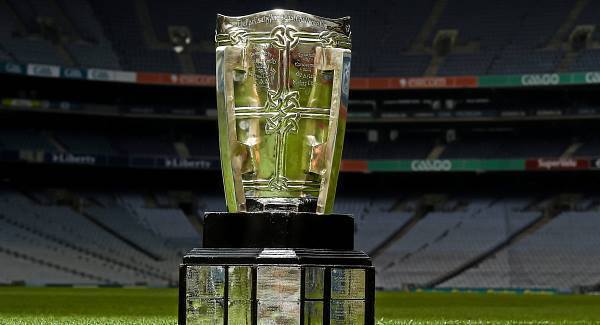
The greatest of all time?
A few years ago a pal of ours met an Australian whose first experience of a live hurling game was the 2009 All-Ireland final between Tipperary and Kilkenny.
“Give up now,” said our friend to the Aussie. “Don’t go to another game. You won’t see better.”
You’d hope our friend from Down Under made it to last year’s draw and replay which formed a fairly irresistible double bill, but the immediate consensus at the final whistle on Sunday was that we had a new contender for the best final ever.
First impressions? Not a wild boast at all. If it wasn’t the greatest it was hard to think of better, and a couple of days’ consideration hasn’t thrown up too many contenders for that title either.
We’re not dealing in quadratic equations, so being definitive is difficult, but the entertainment, the closeness of the proceedings, the individual displays, the ending, the rate of scoring . . . even objective measurements cast the game in a rosy glow: there were no wides struck between the 42nd minute and that last narrow miss from John O’Dwyer, which is a fair benchmark of quality.
Even statistics can lie, as we all know. Tipperary manager Eamon O’Shea will rue, for instance, Seamus Callanan’s late effort which dropped tamely in front of Eoin Murphy.
Callanan was off-balance and on the run, with opponents in close attendance, but his striking is generally pure and he was on form.
Tipp would have expected him to exercise the umpires at the very least, but the Drom & Inch man did the statisticians a favour by not putting the ball over the end line — he preserved that 30 minutes of wide-free hurling in the second half. The game was almost decided, in fact, on a couple of uncharacteristic errors.
It was very late when Michael Cahill, a sub who made a fair difference for Tipp on his introduction, put a clearance down the throat of Brian Hogan; however, while the Kilkenny centre-back made progress upfield with the ball he was atypically indecisive and ended up running into Padraic Maher and conceding that last free for John O’Dwyer.
The game doesn’t lose any cachet because there were a couple of minor errors, of course; it’s just striking that despite the quality all through they could have decided the outcome.
No matter what your criteria, there’s no doubt that the weekend before last, with its back-to-back thrillers in Limerick and Croke Park, pushed the football championship ahead of its hurling counterpart in terms of entertainment.
The dreary foothills of the football qualifiers and the already-distant memories of those provincial championships became even more distant as Kerry, Mayo, Donegal and Dublin offered incident and excitement aplenty.
Their hurling equivalents had been an armwrestle and a blow-out in reverse order: has that seeped into hurling fans’ thinking, the need for a classic to restore their game to its pre-eminence? (In this reading, by the way, please cease and desist with all those comparisons between the hurling game and Ireland-Georgia, folks. You preferred the hurling? We picked up on that, thanks. Beyond that it’s apples and oranges.)
When you leaf through the history books what’s striking is the number of immortal games from decades ago which had scorelines that belong to a present-day McGrath Cup game: 1-9 to 1-6, that kind of thin fare.
Sunday’s scorefest was at the far, far end of the spectrum, and it raises one obvious point. Can games be great when defences are conceding those kinds of tallies? If a backline is conceding a couple of dozen scores, or more, over the course of 70 minutes, does that mean it’s a great game or a game with great scores? That may be a philosophical step too far, and nobody wants to come across as a slightly less dishevelled version of Alan Hansen, bemoaning shocking defending, but the point is worth discussing.
Usually you ask a manager after a match if he would have taken his team’s scoring total if he’d been guaranteed it an hour before the game (by a suspicious stranger with hooved feet, no doubt).
Messrs Cody and O’Shea would probably have been happy with being assured of 3-22 and 1-28 respectively.
But flip that question around. Do you think either manager would have felt his side would still be alive after conceding those kinds of totals? Without seeing the game, each would have presumed a defensive collapse, perhaps due to an early red card, if you’d told them what they’d leak over 70 minutes.
Tipperary’s late surge suggests they have the legs. Kilkenny’s ability to get goals suggests they’ll get more.
Tipp are winning penalties. Kilkenny will get another couple of weeks’ preparation into Henry Shefflin.
Is Richie Hogan fully fit? Will Tipperary have to realign their defence all over again?
For the next couple of weeks you’ll be relying on little indications and straws in the wind.
For what it’s worth, on Sunday as the teams filed out of their dressing-rooms after the game into the big tunnel under the Hogan Stand Tipperary looked lively and defiant, chatty and eager, while Kilkenny were far quieter.
The latter spent a lot longer as a group behind closed doors before finally emerging, one player telling the assembled press they had been instructed not to talk (that’s terrible — said no member of the public ever).
Will circling the wagons help? On The Sunday Game later that evening Eddie Brennan articulated a deep unhappiness within Kilkenny with referee Barry Kelly, but Kelly will not handle the replay. Will that be significant? As significant as the re-emergence of Eoin Kelly as a sub late on Sunday, particularly if there are penalties on offer in the replay? Will the replay be as good as the first game, now you mention it?
Patience. It’ll be here soon enough.