Green hydrogen offers a clean energy choice for low-carbon manufacturing
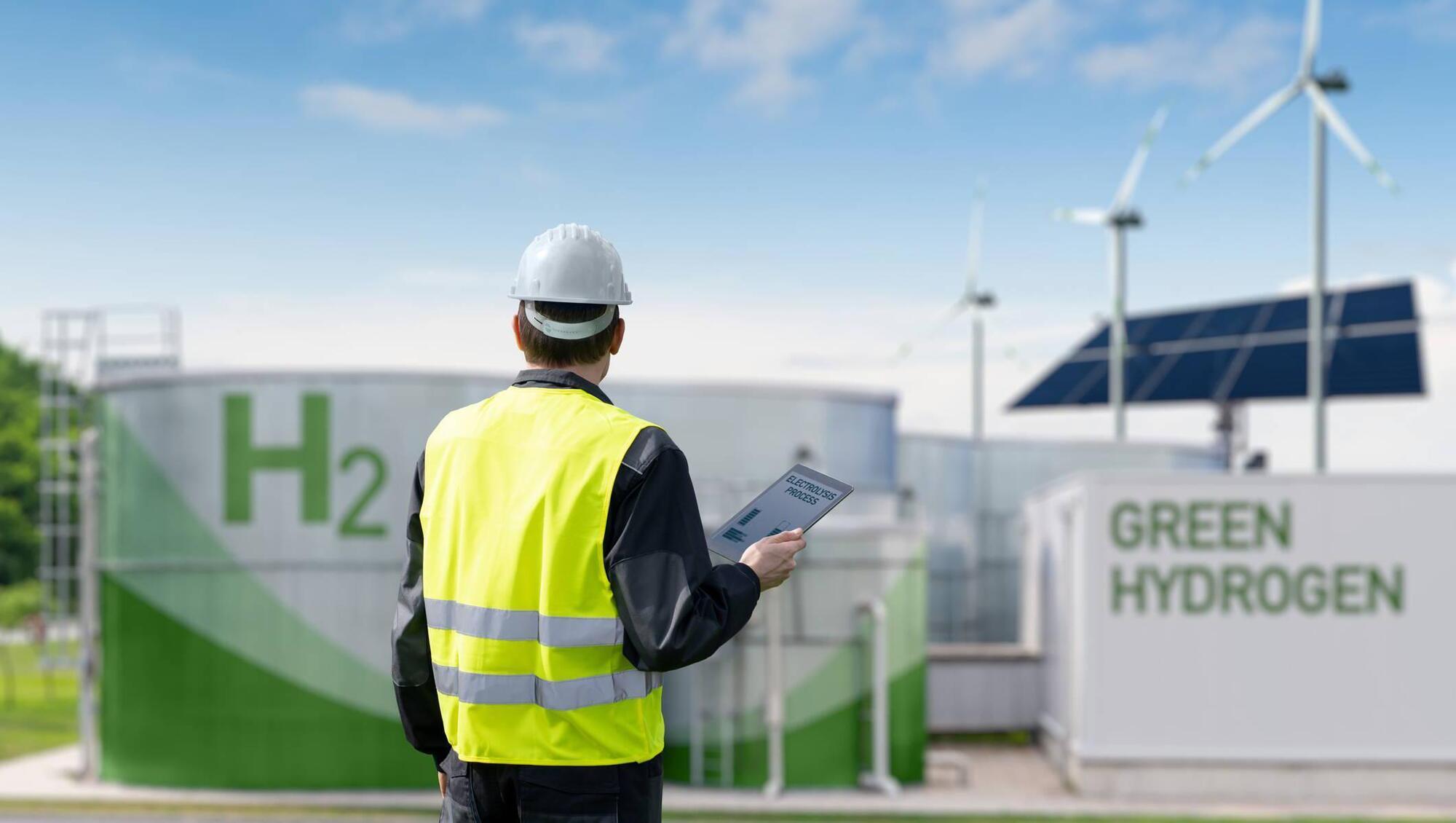
As Ireland does not carry a carbon-heavy legacy of 20th-century industrialisation, no steel mills to convert, no petrochemical complexes to retrofit, the country is free to build a new industrial future, one designed from the ground up around clean hydrogen, circularity, and low-carbon manufacturing.
Green hydrogen is no longer a distant dream in Ireland; it’s already here, ushering in a new chapter in energy while positioning the country as a leader in Europe’s clean energy future.
Paul McCormack, CEO of Hydrogen Ireland, says it’s unfolding now, in ports, data centres, rural counties, university labs, and industrial estates where a new hydrogen economy is beginning to take shape. “What was once a speculative technology is rapidly becoming a national project, driven by the twin pressures of climate targets and energy security, and by the extraordinary renewable resources that surround the island.
“With world-class offshore wind potential, a growing urgency to decarbonise hard-to-electrify sectors and a national strategy now in place, clean hydrogen is emerging as a cornerstone of the country’s long-term energy system. The National Hydrogen Strategy (2023–2026) positions renewable hydrogen as essential for decarbonisation, energy security, and industrial opportunity.”
As for the series of hydrogen valleys emerging across Ireland, he says they reveal a country positioning itself at the forefront of Europe’s clean-hydrogen transition.
Pointing out that Europe’s hunger for renewable hydrogen is immense, he says: “Heavy industry across the continent needs vast quantities of clean hydrogen to decarbonise. Germany alone is forecasting a hydrogen deficit so large it will require imports for decades. The Netherlands, Belgium and Italy face similar shortfalls. Europe’s industrial heartlands are desperate for clean molecules.”
Ireland, he argues, is in a very different position. “The country does not carry the carbon-heavy legacy of 20th-century industrialisation. There are no steel mills to convert, no sprawling petrochemical complexes to retrofit, no automotive factories waiting for hydrogen pipelines.
“Because Ireland is not burdened by a heavy industrial past, it is free to build a new industrial future, one designed from the ground up around clean hydrogen, circularity, and low-carbon manufacturing.
“Instead of retrofitting old industries, Ireland can create new ones: sustainable aviation fuel production, green ammonia and fertiliser, biorefining, hydrogen-powered data infrastructure, advanced materials, and next-generation manufacturing.”
This freedom from legacy infrastructure allows Ireland to move faster than countries wrestling with the cost and complexity of industrial conversion, he says. It positions Ireland as a magnet for companies seeking to locate in a clean-energy environment, firms that want to manufacture products with the lowest possible carbon footprint, or operate digital infrastructure powered by indigenous, zero-carbon fuels.
McCormack believes that if Ireland can scale offshore wind, build hydrogen-ready ports, and align certification with EU standards, it could become the western gateway of Europe’s hydrogen economy. Hydrogen valleys like Cork and Galway could evolve into export corridors. Rural regions like Fermanagh-Cavan could become production hubs. The Data Valley could position Ireland as a global leader in clean digital infrastructure.
But translating that ambition into reality is far from straightforward.
“Offshore wind deployment remains painfully slow, and without rapid acceleration, the scale of renewable generation needed to feed a hydrogen industry will not materialise in time. Regulatory frameworks are still emerging, leaving investors uncertain about certification, safety standards, and market rules. Infrastructure from pipelines to storage caverns to hydrogen‑ready ports must be built almost from scratch. And the workforce required to operate this new energy system does not yet exist at the scale needed.”
Planning, consenting, and grid integration continue to lag ambition, he says. Without a rapid acceleration in delivery, the renewable energy required to feed a hydrogen economy will not arrive at the necessary scale or speed.
“Ireland is still developing the rules that will govern hydrogen production, certification, safety, storage, and market operation,” he says. “But the regulatory challenge does not stop at the Irish border.”
On the EU’s Delegated Acts, particularly those defining renewable hydrogen, he says they’re proving to be a double-edged sword.
“The Acts impose strict rules on additionality, temporal matching, and geographical correlation. For Ireland, which lacks international grid interconnection, they risk becoming a structural barrier.”
Opining that Ireland cannot import renewable electricity from neighbouring states to meet compliance requirements, nor rely on cross-border balancing to smooth variability, he continues: “Without agility and flexibility in how the Delegated Acts are applied, Ireland could find itself unable to fully harness its vast offshore wind resource for hydrogen production, not because of a lack of renewable energy, but because of regulatory definitions that do not reflect the realities of an islanded system.
“Industry leaders and researchers have warned that unless the EU allows tailored pathways for peripheral, non-interconnected regions, Ireland risks being locked out of the very market it is best placed to serve. The irony is stark: a country with some of Europe’s best renewable resources could be constrained by rules designed for countries with very different energy systems.”
Of the significant infrastructure gaps that remain, he says Ireland currently has no hydrogen backbone, no large-scale storage, and limited hydrogen-ready port capacity. “Building this infrastructure will require long-term planning, coordinated investment, and political resolve.
“Because of the high capital costs involved, early projects will require government support, risk-sharing mechanisms, and long-term offtake agreements to reach commercial viability. Without these, Ireland risks losing first-mover advantage to countries with more aggressive subsidy regimes.” That gap between ambition and delivery is also evident at a more practical level.
Dr Eoin Syron, Associate Professor in the UCD School of Chemical and Bioprocess Engineering, points to the fundamentals required to scale production. His research focuses on the scale-up of chemical and biological processes to recover value from waste.
“To produce green hydrogen at scale, the first thing needed is lots of cheap renewable electricity to power the electrolysis process,” he says. “We had hoped to have 5GW of offshore wind energy connected by 2030. It looks like that target will be missed by a year or two.”
Explaining that the long-term potential for sustainable biohydrogen production in Ireland is small, in comparison with the potential for green hydrogen from electrolysis, he says: “To put it simply, there isn't enough waste biomass to produce large quantities of biohydrogen. Producing biomethane from this waste is already a well-developed technology and the biomethane can be directly incorporated into the gas network so this should be our first priority.”
Advising that converting farm or biodegradable industrial waste into biohydrogen or other fuel is possible but not easy, he notes that it would require large-scale industrial facilities. As for the transport to a large central processing facility of sufficient quantities of this wet waste, he says it could scupper the viability of any potential project.
Asked how hydrogen and its derivatives could support climate targets and job creation, Dr Syron is clear: “The hydrogen should be produced in Ireland. If we buy green hydrogen and e-fuels from third parties, it will help us to achieve our climate goals but there won't be any job creation and we will still be dependent on others for our energy needs.”
“There is a percentage of our future energy requirements - in heavy industry, long-distance HGVs, shipping and aviation — that will be extremely difficult to electrify. This is where green hydrogen and its derivatives will play a role in achieving a completely decarbonised energy system.”
As for hydrogen’s role in balancing renewable energy, he says: “Ireland's renewable power production is intermittent. Green hydrogen can be used to store renewable energy for periods of ‘dunkelflaute’ — extended periods when the wind is not blowing and the sun is not shining.”
Advising that the future of green hydrogen in Ireland is dependent on developing our renewable energy production, he says: “Without lots of wind and solar electricity, there is no power available for electrolysis. This should be the current priority, to produce more renewable electricity and to use this energy where possible to displace fossil fuels.
Dr Syron says that with the use of green hydrogen in the energy system still 10 to 15 years away, we need to prepare for the use of green hydrogen derivatives. This includes developing regulations for safe transport and storage, building demonstrator projects so we can develop and test safe and reliable systems, and designing market structures and incentives that avoid wasting surplus renewable energy.
Without that preparation, he warns, Ireland may find itself importing green hydrogen or synthetic fuels in the 2040s to meet decarbonisation targets.
For all the challenges, the momentum is unmistakable. McCormack says: “Ireland’s hydrogen valleys are demonstrating what is possible when local ambition meets national strategy. They’re proving that hydrogen is not an abstract future technology but a practical tool for decarbonisation, economic development, and regional renewal.
“They’re showing that Ireland’s wind resource can become the foundation of a new export economy. And they are revealing a country that, despite its challenges, is beginning to think and act like a clean-energy leader.
“If Ireland can align policy, infrastructure, and investment with the pace of innovation happening on the ground, this island could become one of Europe’s most dynamic hydrogen hubs by the 2030s.”