Solar can help Ireland realise its energy independence goals
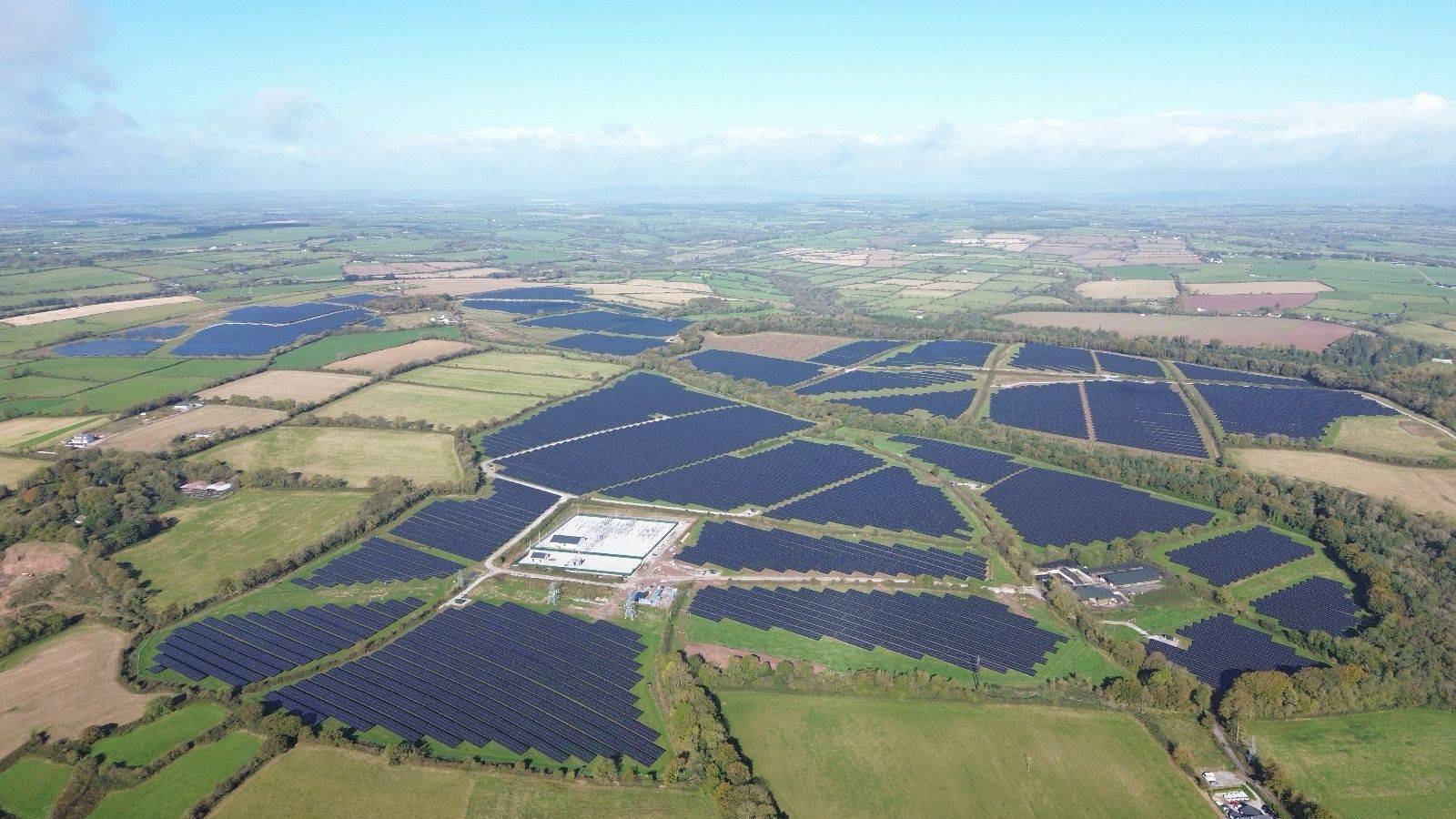
Power Capital Renewable Energy’s Lysaghtstown Solar Farm project in Cork has the capacity for 131 MW of clean, renewable energy.
Ireland has an opportunity to become self-sufficient in renewable energy.
For Justin Brown, CEO of Power Capital, that is no longer an environmental ambition or a long-term aspiration. It is a matter of national security.
“By having your own energy security at the forefront of policy, you enable faster decisions,” he says. “It’s not a nice to have anymore. It’s absolutely essential.”
Brown leads one of the more active developers in Ireland’s renewable energy market, with Power Capital building a pipeline that spans development, financing, delivery and operation. The company has been developing projects in Ireland since 2015, though the first assets only came online in 2023, reflecting the long lead times involved in planning, permitting and grid connection.
“We’ve been developing projects in Ireland since maybe 2015,” he says. “It takes a while.”
That delay is not unusual. It reflects a system that moves slowly at every stage. Projects pass through multiple policy cycles, shifting ministerial priorities and evolving market frameworks before they reach construction. Power Capital’s portfolio combines different routes to market. Some projects are supported through corporate power purchase agreements with global technology firms.

“We do corporate PPAs with Microsoft and Google,” Brown says. Others are developed through the State-backed Renewable Electricity Support Scheme, where projects compete in auctions for long-term price certainty.
Financing has scaled alongside development. The company has recently secured backing from Danske Bank and the European Investment Bank for a new tranche of projects.
"We’ve been working with them for the last nine months to bring those through project finance,” Brown says. Once operational, those projects will push the company towards significant scale. “That’ll get us over 950 megawatts of operational solar PV,” he says. Alongside generation, the company is expanding into storage.
“We do a lot of battery storage,” Brown says. Storage is not an add-on. It is central to how the system must evolve.
Brown’s framing reflects a broader shift in the energy debate. The discussion has moved beyond climate targets into something more immediate. Energy is now tied directly to geopolitical risk. Supply chains are uncertain and pricing is volatile. Dependence on imports carries exposure that cannot be managed through policy alone.
“These geopolitical issues in relation to energy don’t look like they’re disappearing anytime soon,” he says. “So, it’s about being completely self-sufficient and able to manage your own energy security.”
The recent protests o

nly highlights the need to move faster towards EV’s, which if powered on renewable energy protects further protects against geo political energy price shocks and gives protection to consumers”
The argument is direct. If Ireland can generate and store its own energy, it can control pricing and reduce exposure to external shocks. “It’s the only way we’ll stabilise pricing,” Brown says. The system, however, is not delivering at the pace required.
The constraint is not technology. Solar and wind are established and storage solutions exist. The issue lies in how the system is organised and governed.
“We just need faster decisions,” Brown says. “There’s consultation after consultation before anything actually happens.”
Policy changes are handled sequentially rather than in parallel. Each reform is subject to consultation, review and decision before implementation begins. “There’s probably eight or nine things that need to happen, and they’ll deal with them in sequence,” he says.
The effect is cumulative. Even where solutions are understood, they are not implemented quickly enough to meet demand. This becomes most visible in how renewable energy is used.
“Generators are curtailed or dispatched down,” Brown says. “That power is dead, just lost in the system.” At the same time, Ireland continues to import electricity. “We constantly see scenarios where renewable generators are being dispatched down, and yet we’re importing hundreds of megawatts from the UK,” he says.
The contradiction is clear. Domestic renewable energy is turned off while imported energy continues to flow. Storage is the missing component. Without it, the system cannot absorb excess generation or release it when demand rises.
“Storage is going to be a big piece of the story,” Brown says. He is explicit about its role in meeting national targets. “We won’t get close to 80% renewables by 2030 without long duration energy storage.”
Long-duration storage, defined as four hours or more, allows energy to be shifted across the day. It smooths supply, reduces curtailment and lowers reliance on imports. The barrier is economic rather than technical.
“The market charges are prohibitive,” Brown says. Battery operators are treated as large energy consumers within the system. “They charge me the same as a data centre,” he says. That classification undermines the economics of storage. “I can’t afford to pay the same costs,” he says.
Grid infrastructure presents a further constraint. Bottlenecks in the network limit how much renewable energy can be transported. “It’s like three lanes of traffic moving into one,” Brown says. When that happens, generators are forced to reduce output. “We’re being dispatched down far more than we would have forecast,” he says. For developers, this translates directly into lost revenue. Energy that cannot reach the grid cannot be sold.
Connection delays compound the issue. Brown points to several projects under the RESS2 scheme, all delayed. “Projects have been unable to energise on time,” he says. The consequences are immediate.
“Projects are delayed from connecting, sometimes months after construction, thereby limiting our renewable generation and increasing our reliance on imported gas, and increasing power prices for consumers,” Brown says.
Developers carry the investment risk but do not control connection timelines. “There’s no contractual obligation to deliver on time and no implications for delays,” he says.
Even where developers build key infrastructure, control does not follow.
“We build the substations and hand the keys over,” Brown says. The system places responsibility on developers without granting corresponding authority. Market distortions extend further. Renewable generators can be curtailed to manage issues caused elsewhere in the system, including those linked to large demand users.
“We’re now subsidising data centres,” Brown says. No compensation is provided for that curtailment. “Renewable generators are being dispatched down without compensation,” he says.
The result is a system that does not optimise for cost or efficiency. Lower-cost renewable energy is constrained, while higher-cost alternatives remain active. Despite these constraints, the underlying resource remains strong. Ireland has a combination of wind and solar capacity that, if fully utilised, could meet a significant proportion of demand.
The auction system reinforces that potential. It provides price certainty and, in the current market, delivers value to consumers.
“We’re actually giving money back,” Brown says. That reflects the economics of renewable generation. Once built, it operates at low marginal cost. “More renewables right now means lower cost of electricity,” he says.
The gap between potential and delivery is not due to lack of investment or technology. It is a function of policy pace, market design and system governance.
Brown returns to the central point. Energy security changes the hierarchy of priorities. It reframes the transition from optional to essential. “If we put energy security at the top of the agenda, you’ll start to see policy change,” he says.
That shift would enable faster decisions, parallel implementation and greater use of domestic resources. Ireland has the resource, the capital and the technical capability. The remaining requirement is alignment. The opportunity is clear but the system is not yet delivering it.