Renewable Island: Ireland marks a century of pioneering in clean energy
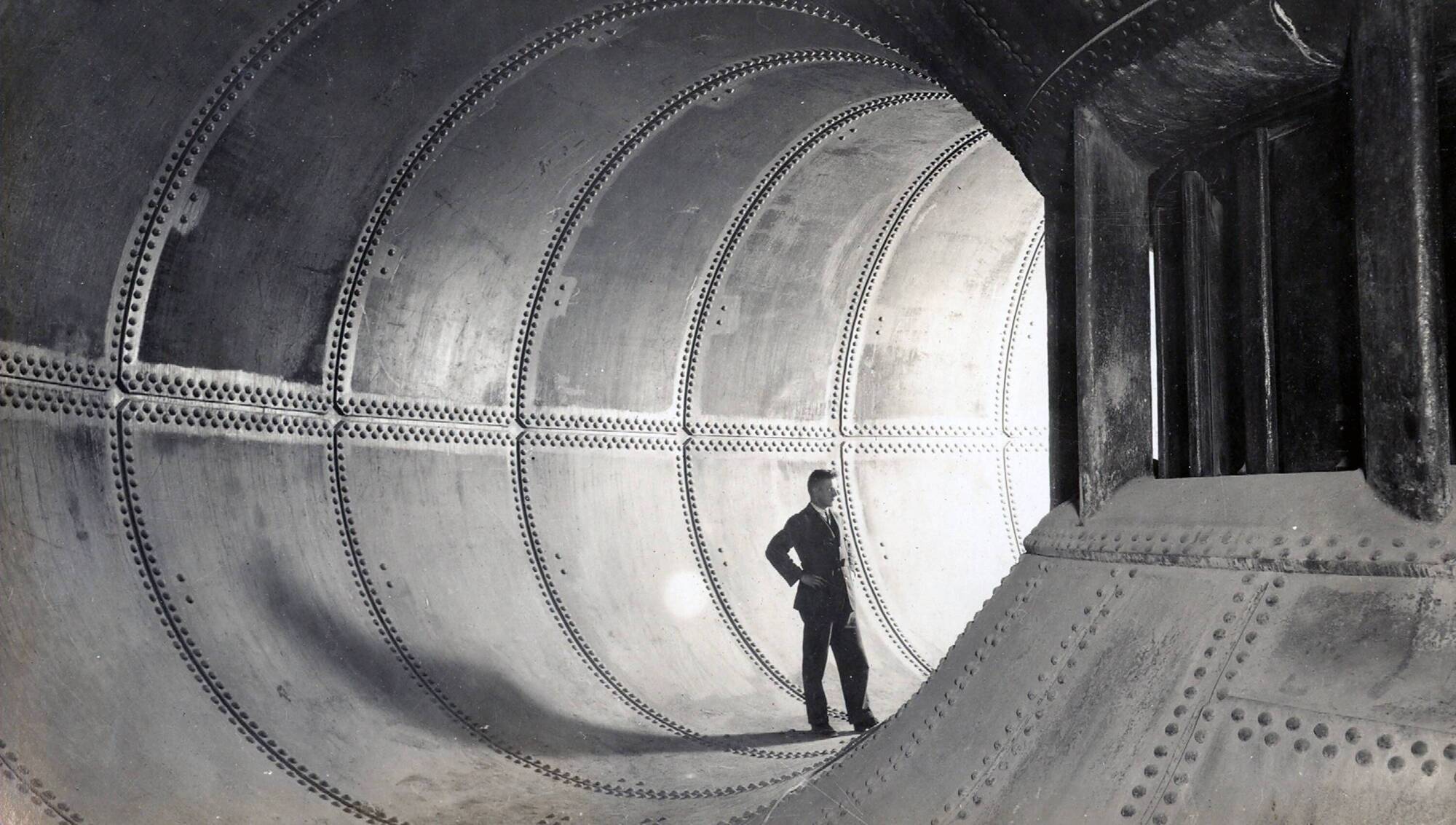
A picture taken during the development of the Ardnacrusha hydroelectric project in Co Clare.
Ireland’s leadership in renewable energy is not new. The commissioning of the Ardnacrusha hydroelectric plant in 1929 placed the State among the pioneers of large-scale renewable generation.
Nearly a century later, that legacy remains in operation, contributing a modest but symbolic share of national capacity. Yet it is onshore wind that now defines Ireland’s renewable energy landscape, both in scale and in strategic importance.
With more than 300 operational wind farms and over 5GW of installed capacity, onshore wind is, by a considerable margin, the most mature form of intermittent renewable electricity deployed in Ireland today.
Its development has been shaped over decades by successive policy interventions, from the Alternative Energy Requirement (AER) scheme of the 1990s through the Renewable Energy Feed-in Tariff (REFIT) regime of the 2000s, to the current Renewable Electricity Support Scheme (RESS).
Alongside these mechanisms, corporate power purchase agreements (CPPAs) have emerged as a key route to market, particularly for large industrial and commercial consumers seeking both price stability and demonstrable decarbonisation.
For Fergus Devine, partner and head of energy and natural resources at William Fry, the sector’s maturity is now evident in a shift of focus. Where once the priority was expansion, attention is increasingly turning to optimisation.
“One of the clearest indicators of the industry’s maturity is that so-called ‘repowering’ of existing wind farms has become an increasing part of our practice and an increasingly pressing issue for the power system,” he says.

Repowering, the replacement of ageing turbines with modern, more efficient technology, reflects both the lifecycle of early installations and the pace of technological advancement. It also signals a more complex phase in the sector’s development, where infrastructure renewal must be balanced against planning constraints and grid capacity.
The strategic importance of onshore wind is underscored by Ireland’s climate commitments. The Climate Action Plan 2025 sets a target of generating at least 80 per cent of electricity from renewable sources by 2030, requiring the installation of 22 GW of intermittent renewable capacity. Within this, 9 GW of onshore wind is expected to play a central role.
Progress to date has been significant. In 2025, wind energy supplied approximately one-third of Ireland’s electricity demand, materially reducing the carbon intensity of the system. Yet the gap between current capacity and 2030 targets remains substantial, and closing that gap will depend less on technology than on process.
Planning, rather than engineering, has become the defining constraint.
Jason Milne, partner and head of environment and planning at William Fry, notes that the formal planning pathway for onshore wind remains relatively structured. A project of moderate scale can expect a determination within 12 to 18 months, including any appeal to An Coimisiún Pleanála. This timeline, while not insignificant, is broadly predictable where site selection is robust and environmental assessments are well prepared.
The greater uncertainty lies in factors that are far less quantifiable.
Community opposition remains one of the least predictable variables in onshore wind development. Concerns around visual impact, noise, shadow flicker and proximity to dwellings continue to feature prominently in objections, with turbine height and scale intensifying these sensitivities. Increasingly, however, it is cumulative impact that proves decisive.
“A project that would have cleared planning ten years ago on its individual merits may now fail because the cumulative picture has changed around it,” Milne observes.

This evolution reflects a tightening of the planning framework, particularly in relation to landscape character assessment. What was once considered acceptable in isolation may now be deemed inappropriate when viewed in the context of existing and proposed developments within the same area.
The reputational dimension further complicates matters. Projects that generate sustained local opposition carry that resistance through the planning process and beyond, affecting not only individual applications but the broader perception of the sector.
In response, developers have increasingly turned to community engagement mechanisms. The most established of these is the community benefit fund, whereby a developer commits to an annual financial contribution to be administered locally. While effective as a goodwill gesture, its limitations are increasingly apparent.
“This model is well-established in Ireland, and it works reasonably well as a goodwill mechanism,” Milne notes. “What it doesn’t do is give communities a stake in the project itself.”
The timing is critical. Community benefit funds typically flow after planning approval has been secured, arriving too late to influence the relationships that determine whether a project is contested in the first place.
More participatory models, including shared ownership structures, seek to address this imbalance. These can take various forms, from equity participation and community bonds to cooperative arrangements and joint ventures. Evidence from jurisdictions such as Scotland suggests that projects incorporating meaningful community ownership tend to encounter less sustained opposition and are more likely to secure local support.
Ireland has been slower to adopt such approaches. While the Renewable Electricity Support Scheme includes community benefit obligations, and policy frameworks have begun to acknowledge the importance of community gain, shared ownership at equity level remains relatively uncommon.
The barriers are both structural and cultural. Community entities often lack the financial capacity or technical expertise to participate meaningfully in project ownership, while developers have historically approached engagement as a risk management exercise rather than an opportunity for value creation.
“The honest assessment is that community engagement works when it is genuine and early, and fails when it is procedural and late,” Milne says.
Energy security provides an additional layer of urgency. Ireland continues to import the vast majority of its fossil fuels, leaving it exposed to volatility in international markets. The energy crisis of 2022–2023 highlighted the extent of this vulnerability.
Onshore wind, particularly when supported through RESS contracts for difference, has demonstrated its value as a hedge against price shocks. By stabilising electricity costs during periods of market volatility, it has provided a degree of insulation for both consumers and the wider economy.
However, its limitations are equally clear. As an intermittent resource, wind cannot provide electricity on demand. Dispatchable generation, predominantly gas-fired in Ireland’s case, remains essential to ensure system reliability.
“While onshore wind supported by contracts for difference can act as an important price hedge, true energy security remains reliant on our ability to supply dispatchable forms of power,” Devine notes.
Interconnection is expected to play a growing role in addressing this challenge. The commissioning of the Greenlink interconnector in 2025, linking Ireland and Great Britain, and the anticipated completion of the Celtic interconnector to France in 2028, will enhance Ireland’s capacity to import electricity during periods of low domestic generation.
These developments will support greater integration of renewables, allowing surplus energy to be exported when available and deficits to be met through imports when necessary. In doing so, they reduce the system’s reliance on domestic dispatchable generation while improving overall resilience.
Grid infrastructure, however, remains the critical enabler.
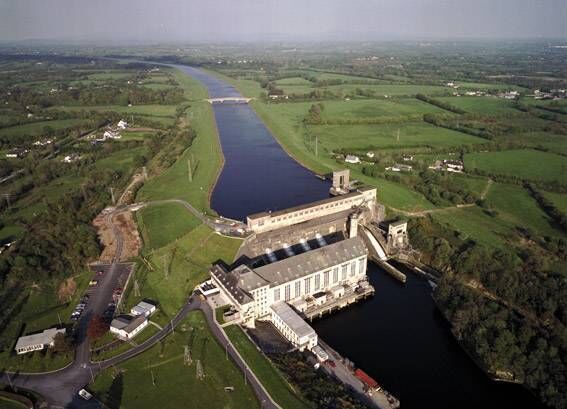
The Commission for Regulation of Utilities’ Price Review 6 represents the most ambitious investment programme in the State’s history, with up to €18.9 billion allocated to electricity grid development between 2026 and 2030. This programme encompasses hundreds of projects aimed at increasing capacity, reducing curtailment and strengthening resilience.
Without such investment, the expansion of onshore wind, and indeed all forms of renewable generation, will be constrained not by resource availability but by the system’s ability to absorb and distribute power.
Despite these advances, a fundamental tension persists at the heart of Ireland’s energy transition.
As Milne observes, opposition to onshore wind is rarely ideological. Most communities support renewable energy in principle. Resistance tends to arise in response to specific projects, often where the process is perceived as imposed rather than collaborative.
“The tension is real, but it is sometimes overstated,” he says. “The problem is one of process design and trust.”
There are, however, limits to what improved processes can achieve. Some landscapes are inherently contested, and no degree of consultation will produce consensus on their suitability for development. In such cases, policymakers face a more difficult question: how to balance local preference against national obligations.
Ireland’s climate legislation introduces legally binding emissions ceilings, requiring significant reductions across all sectors. The planning system must operate within this framework, yet its outcomes can, in practice, influence the pace and extent of renewable deployment.
At the political level, there is a risk that local opposition, amplified through the planning process, may effectively override national policy. While An Coimisiún Pleanála is not tasked with setting energy strategy, cumulative decisions can shape its trajectory.
“The underlying point is that policymakers cannot have it both ways,” Milne concludes. “They can set ambitious renewable targets and design a system that gives them a realistic prospect of being met, or they can defer to local concern at every contested decision and accept that the targets will not be met on time.”
The current approach seeks to occupy the middle ground. In doing so, it risks creating a system that is slow, unpredictable and increasingly frustrating for developers, communities and the State alike.
Ireland’s challenge is no longer whether to build onshore wind. It is whether its planning, policy and community frameworks are capable of delivering it at the scale and pace required.


CONNECT WITH US TODAY



Be the first to know the latest news and updates