Peter Dowdall: Why almost every gardening problem starts and ends with soil
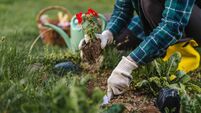
When soil is healthy, plants are more resilient to drought, better able to access nutrients, and less vulnerable to pests and diseases
A single teaspoon of healthy soil can contain billions of bacteria, metres of fungal threads and countless microscopic organisms all working together. File picture

A single teaspoon of healthy soil can contain billions of bacteria, metres of fungal threads and countless microscopic organisms all working together. File picture

For years, gardeners have been taught to focus on feeding plants. We buy fertilisers, some organic, others chemical, sprinkle them around our borders, feed our pots and containers and wait for the results. Sometimes the results are impressive. Plants respond with lush green growth, bigger flowers and stronger performance. Yet despite all of this feeding, many gardeners still find themselves battling the same problems year after year.

Plants struggle in dry weather, growth slows unexpectedly, leaves turn yellow, and flowering disappoints. The temptation is often to reach for more fertiliser, but what if the real answer lies somewhere else entirely?

The more time I spend gardening, the more convinced I become that almost every gardening problem starts and ends with soil. Back in the last century, I used to fall asleep during my soil science lectures in college, due to the fact that the subject didn’t interest me and perhaps also because they were early morning, and I was known to be an enthusiastic participant in student life at nighttime. 

Nowadays, the magic that happens in the soil absolutely fascinates me, though even the experts still only understand a fraction of how it all works.

Healthy soil is one of the most remarkable living systems on Earth. A single teaspoon can contain billions of bacteria, metres of fungal threads and countless microscopic organisms all working together. These organisms help break down organic matter, release nutrients, improve soil structure and create the conditions plants need to thrive.

When soil is healthy, plants are healthier. They become more resilient to drought, better able to access nutrients and often less vulnerable to pests and diseases. Unfortunately, many modern gardening practices focus almost entirely on feeding the plant while paying very little attention to the soil itself.

Traditional fertilisers provide nutrients such as nitrogen, phosphorus and potassium. These nutrients are essential, and plants cannot survive without them. The problem is that nutrients do not always stay where we put them.

Rainfall washes nutrients down through the soil profile and beyond the reach of plant roots in a process known as nutrient leaching. In effect, the nutrients you paid for simply disappear from the area where plants can use them.

As a result, plants often receive a short-term boost followed by a gradual decline as nutrients become less available. The gardener responds by applying more fertiliser and the cycle continues.

The real solution is to improve the soil structure and the soil’s ability to hold onto nutrients, moisture and beneficial microorganisms.

One of the most exciting ingredients being explored in horticulture is biochar, which is a highly stable form of carbon produced by heating organic material in a low-oxygen environment.

Under a microscope, biochar looks like a sponge. Its surface is full of tiny pores and cavities. These spaces provide shelter for beneficial soil microorganisms and help retain both nutrients and moisture within the soil. One cubic inch of biochar has a similar surface area to a tennis court, and this surface area provides a home for nutrients and beneficial microbes.

Rather than allowing nutrients to wash away, biochar helps keep them available within the root zone for longer. It acts a little like a nutrient bank account, helping the soil store valuable resources until plants need them. 

Unlike many organic materials that break down over time, biochar can remain in the soil for decades. Of course, biochar on its own is not a fertiliser; it’s what improves the structure of the soil. It works best when combined with nutrient-rich organic materials, and one of the most effective sources of organic nutrition available to gardeners is composted poultry manure.

Chicken manure has long been valued because it contains significant levels of nitrogen, phosphorus and potassium, along with a wide range of trace elements. Once properly composted, it provides a rich source of plant nutrition while also contributing organic matter to the soil, though there is a distinction between certified organic poultry manure and conventional poultry manure.

Certified organic poultry manure comes from systems that must meet strict standards governing feed, production methods and traceability. Those standards provide reassurance for gardeners who want to know exactly what is entering their soil and growing environment.

However, many of the benefits of chicken manure can be relatively short-lived. Nutrients are released, plants respond, and then those nutrients are lost through natural processes such as leaching, a short, sharp boost for the plant, but nothing long-term. Combining composted poultry manure with biochar creates a particularly interesting partnership, as the manure supplies nutrients and organic matter while the biochar helps retain and recycle those nutrients within the soil system.

This soil-first approach has been the focus of considerable work by Humusoil in Co Louth over recent years. Since the covid period, the experts on soil health have invested significant effort into developing products that place soil health at the centre of gardening.

I have had the opportunity to work closely with the team over the last few years, and that work has eventually led to me developing a certified organic plant food and soil improver, The Irish Gardener’s Nutrichar, that combines composted poultry manure with biochar using patented composting technology. 

What appealed to me was the challenge of creating something that reflected the soil-first principles I have been talking about for years. Nature rarely solves problems by treating symptoms — rather, natural systems build resilience from the ground up, so the aim was to combine the nutritional benefits of composted organic matter with the longer-term soil-building benefits of biochar, helping gardeners support the health of their soil and the plants growing in it.

Open garden

The latest events in the Friends of Marymount Open Gardens Summer 2026 campaign take place tomorrow, Sunday, June 28, from 11am-5pm. Two gardens will be open in Carrigtwohill: Noel O’Keeffe’s garden, Silverstone, The Rock, Carrigtwohill, T45V089, and Anthony Barry’s garden, The Rock, Carrigtwohill, T45KN61. See Marymount.ie, call 021-4869100, or email fundraising@marymount.ie.

x

More in this section

Revoiced

Newsletter

Had a busy week? Sign up for some of the best reads from the week gone by. Selected just for you.

Cookie Policy Privacy Policy Brand Safety FAQ Help Contact Us Terms and Conditions

© Examiner Echo Group Limited