How radiators can give your home a glow-up this winter
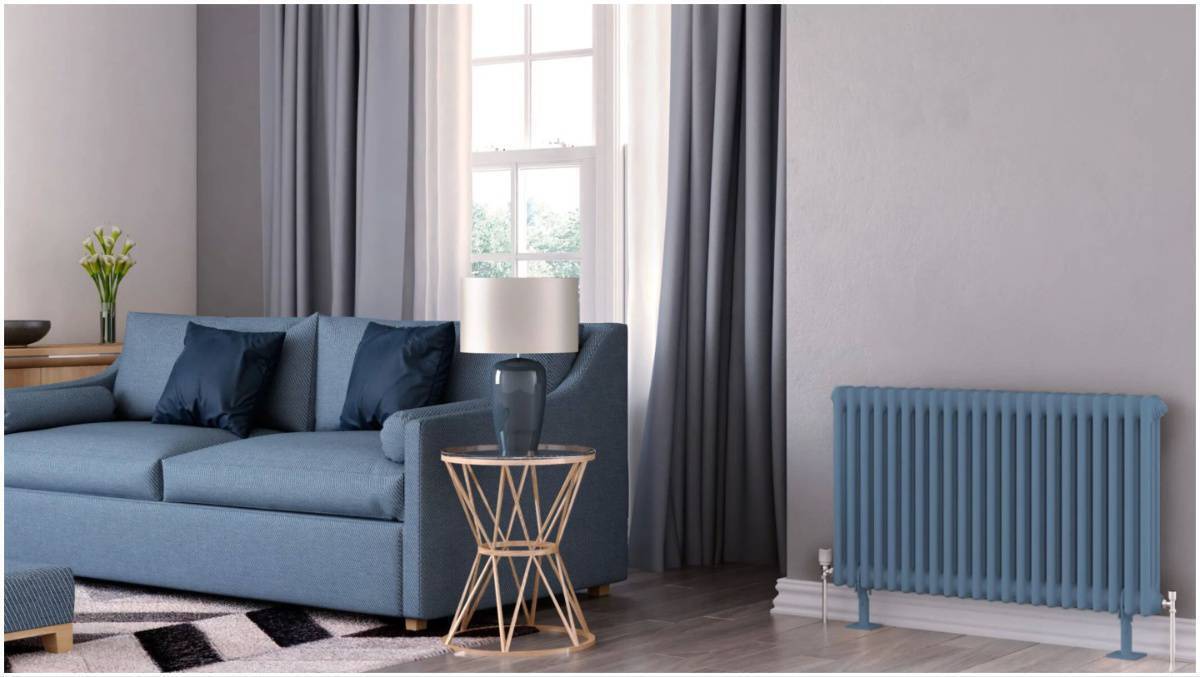
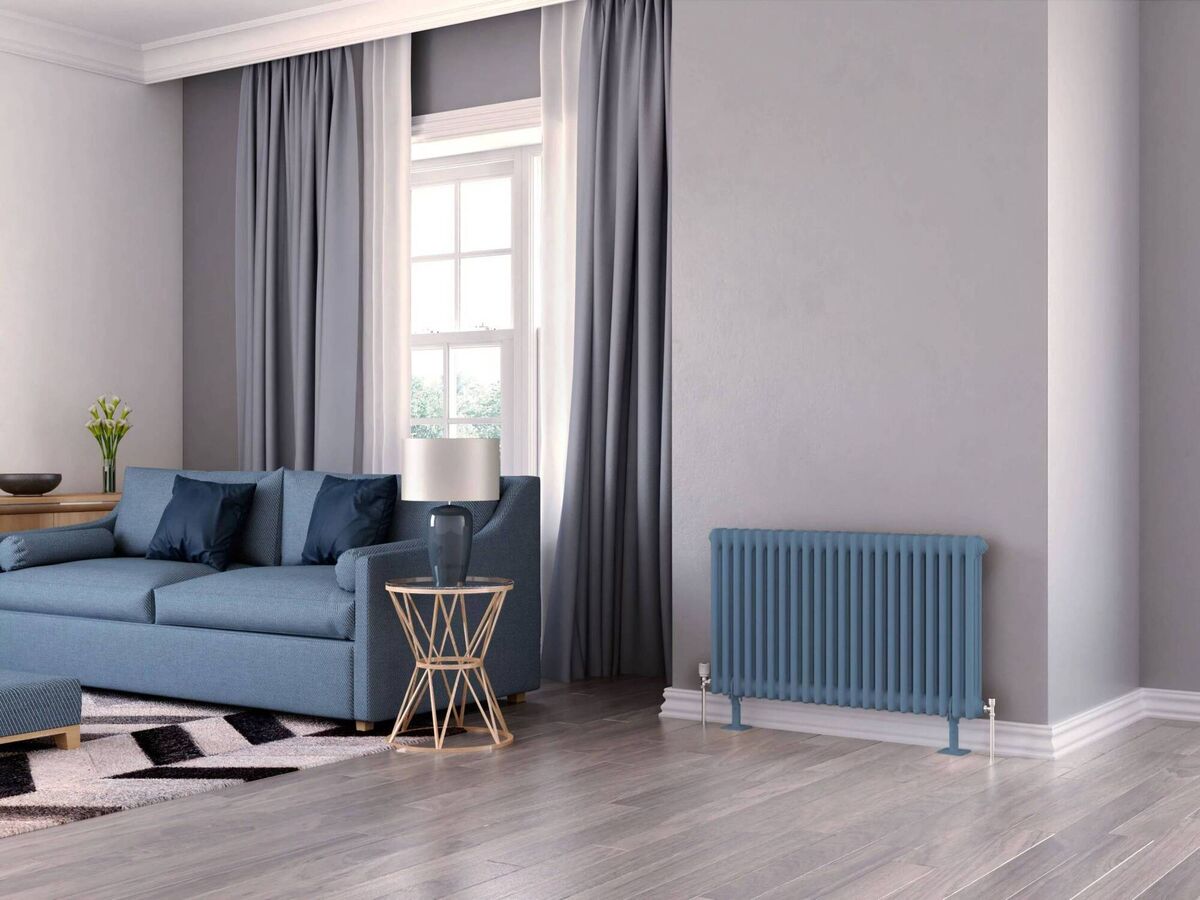
Stelrad classic column in Pigeon Blue with feet: Steel radiator in cast-iron styling, 750mm x 444m from €480 in RAL 1916 white, various suppliers.
Replacing your radiators or just checking everything is flowing in the right direction? Here’s what you need to know before winter scratches at the door.
Before we call in the engineer for a full annual boiler service, turn on your central heating (CH) system to a working level. Once the radiators have heated up (note how long that takes) move through your valve settings and note anything unusual. Run your hand over the panel from top to bottom, side to side.
Curious gurgling sounds or cold areas to the top of the radiator may be just an airlock that can be “bled” out. If you find dirty brown water appearing when you bleed your rads — it’s likely time for a flush, and hard-water areas without water conditioning, this can be demanded every three to five years.
Over time, radiators can rust and collect debris from water that is repeatedly circulating in the system.
You may notice weird noises coming from the boiler too. Internally dirty radiators with reduced efficiency can be easily dealt with and the water completely replaced by a skilled plumber with power washing or (more commonly) a manual clean utilising a hose that drives the grot out of each radiator, allowing it to heat fully.
Power-flushing is a serious procedure that can take up to 8 hours and utilises chemicals to remove debris — don’t attempt to do it yourself. Protect your floors before the procedure (in case of leakage of this serious nasty sludge). Kettling is banging noises in and around the radiator. It occurs in hard water areas, where limescale builds up and blocks the pipes. Again, test the CH, and talk to your heating engineer. Leaking radiators will need replacing.
Replacing like-with-like in scale, measure your radiator from each pipe position. If you’re keen on something bigger or smaller with an appropriate BTU output, your pipe positions may be affected. BTU stands for British Thermal Unit. This represents how much energy it takes to heat 1 pound of water by 1 degree Fahrenheit. If you are just swapping out a radiator for one in the same BTU range your boiler output will cover the same cubic metres and the existing level of your insulation.
When adding more radiators or increasing BTU output, it’s vital to ensure your boiler can handle the extra demand and reach along the extended central heating loop. There are handy BTU calculators available through most suppliers online. Enter the floor space and height of the room, any window openings, its aspect and the insulation quality of the walls, floors and ceiling.
Round the BTU figure up not down before talking to your heating engineer for their response to the actual space, including any insulation improvements you’ve made lately. Your valve choice, manual or thermostatic will increase the width of the radiator overall (or its length in a vertical). Ensure you know to the millimetre where the pipes and valves will land.
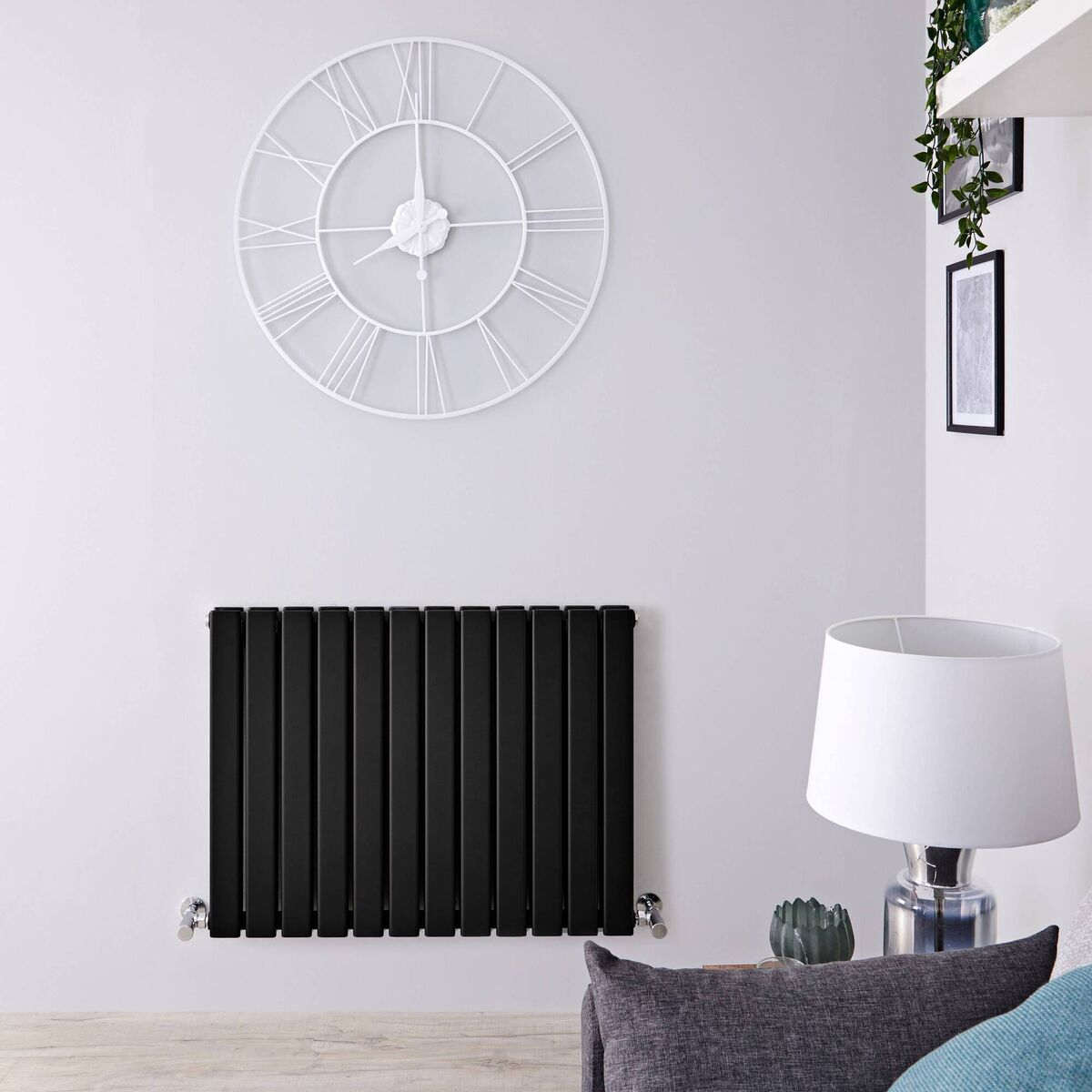
Double-panel radiators (termed type 21 or 22) can add from 30% to the BTU with a minimal change in depth. Going from a horizontal radiator to a bold vertical style will demand a pipe position change — an extra expense, especially chasing back into the floor or walls in a block-built house.
That said, if the wall is constructed from solid brickwork or blockwork, you have a wider choice of heavier wall-hung radiators. Allow 100mm below and at least 50mm above each radiator.
Different radiator materials and shape profiles offer slightly different characteristics once heated. Radiators largely convect and to some extent radiate heat (radiator is something of a misnomer — radiators pull air around the room).
Some rads can handle any wet heating set-up, while others are better suited to particular rooms or CH systems. Cast iron (new or restored) has unique thermal properties, heating slowly but retaining warmth to return to the room for longer.
A premium spend, they should last a lifetime and can be bought new (but cast from original moulds) or vintage by a specialist supplier. If you have old radiators and fancy painting them, keep in mind, the wrong paint can block convection and reduce efficiency. A factory-applied finish will outshine that first DIY dabbling.
Budget-friendly steel radiators come in a good range of honest, gentle industrial styling, and are perfect for the fast reactivity of conventional gas or oil CH systems. Compact radiators in traditional mid-century “mattress” styles offer excellent prices. Aluminium radiators with beautifully engineered fins are often specified for a retrofit to accommodate HP systems.
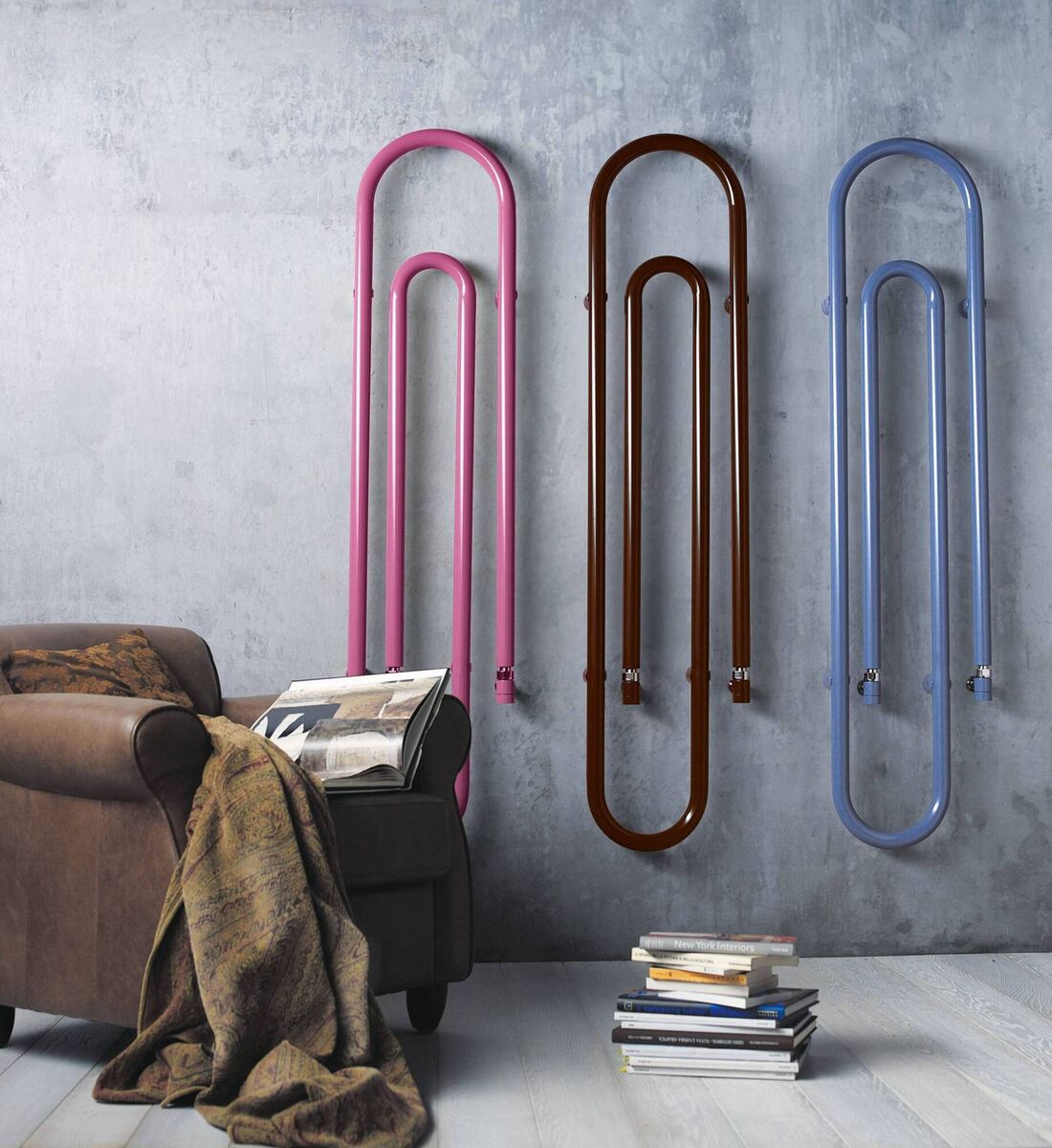
They are effective conductors, use less water, heat rapidly, and deliver a high degree of kWs to the room for a low-flow rate. Aluminium is very malleable and delivers some cutting-edge and classic Bundy-Loop design choices too. They do tend to be more expensive, but we’re talking about 30 years standing, so well worth that extra investment in an eco-friendly material. TRVs attached to the radiator now come in discreet, heritage finishes as well as the familiar white wheel style — there’s no style compromise. In terms of shape, for any heating system relying on convection, horizontal radiators work slightly better than tall, thrusting verticals.
If you don’t have a thermostat in the room, then yes you do. TRVs have nothing to do with boiler settings and master heating controls — the bar helps to regulate the central heating from calling on the boiler too often. One of the most powerful basic additions to even the most challenged system begging for an upgrade, they measure the ambient temperature of the room, not the heat of the water in the radiator, so they react specifically to the space they are in. They are stand-alone little heroes working under a setting on the head (or via your app if you have smart TRVs).
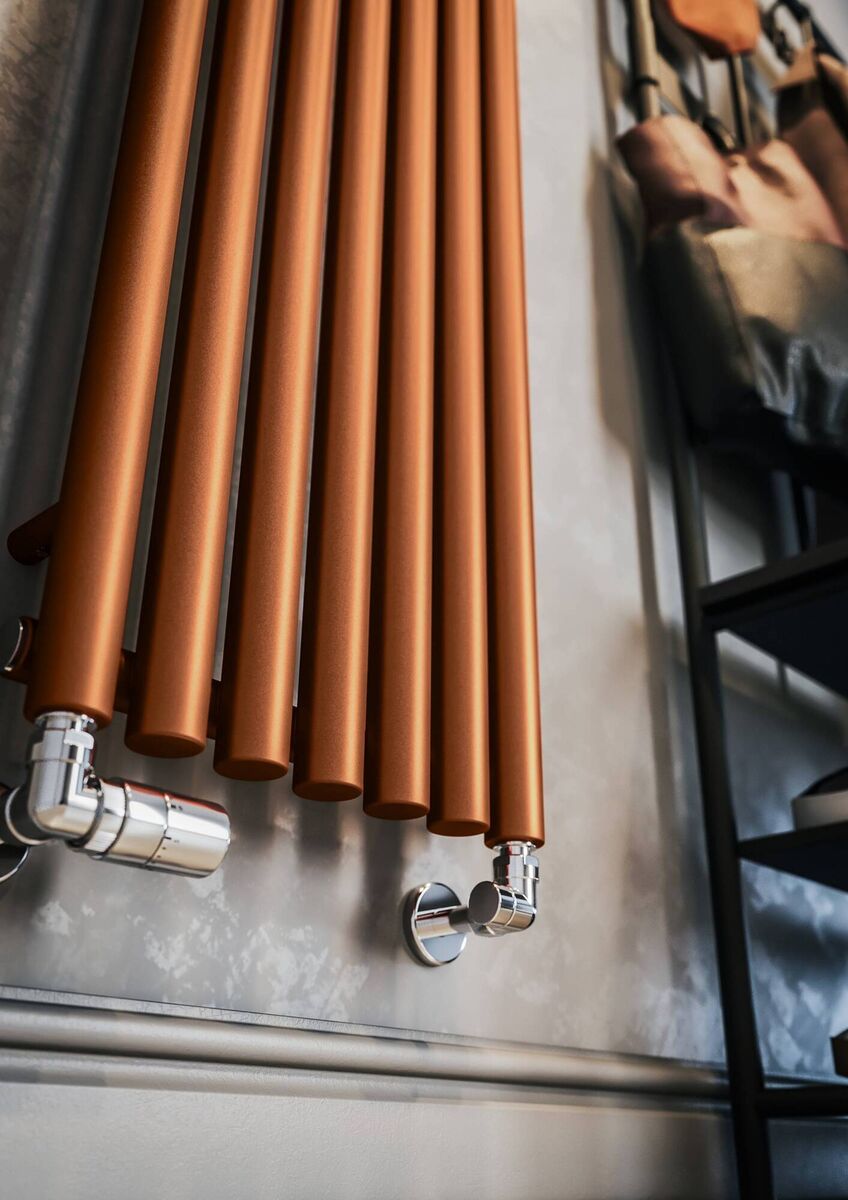
Every radiator in any home, be it in the hall or a spare room should be detailed with a TRV or dedicated zone regulation through superb heating controls singing with in-room thermostats. With standard TRVs and smart app-tickled radiator valves, there’s zone control available to even an antiquated central heating system. Retro-fitting TRVs can be handled by a seasoned DIY amateur, otherwise have the plumber in, and ask for a deal for several valve changes. Find our full guide to TRV setting here: irishexaminer.com/property/homeandgardens/arid-41309488.html. Ordering any valve ensures you know if you have a side-entry or bottom-entry valve, and check the supplier specs’ for angled, corner or straight valves. 15mm and 22mm valves are standard.
Where you have achieved a B2 BER or better following a full house deep renovation — well, it’s an exciting time. If you have used the SEAI’s Technical Assessment process on the way to grant aid, you’ll already know if your radiators are up to the job, with sufficient emissivity running at a lower flow rate, reduced temperatures of 40C-50C and the low reaction times typical of a HP system.
Traditional non-condensing fossil fuel heating systems are designed to run at 60C-65C. Keep in mind that the best results for HP systems are achieved with the large area provided by underfloor heating.
Generally, a heat pump will demand large existing panels in older houses, or full replacement with a super-conductor like aluminium. When you renovate, HP or not, there will be times when stretching the wet CH system will not be cost-optimal for some rooms.
Consider a thermostatically controlled electric radiator for bathrooms, or dual-fuel models that can be part of your wet CH loop while having an independent electric element when you just want to cosy up the en-suite on a cooler morning.


CONNECT WITH US TODAY



Be the first to know the latest news and updates