Who was the man with no name found in Cork in 1986?

Former 'Prime Time' reporter BARRY CUMMINS has long wanted to tell the story of the man who didn't know his own name. Finally — five years after the man's death — we can ask if anyone knows him
Who was the man with no name found in Cork in 1986?

Gardaí are appealing for information about the man discovered sleeping rough in Ballincollig in August 1986. He spent the rest of his life in care at St Stephen’s Hospital in Glanmire. Pictures courtesy of An Garda Síochána

He was sleeping rough at a bus shelter in Ballincollig in Cork, when gardaí first came across him. It was August 25, 1986.
The man looked to be in his 50s, but when officers asked him his name he couldn’t tell them, nor could he say where he was from. He had a dog with him, a pet he said he had “on loan”. The man said he had lived in Dublin “for years”, but offered no more information. He appeared hermit-like and very gentle.

Amid concern for his wellbeing, the man was taken for psychiatric assessment to St Stephen’s Hospital in Glanmire. He would remain there for the next 35 years.

The man received immediate medical care, with a decision soon taken that he needed to be admitted as an inpatient. During that last week of that August there was no national appeal for information to discover who the man was. Nor was there any such appeal in the following months, or years, or even decades.

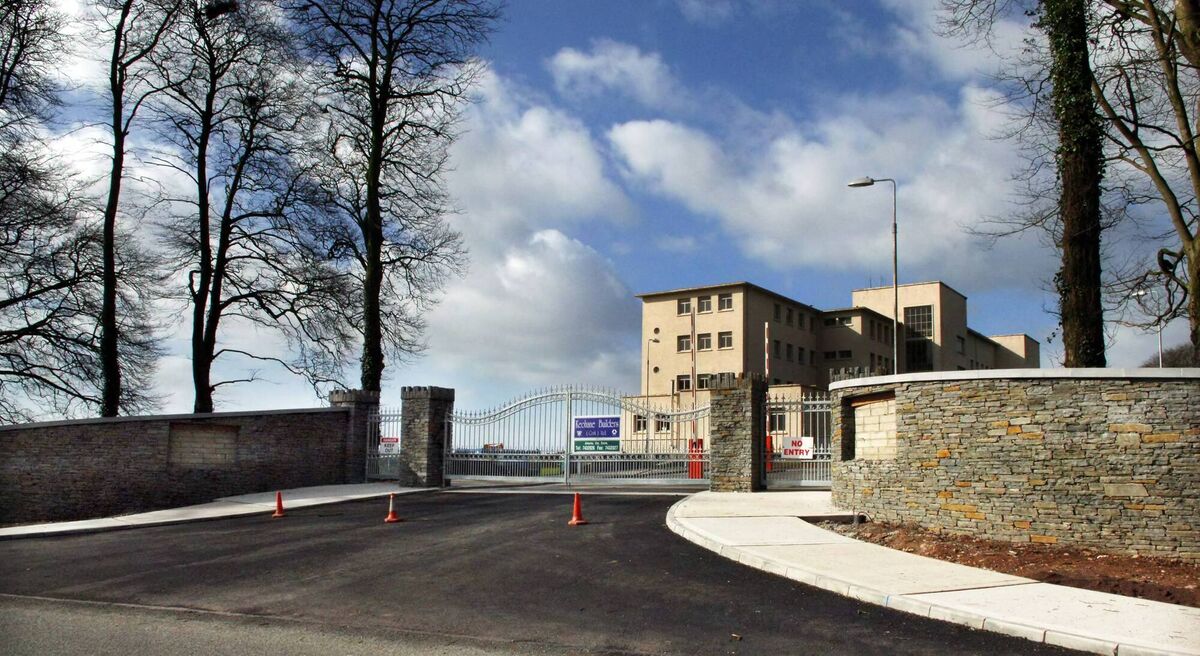
Out of respect for the man in their care, medics at St Stephen's Hospital (Sarsfield's Court) in Glanmire, Cork, gave him the made-up name of 'Bill Fitzgibbon' and a nominal date of birth. Picture: Denis Scannell

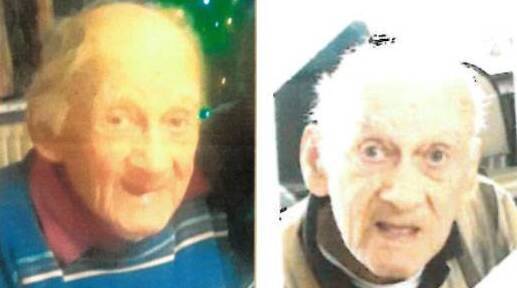
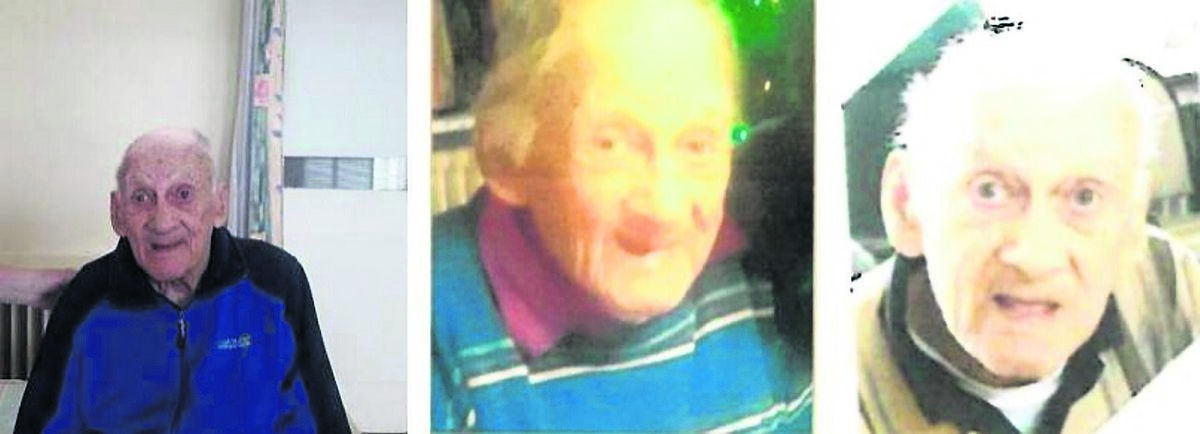
The first publicity given to the case was on Monday’s Crimecall on RTÉ One television when, for the first time ever, and after much consideration by authorities, photographs of the unidentified man taken in his last years of life were published.

The images are very evocative. 

The unidentified man has a warm face, with big engaging eyes, someone who could have been the life and soul of the party, if his mind had allowed him.

Whether it was amnesia brought about by a physical injury or some other form of trauma, the man lived for 35 years in a psychiatric care facility with no idea who he was was. 

The man’s accent was described as “middle of the road”. There was no identifiable lilt to his speech. He couldn’t be placed as a Corkman, or a Dubliner, or even an Irishman.

Various theories would abound within the gardaí that the man might be Scottish, or perhaps Canadian. The only definite thing was he came from an English-speaking country.

Respect, consent, and privacy 

For 40 years, those theories remained within the force, with no publicity given to the case of the unidentified man.

There were reasons given. Because of my interest in missing persons cases I had long heard from sources of the case of the unidentified man. 

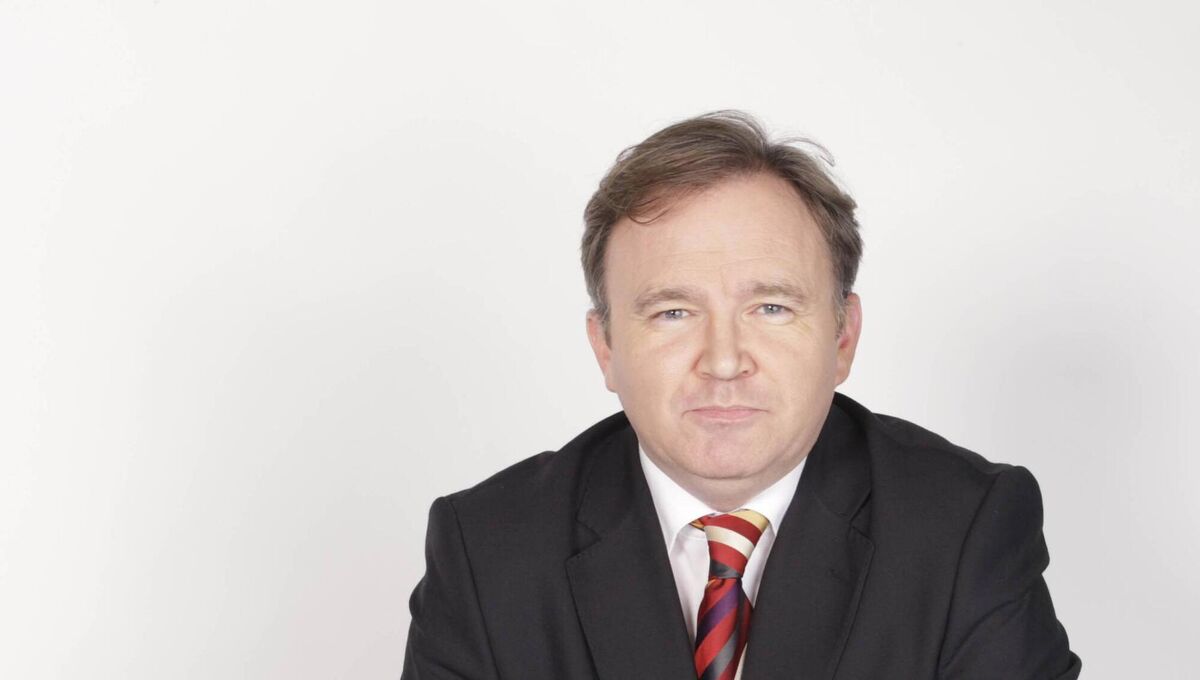
As an RTÉ 'Prime Time' reporter, Barry Cummins has been aware of 'Bill Fitzgibbon' — but the man didn’t have capacity to consent to information about him being circulated, which is why it's only now that gardaí are appealing for loved ones to come forward. File picture

All I knew was he was in a psychiatric hospital in Cork. I knew that he had been given a nominal name and date of birth. Such made-up details were designed to give the man some dignity, to allow him have an identity, to be a person.

There was also a practical reason for the made-up identity. The man spent decades in the care of the Irish State. Doctors and nurses who interacted with him daily needed to call him something. The worst thing would be to call the man “John Doe”, a term usually reserved for dead people whose identities are not known.

“Let’s call him William Fitzgibbon,” one person suggested, “and let’s say he was born in 1930.”

Throughout the years, I came to hear about “Bill Fitzgibbon” and I asked informally if I could do a television report about him. I pointed out that an RTÉ News report I did in the 2000s had helped to identify a man with an Irish accent in a care home in England.

I asked gardaí whether I could visit Bill in hospital, or film him. I was told it would not be in his best interests. 
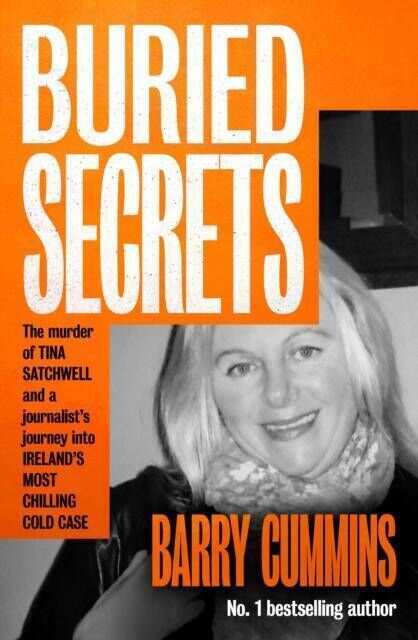
Barry Cummins was aware of the unidentified man in Cork, as he had worked on several missing persons cases including the subject of one of his books, 'Buried Secrets: The Murder of Tina Satchwell'. 

Bill had a routine, he was vulnerable, he didn’t have capacity to give consent. There were many reasons given. While I kept enquiring, I understood the reasons given not to pursue publicity while Bill was alive.

Man with no name now had a family

For 35 years, gardaí were in a strange position. 

They had a living unidentified person in their files, but couldn’t do very much to advance the investigation. Bill was in the care of medical staff, and they were now his family. They had his best interests at heart, and they knew he did not have the mental capacity to give consent for a DNA sample to be taken.

As Bill got older, his health deteriorated. He was successfully isolated during the covid pandemic in 2020 but, in 2021, his health failed. By his nominal date of birth, Bill was now in his 91st year. When there was talk of moving Bill to a different facility for end-of-life care, the staff at St Stephen’s became very upset. They had cared for Bill for so long, he knew them, his eyes sparkled when he engaged with staff he knew. He didn’t know who he was, but he knew he was among friends, he knew he was safe.

Gardaí now wish to find his real family 

“Bill Fitzgibbon” died in September 2021. Sergeant Aoife Corcoran from Ballincollig station was one of the officers now involved in the case of the mystery man. She and her colleagues were determined to find his real family wherever they might be.

A DNA sample was taken from Bill before he was laid to rest on the southside of Cork City, in St Finbarr’s Cemetery in Glasheen.

In the aftermath of Bill’s death, I formally applied to gardaí to show photographs of Bill in a television report for RTÉ’s Prime Time. I knew the request was unusual and that it would take time to consider. I had first asked in 2022 but no decision was made. 

Undeterred, I renewed my request in 2025. I knew gardaí had been running the DNA sample through international databases to try and solve the case without seeking publicity, but to no avail. 

By early this year, gardaí were ready to move ahead with my request for the TV report but, by then I had given notice that I was leaving Prime Time and couldn’t go ahead with the report given the timeframe.

'Crimecall' asks 'do you know this man?'

I was delighted when I saw the appeal on Crimecall this week. 

Somewhere out there is the family of a man who went missing in the 1960s, ’70s, or early ’80s who now lies unidentified in a graveyard in Cork. Somewhere, be it in Ireland, the UK, Canada, the United States, Australia, or New Zealand, or elsewhere, is the answer.

The publication of the photographs of Bill in recent days is a very welcome step and could lead to the solving of the case, if the images are spread far and wide.

A dedicated Garda sergeant

The dedication of Sgt Corcoran and her colleagues in Ballincollig is clear. They want to solve a mystery which began when many of the current officers were only children. Some of them may not even have been born.

With the international advances in genetic genealogy, “Bill Fitzgibbon” now has an excellent chance of being identified with expert analysis potentially being able to narrow down the part of the world that Bill comes from.

Until solved, Bill’s file is in the hands of the Cork South Coroner Frank O’Connell. Bill’s case is CS001 in a list of 50 unidentified bodies from right across Ireland.

Gardaí are asking anyone with information about the 'gentle' man with no name they encountered in 1986 in Ballincollig Cork to come forward. 	Pictures courtesy of An Garda Síochána
Gardaí are asking anyone with information about the 'gentle' man with no name they encountered in 1986 in Ballincollig Cork to come forward.  Pictures courtesy of An Garda Síochána

“Bill Fitzgibbon” lived for 35 years with no identity. He is now five years dead and still unidentified. How long must he and all the medical staff who cared for him wait before the mystery of his identity is finally solved?

Until then, he rests in St Finbarr’s Cemetery.

  • Anyone with any information is asked to contact Crimecall on 1800 405060 or email crimecall@garda.ie, or phone the Garda Confidential Line on 1800 666111. Reports can also be made in person or by phone to any Garda station. 

More in this section

Lunchtime News

Newsletter

Get a lunch briefing straight to your inbox at noon daily. Also be the first to know with our occasional Breaking News emails.

Cookie Policy Privacy Policy Brand Safety FAQ Help Contact Us Terms and Conditions

© Examiner Echo Group Limited