Peter Dowdall: Rhododendrons are at their best right now
Whether you're a gardening beginner or expert, Irish Examiner columnist Peter Dowdall has the answer to your questions
Peter Dowdall: Rhododendrons are at their best right now

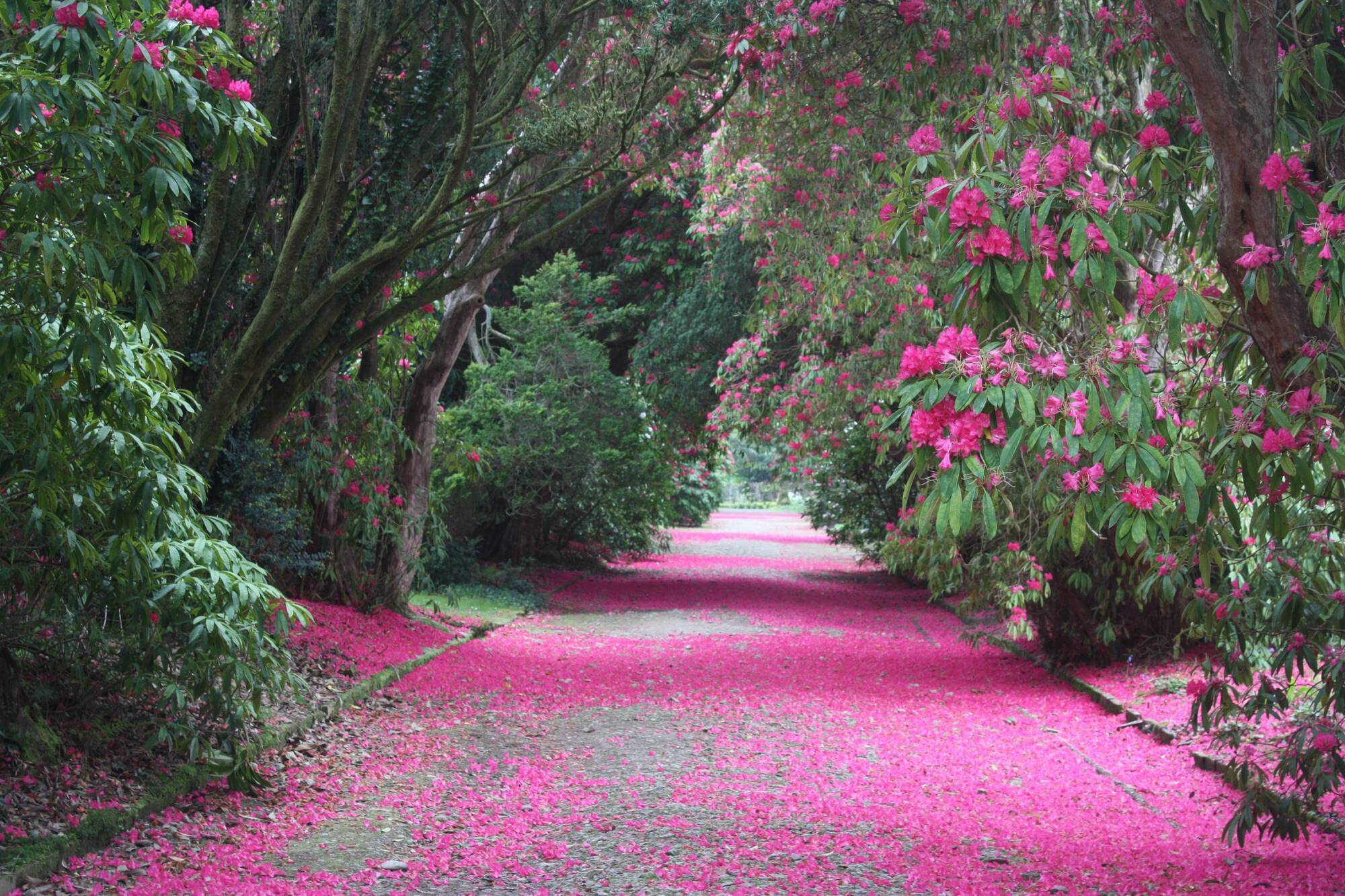
The Broad Walk, Kilmacurragh.

Often maligned because of one unruly family member, namely the species ponticum, rhododendron is a truly magnificent genus at their best during this time of the year.

One of the best gardens in Ireland in which to enjoy them is Kilmacurragh in Wicklow and if this, one of our National Botanic Gardens is in your county, then count your blessings and get down there to enjoy it.

The Broad Walk at Kew Gardens made these features popular in the Great Gardens of the 19th Century and the Broad Walk which was developed in Kilmacurragh was originally planted with Chamaecyapris ‘Kilmacurragh’ and Rhododendron ‘Altaclarense’. 

Rhododendron arboreum in Kilmacurragh.

Rhododendron overpowered the conifer and it has been replaced with taxus (yew). 

During late spring and early summer, this walkway is covered in the deep pink/red petals of the thododendron. They are left here and not tidied up as the image is evocative of the Poppy Fields in Flanders and given the history of the Acton family who developed Kilmacurragh, and that two of the family died in First World War it is a fitting annual reminder.

To celebrate their rhodos, Dr Matthew Jebb, Director of the National Botanic Gardens of Ireland, Seamus O’Brien, head gardener at Kilmacurragh, and Richard Baines, curator of the Logan Botanic Garden, Scotland, are collaborating with the RHS Rhododendron, Camellia & Magnolia Group with a series of video stories and online talks, accessible to all during this period of restricted movement.

Rhododendron 'Thomas Acton'.

In 1649 Cromwell marched along the roadway from Dublin to Wexford, which passes just to the front of where the house now stands, with his army of 12,000 men. One of those 12,000 was Thomas Acton of Shropshire who was given the lands at Kilmacurragh as payment where he built the house in 1697.

William Acton who owned Kilmacurragh during the 1840s was MP for Wicklow and he impressed upon the British Parliament how bad conditions were during the Famine saying that he couldn’t stand back and do nothing while his fellow Irishmen died. 

He brought in one hundred families from Mayo to work on stone walls and install ha has in a measure which nearly ruined the Acton family financially.

In early April the gardens at Kilmacurragh are marked by the splendour of their two-centuries-old rhododendron collection bursting into flower. The Acton family established a long and fruitful friendship with David Moore and later his son Sir Frederick Moore, successive curators at Glasnevin.

From the early 1850s, the Moore’s advised the Acton family on gardening matters and suppled the latest introductions of the great plant hunters, particularly from the Himalayan range. For over 70 years a regular exchange of plants resulted in Kilmacurragh becoming one of the best stocked private gardens in these islands.

Head gardener Seamus now works closely with the National Biodiversity Centre and its pollinator programme The meadow to the front of the house contains 136 species of wildflowers making them the richest cultivated meadow in Ireland. In this meadow, they are also charting the amount of different bee, moth and butterfly species feeding on it.

Today the collection boasts 180 species of Rhododendrons and over 420 varieties. Since taking over the management of the site in 1996, the National Botanic Gardens of Ireland have both restored, and greatly expanded the collection.

These online talks have been taking place all this week, finishing up over the next few days with a Video Story on Saturday 17th by Seamus O Brien who will give an overview of the taxonomy of the genus, using fresh materials from the extensive collection of over 180 species.

Then on Sunday, the week closes with Seamus O’Brien joined in another video story by Dr Matthew Jebb, with a brief overview of the conservation purposes of the collections and a look to the future.

All online talks will go live at 6pm each evening, hosted from the National Botanic Gardens of Ireland with bookings through Eventbrite.

Kilmacurragh is a garden of champions, starting with Seamus who was awarded the RHSI Gold Medal of Honour during 2018 for Services to Horticulture on an International Level. The term "champion tree" is defined as the ‘tallest, oldest or most massive of its species in a given region’ and in Kilmacurragh you are, not quite tripping over them, rather looking up at them at every turn.

This garden is intrinsically connected with Horticultural royalty, everywhere there are links to the past and associations with some of the most famous, important and influential horticulturists and plant hunters of the last few centuries.

For me, possibly the star of the whole garden in Kilmacurragh is a magnificent Rhododendron grande, another European Champion, and the largest specimen outside of the Himalayas. This is a real sight to behold when in full bloom. 

Grown from seed collected in the 1850s by Sir Joseph Hooker in Sikkim and raised in Glasnevin before finding its way to this magnificent, important garden here in Co Wicklow.

More in this section

Revoiced

Newsletter

Had a busy week? Sign up for some of the best reads from the week gone by. Selected just for you.

Cookie Policy Privacy Policy Brand Safety FAQ Help Contact Us Terms and Conditions

© Examiner Echo Group Limited