So, it's on again. The perennial struggle to establish my womanhood, my domestic prowess, my entire worth as a host, wife and mother. Is that a heart arrhythmia?
Something’s trilling under this ragged vest, and Peggy Seeger — it’s not the “beating heart of a captured bird”. Is it hot in here? The dread is rising, lapping my ear-lobes.
Of course, I’ve ordered it. Despite knowing there will be cadaverous flocks heaped in chill cabinets across the country on the 23rd, it’s the accepted prologue to the self-imposed stress festival to suggest there’s a terrifying shortage.
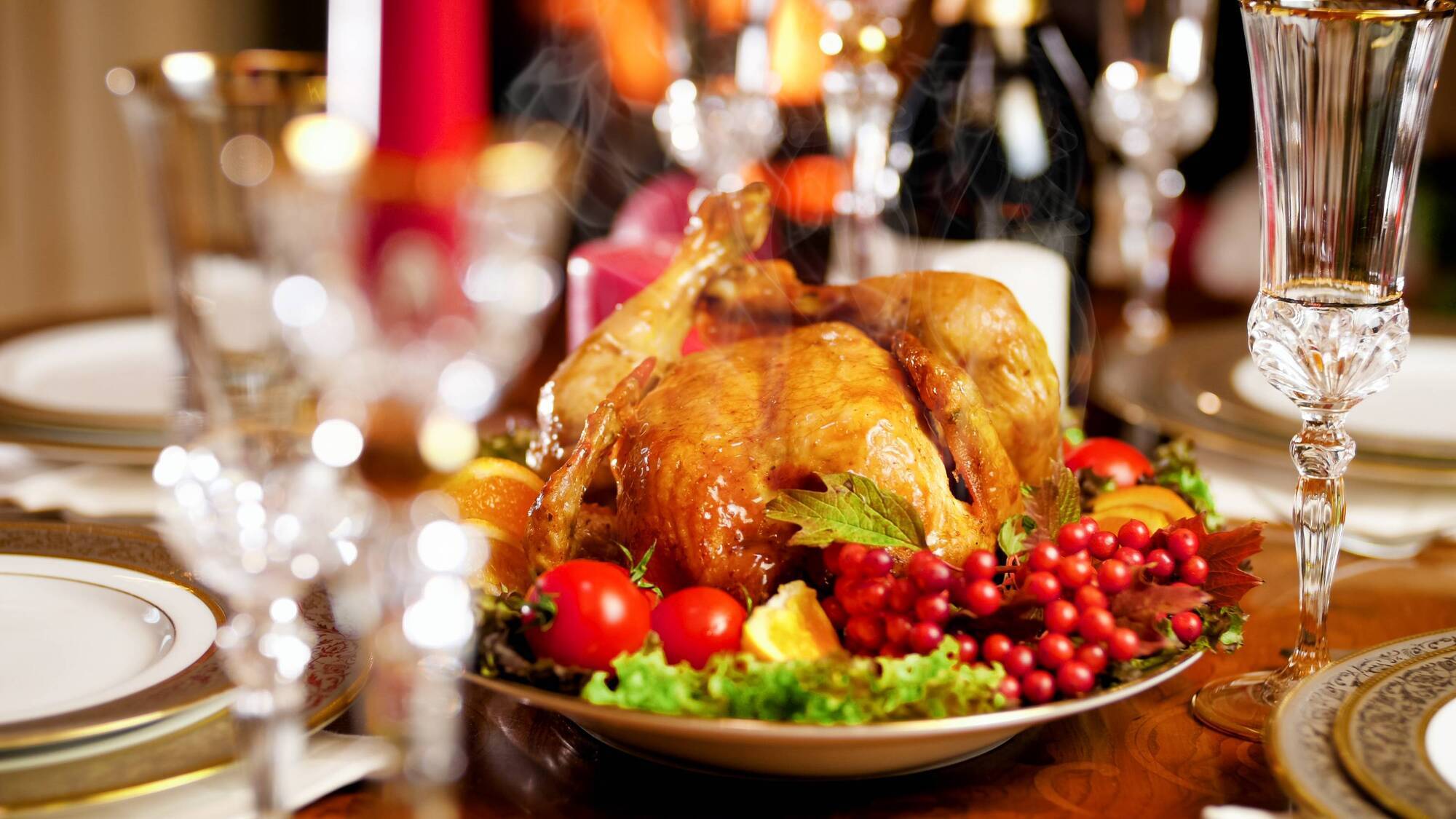
The Meleagris hasn’t even been heaved out of the boot, and I’m talking the pharmacist into a box of Solpadeine to stash in Mummy’s secret treat tin for the 25th.
I’ve ironed a pinny and double-bagged the Barry’s — it’s time to woman up.
Last year, that pan really didn’t meet the moment. It didn’t help that the oil-fired stove gave a hoary groan and died at 8am on Christmas morning 2019. It was the first and only time I was glad my poor aged mother didn’t know what was going on.
We glittered, tinkled with laughter, threw down two beers a head, and played yuletide scouts with a toaster oven and camping stove.
We couldn’t cram the 10lb object into a 4lb hole and the big Christmas cracker went off in my head.
A Christian neighbour laid hands on my substitute poultry roll — I was so grateful and yet robbed of the annual joist for moist magnificence. Jealousy had tightened around my callused soul.
Regarding his broken little body, atrophying in the tinfoil days later, I hissed quietly: “This isn’t over.” I seriously, deeply, murderously cannot stand turkey.
What happened to the goose getting fat? Now the only fat we see is the stuff we rumble our par-boiled potatoes around in before the final crisp Darina magic. Introduced by the Spanish from the Americans, the “Indian chicken” was an easy-to-handle, adaptable bird — but expensive as table fare.
Apparently, we have Henry VIII to thank. Yes, the man who changed the course of history and religious affiliation with his (how can I put this delicately) — lust? He’s credited with a taste for turkey. In fact, many see a turkey leg in his right hand in his most famous full-length portrait by Hans Holbein.
The disputed limb is digitally muscled up and regularly re-posted on Instagram by fans of the King Hal-and-his love-of-turkey story. So, one of the greatest, and well-recorded misogynists of all time is responsible for lopping the happy head off my Christmas 2020 — that makes perfect and complete sense. I have news for youse’ — it’s a glove in Holbein’s hagiographical masterpiece — not a drummer. False news circa 1537.
Still, sometime in the 1600s, turkey took a trot up to the former royal favourites — boar and pheasant (swans and even sinuous peacock for their majesties) to head up the table on the great day. It didn’t quite gobble up par position until Victorian times. Thomas Tusser was a farmer and poet, and in 1573 he wrote that turkey was now commonplace fare for the table at Christmas. “Beef, mutton, and pork, shred pies of the best/Pig, veal, goose, and capon, and turkey well drest.”
It was said to be on the table, but whether this expensive, exotic meat was entire, or bought in pieces as gifts by Tudor neighbours and friends is still in dispute. It may well have been enjoyed mixed up in pies with other shredded meats.
Oliver Cromwell was not in favour of a merry Christmas, or a merry anything come to that. Turkey roosted in favour of goose again until the 1700s as an extravagant popish festival of waste and indulgence. Records show that in 1757, turkeys were being shipped into Dublin from Bordeaux — pre-prepared and stuffed with truffles.
Indulgent grandeur, but given the length of that journey and typical delays by weather — no thanks. Interestingly, some food writers have suggested that turkey is “dry” because not only is it naturally lean with little collagen, but we at heart don’t relish it, and therefore don’t drool enough before eating it. Food for thought.
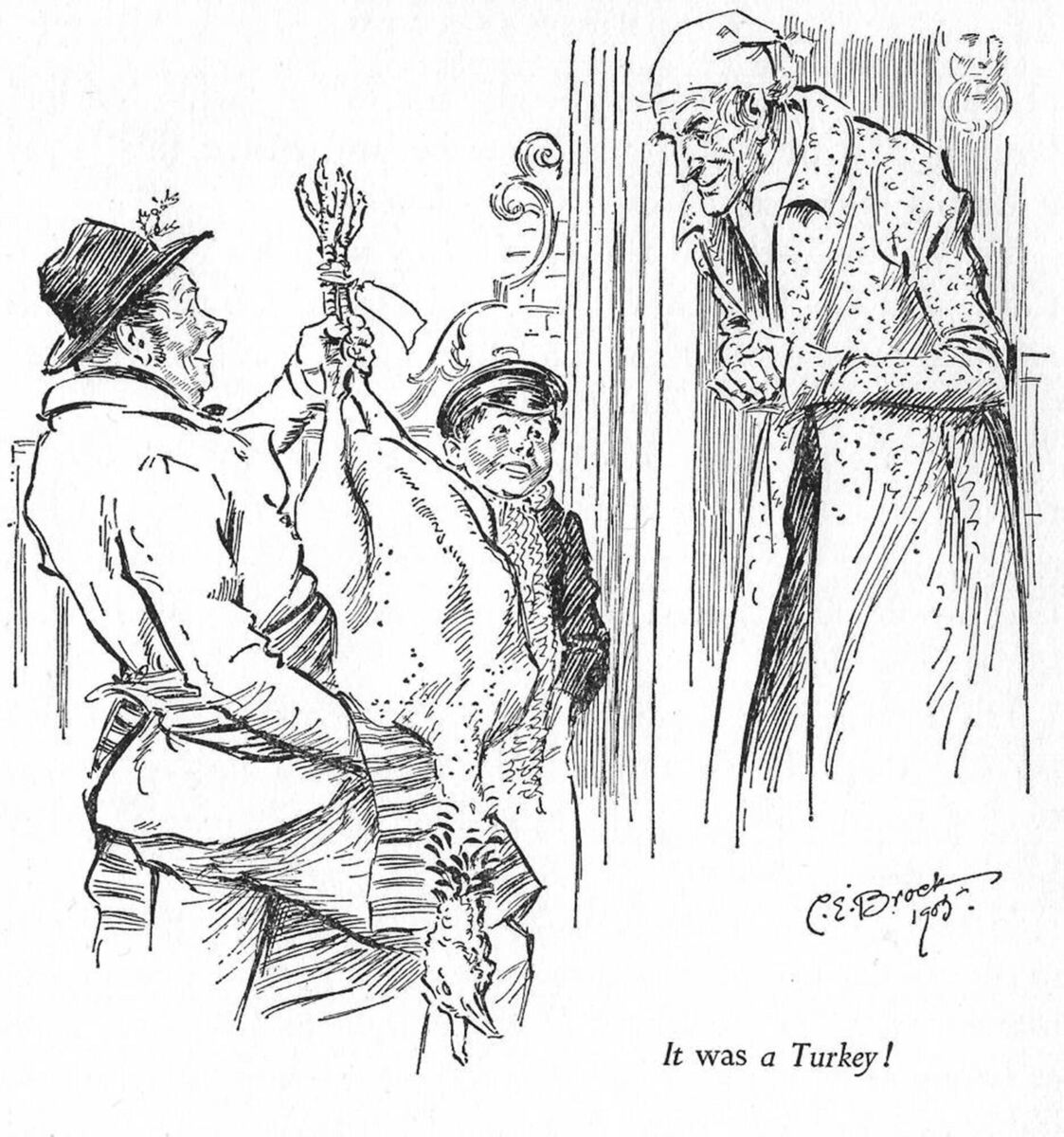
It’s significant that Ebenezer Scrooge didn’t tell the little 19th-century lad in the street to go and fetch the Cratchit family a goose, commonly saved for by Victorian working people in the towns as part of a goose club on birdy lay-away. He told the ragged-trousered boy to fetch a bigger prize — a turkey ( A Christmas Carol, 1843). Some commentators on Dickens’ work have seen this as a grand socio-economic moment.
Here and in Britain, goose was still a vital bird, reared tenderly at home and killed and prepared by the family in rural Ireland. A greasy fowl, it was a lot easier to get right in the vagaries of an old wood or coal-fed range.
One reason turkey may have flown higher by the mid-20th century is that more abundant meat on the carcass — ideal for the Christmas Day when the fast of Christmas Eve was broken, and providing more meals for the following week as the goodies dwindled down.
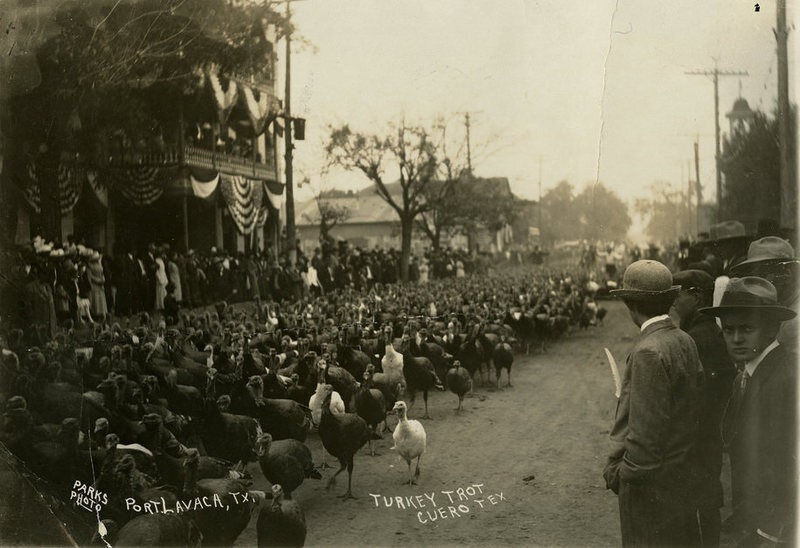
Norfolk turkey has a legendary place in the turkey tale, and there are delightful photographs of magnificent black-feathered turkeys being driven to the markets of London in the 1930s in individual leather and tar booties to protect their feet from damage during the journey.
“One hundred and fifty thousand turkeys were driven annually from Norfolk and Suffolk down the Ipswich Road to London” ( The Agricultural Revolution in London by Naomi Riches).
Similar poultry parades were commonplace across the United States at Thanksgiving and Christmas time. Can you imagine the excitement, the noise, the horrifying pong?
Passing Aherne’s Organic Farm and watching their bronze turkeys’ (a strain of American wild black turkey) ebbing and flowing over their undulating lands near Midleton is a real joy every autumn, even for a turkey doubter like myself.
Truly free-range birds are allowed to mature for six months. Between farmed and factory birds, some 2m kilograms of turkey will be carved up over Christmas. Oh, alright — I’ll try again.
What about a little baste in butter and saffron, or filling my friend with sausage meat and herbs — 16th-century salves to the grey, chewy penance of a deLongchamps dish. Gobble, gobble — you win, bird.
CONNECT WITH US TODAY



Be the first to know the latest news and updates