Vintage View: Georgian colour scheming does not spell simply pale and uninteresting
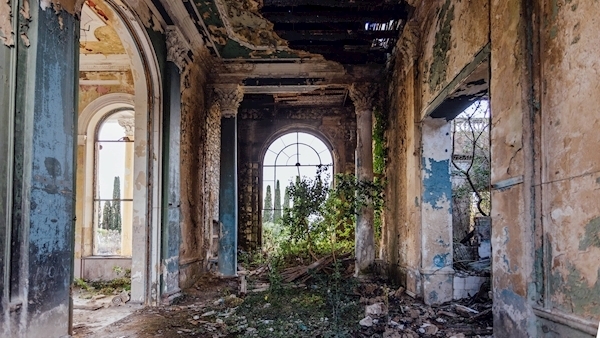
reveals that Georgian colour scheming does not spell simply pale and uninteresting.
GEORGIAN interior style is known for its faint, floataway shades, but also allows for uncommon, vivid, deep colour.
A very long and friendly era for choosing schemes (1714 to the 1820s stylistically), the Georgians not only conjured fabulous lines for furnishings that ring through the ages, but made use of some of the most lovely and still popular shades of paint.
The decorating story was rarely ever just about a single paint colour to the walls, as in finer homes that could afford ornament — paper, fabric and even prints torn from albums were used to fill panelled areas of walls.
Linseed oil-painted timber panels were commonly used before water-based paint became widely available for plaster render, and the new, brave polychromatic palette (often too much for us) exploded on society interiors.
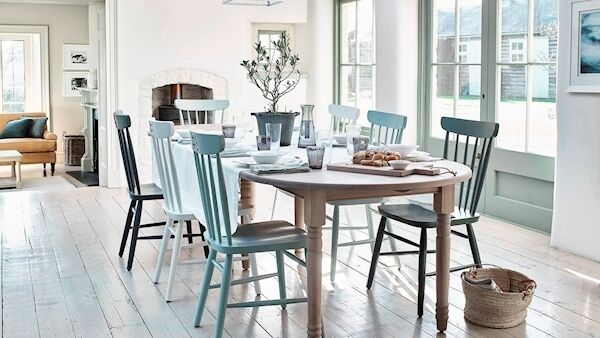
The two early 18th-century colours we all reference as Georgian, are both Wedgwood shades taken from their fashionable Jasperware ceramics — soft sage green and pale china blue.
A good example would be Pantone’s deftly feminine, recently released blue, Plein Air (#13-4111 — a French term for painting outside).
Benjamin Moore’s Water’s Edge (#1635) has a ghostly feel of a fading distemper — heavenly. Sage and paler mint green is trending right now, and Dulux’s Colour of the Year 2020 Tranquil Dawn, would be a good compromise for a family room with period undertones.
As the century progressed, accent colour grew bolder and brighter.
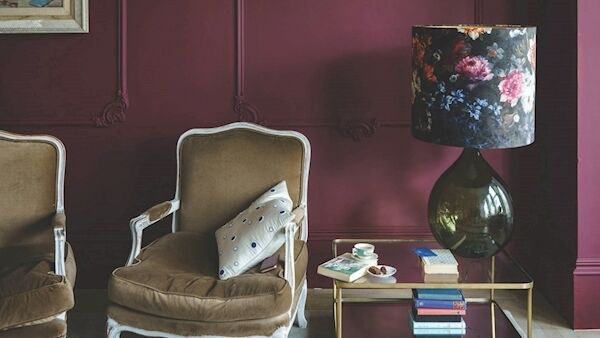
Besides watercolour shades, a snappy pea green shows up, in the company of a feminine soft pink with a polite grey undertone, dark “drab” beige (with gilding glinting here and there it will work), stone (drab) grey and brick reds.
This last outlier was part of a developing interest in the rich Gothic colour seen in medieval church tiles and Renaissance art.
Farrow & Ball’s iconic Picture Gallery Red (#42) is bold but calming, and is a good late Victorian colour too — much nicer that the sulky Georgian brown/red known as “sang de boeuf”.
For something a more cheerful, Little Greene’s Sage and Onions has a vibrant, raw veggie snap recalling 18th-century Lincoln Green and the arsenic heavy Scheele’s Green that slowly killed off many families.
The more granite green seen under George I and II, is and always has been, bloody awful — look for something with more blue in it — what was known at the time as Rifle Green.
For that tissue salon pink, again, I would have to take a Farrow & Ball — its Cinder Rose (#246) is just so unbearably pretty.
All these colours look beautiful freshened up against white eggshell woodwork. White to the walls should be what decorators sometimes term a “dead” or eau-de-Nil white — a distilled rain washed colour.
No pure brilliants please — how unseemly. Colourtrend’s Lace Glove from their Historic collection is crisp and mannerly for south and west facing rooms with plenty of natural light.
Don’t rush to expensive boutique branding: Crown has two lovely dull whites with a subtle hint of cooling blue — Chalky and Clay White; choose matt emulsion, and test over the course of an entire day.
The Georgians liked to wave their sophistication under the nose of guests, and this included colours inspired by the great archaeological finds across the ancient world.
Pompeii Red taken up in Empire Style of the late 1770s is a perfect example — tailored to dining-rooms and libraries across Britain and Ireland. It’s a cinnabar red: Choose carefully as any mid/dark red can prove an aesthetic thug.
Colour in the era of Napoleon was quite arrogant.
Where politics raged, decorating followed and the new, glamorous “French style” was causing a lot of interest amid the English upper classes no matter how they felt about Bonaparte.
Muted gold began to creep into reception rooms and over walls, dado height panels and soft furniture.
Marie Antoinette’s favourite purple “Puce” appeared, and wallpaper was extravagant and romantic as a foil to the proper, upright, neo-classical Adam and Hepplewhite furniture of the period.
Purple in general, and the queen’s aubergine in particular, are difficult to manage today — try F&Bs new Preference Red.
Treating areas of wall panelling with fabric — silk, damasks and brocades were tacked directly to the wall in drab colours by the 1820s.
White applied plaster decoration, paintings and sculpture brought home from the grand tour sat up against melodramatic colour.
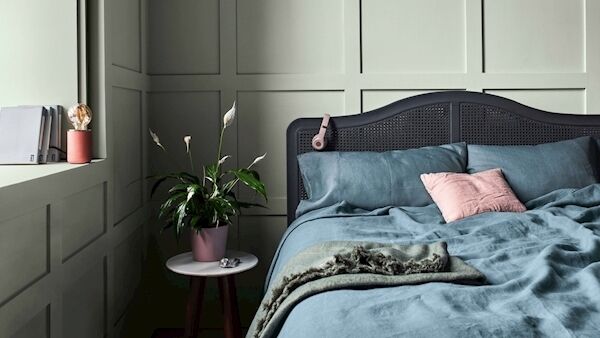
In paint, Pompeian Ash by Little Greene (293) is an interesting alternative to a deep red — gorgeous with deep ruby brown antique furniture. Run over faux panelling and walls in one unifying colour — beautiful and protective.
The underwater turquoise scheming used for the Bennetts’ manor home, Longbourne in Pride & Prejudice (Studio Canal 2005), shows this impact of a dark but delicious palette on damp, dilapidated finishes perfectly.
In brighter full-on shades, just imagine the dandies of society in their silk waistcoats, glittering like birds of paradise at balls and assemblies.
Dead Salmon from Farrow & Ball has a refined mute, but elegant deep pink, dialled up from the pale rose shades of the late 1700s. Be braver.
Touching on the Regency period of 1811-20, wall colour was gifted applied decoration, free-hand ideal landscapes, and stencilling. Go easy, it’s not an easy look to replicate with success.
A deep putty yellow replicating the sophistication of society fashion in clothes of the Regency era is lovely with mid-century furniture and modern greys too.
Little Greene’s Yellow Pink (#46 it’s yellow!) or Colourtrend Turmeric in their Historic Collection, are romantic but oddly now.
If you’re interested in the current fashion for chinoisiere décor or collecting antique pieces from the Far East, a Regency minty green is delicious on the inside of a up-cycled Edwardian china cabinet, or to the walls in a small, private sitting-room or hall.
Exquisite, but again, test it fully to ensure you’re ready for a full on 18th century colour rush.
Like the pink/red Turkey Red (made with madder by the Georgian makers) it might be better subsumed in fabulous wallpaper, tamed by other colours and a white ground.
Little Greene, Green Verditer (#92) is a toe-curling fascination for a dark Irish day, littlegreene.ie for €7 sample pots.
CONNECT WITH US TODAY



Be the first to know the latest news and updates