Vintage View: Mirror, mirror on the wall
reflects on achieving clever home sparkle using mirrors and other antique, vintage and reproduction furnishings
A vintage or antique mirror can prove itself a discreet little vanity decision — yes, this is about your personal confidence. That foxed mirror surface shed of tiny splinters and curling leaves of silver is a cunning image diffuser.
Remember those ageing movie stars of the 1940s who were shot by cameras tenderly licked with petroleum jelly or shielded behind fine silk? Old mirror plate has a magical, merciful, gilded distortion that removes 10 years — 15 if you lean well back and use some north westerly natural light or a dialled down dimmer. Who needs all that crystalline, razor-blade perfection after dinner?
Over-mantle mirrors or larger pieces saved from the back of chiffoniers, can go anywhere from over the back of a deep backed sofa to behind the bed. Just keep your head clear or the glazing. Explore that room at an auction with the “as is” lots.
The broken metallic layers or a failing mirror can be utterly mesmerising — rather Google Earth — with the fine spidery traces of a fine ink drawing. Even a really badly damaged mirror, used for ornamental not practical purposes will reflect the room into a battered daguerreotype.
Don’t replace the mirror plate! Some new mirrors are offered with the foxing recreated in a fine colour wash (see Mirror-tique by Jamie Jaffe in the US).
You can even elect for foxed mirror tiles — ideal for the bathroom as there’s the amplification of space without too much reality creeping-up on you from behind. Think about spatial play with any large mirror or set of mirrors. Vertical examples will send a low ceiling back, while horizontals will stretch out a stuffy wall.
If you get a chance to visit the Hall of Mirrors in Versailles — notice how the room lifts your feet off the floor with all that airy, image multiplying, weightless glamour. Grouping a collection of hand mirrors with their handles down like small hot air balloons – rather gorgeous on a stairs.
Try using a mirror or mirrored furnishings to gin up a space with a little “era intrusion” — for example add an outrageous grand Rococo mirror with a writhing heavily carved gold or silvered frame in a spare modern room. Resin reproductions are now truly cheap if you can’t find something old and affordable at auction.
For larger floor mirrors leaned into corners go for a bit of heft to ensure it’s stable or put up a secret support to just hold the top edge safely.
Venetian Murano table mirrors from the late 19th and early 20th century were popular tourist buys and appear regularly for sale. With a rich history stretching back to the Renaissance, they make lovely decorator pieces gathered with an interesting collection of smalls.
Otherwise underscore a period you like with a new mirror in that style. Right now, both the 1970s and the best of the 1930s are on the rise for collectors. Bauhaus varieties (sleek, slightly industrialist but never rough and ready) are everywhere.
Crisp, clean, rounded mirror plates without foxing (look for rounding to edges to squares and rectangles), are embraced by slender frames and short pole supports. They can be edged in a metal or a pale wood — but the framing should be no more than a couple of centimetres in depth – just licking around the edges of the glass.
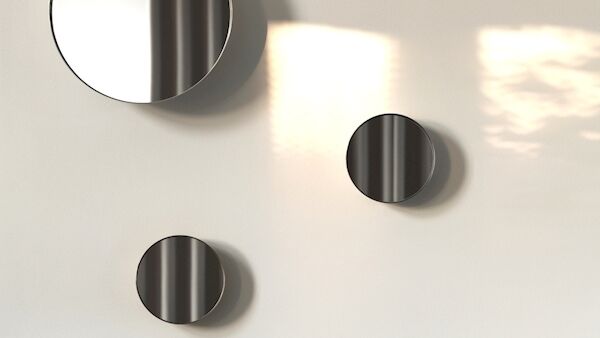
Peer into the Norm Mirror collection, designed by Norm Architects for Menu which come in wall or floor versions in a wide choice of sizings. Match to the new white globe shades from Meadows & Byrne, Harveys and many high street chains — again reaching back to early modernism.
Cheap plate mirrors set low in relationship to a good retro or vintage inspired sideboard — a stylish marriage. Chain-hung mirrors from the 1950s — secondhand favourites. With metal backs, old mirrors can be remarkably heavy — double-check the strength of the links and your intended wall for the right anchors.
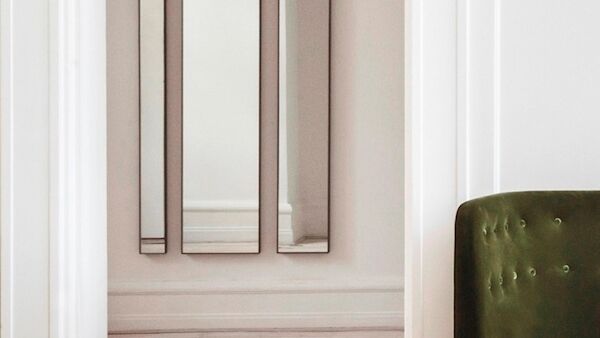
Sets of three multiple mirrors are easily screwed from the batons of old, no account, failing dressing tables from the 40s through to the late 1960s. Hung together they look great, even with a little surface failure, chips or rusted screw heads. Ensure you use a spirit or laser level as there’s no room for a cock-eyed set.
For design reflection, look into the &Tradition Amore mirrors, designed by Signe Bindslev Henriksen and Peter Bundgaarden of Space Copenhagen, a new asymmetric triptych fashioned for and inspired by the iconic SAS Royal Hotel in Copenhagen c.1960, the first sky scraper in the city, with interior design by Arne Jacobsen.
Their steep rectangular form, shifting reflections and lack of frame is exactly what we’re out for in our hunt for mid-century dynamism and elegance.
These feature mirrors are a good reminder to check what is being caught and reflected by your own. The &Tradition is intended to catch glimpses of the city from the top floor rooms of this Danish treasure.
Mirror surfacing was wildly popular in the 1920s, and it has retained it flash today as a Jazz Age essential. Cabinets, armoires and all sorts of parlour furnishings were tried with mirrored finishes from Louis Quinze forward.
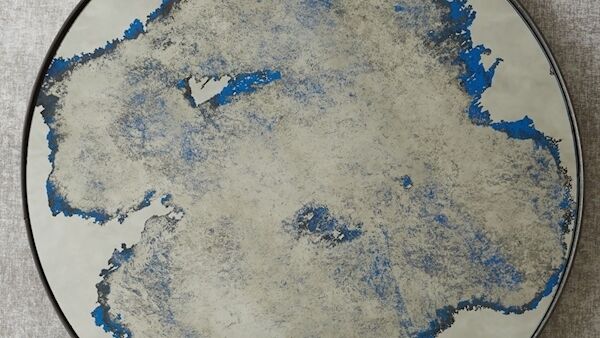
It is possible to use old mirrored doors from truly antique furniture as wall-hung or floor-standing mirrors.
Very large wardrobe doors can be used alone as practical, deep hall and “pier” mirrors (on a slender width of wall) or completely repurposed as room dividing doors — ensure anything you use is heavy enough to hang well, structurally sound and completely true.
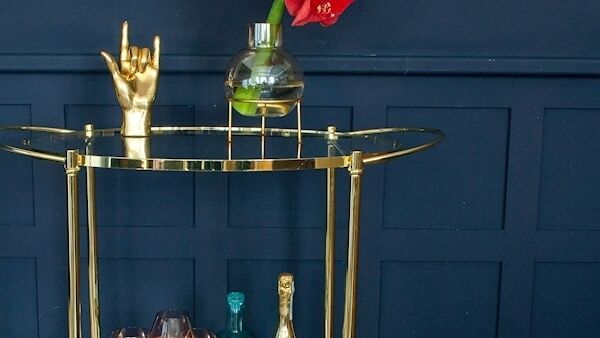
Again, don’t attempt to replace any opaque areas or foxed mirrored nibbles — they are part of the mirror’s history. For new buys, a simple Art Deco trolley with a mirror tray can illuminate a dark corner.
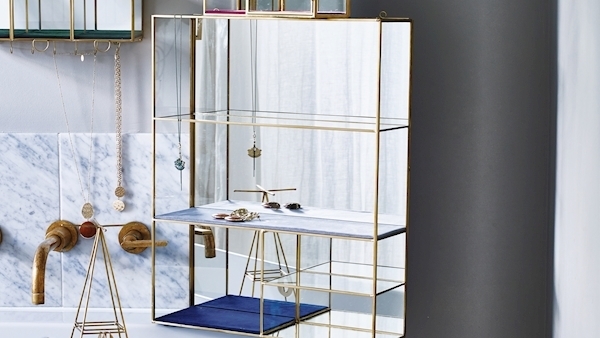
Set any mirrored piece against intense flat dark paint or papers to introduce shimmering drama. For a dressing mirror with vintage manners, the Alana valet mirror from made.com has a superb double line in brushed brass, €336, made.com.
I’m rather in love with Oliver Bonas’ new collection of mirrors and mirrored jewellery stands and pebble mirrors (note his flagship Irish store is due to open at corner of Exchequer Street and Drury Street, Dublin shortly!); prices from €50, oliverbonas.com
CONNECT WITH US TODAY



Be the first to know the latest news and updates