Poor Ethiopians again in need of our help
A SWAN sits on her nests within shouting distance of a schoolyard full of energetic primary school children at Timoleague, Co Cork, clearly unperturbed by their proximity. In some parts of the world, it would be captured and cooked on sight. We are indeed fortunate not to be hungry.
A man we met in Ethiopia last month sent me this email yesterday:
“Dear Mr Damien, Many refugees are coming in from south Sudan in the western parts of Ethiopia close to 50,000 refugees are coming to the district where I have a project with the local community.
“It is about five hours on foot to reach the Sudan border. They will arrive in the next few weeks. What I am thinking is how to deal with the local community and the refugees and I wonder if you can help me find any interested funding organisation.
“The issues of refugees is very sensitive and they come in with many problems. Please talk to organisations interested to work on this issues with me. With thanks, Guta Abdi. EFDA Ethiopia.”
The website is www.efhda.org.et. If you, dear reader, are in a position to help this good man help these unfortunate people, please contact him. I will do my best to help. I visited an EFDA project in Ethiopia, and saw it was doing genuine good work, teaching local farmers how to better use their limited resources.
Here in Ireland, we have a wealth of natural resources but nature is often mistreated. Last week, I wrote about hill fires on the Cork-Kerry border and wondered how they started, given that burning hillsides is illegal in April. This week, even bigger wildfires raged at Gougane Barra, the famous beauty spot.
Does the Garda believe that they were again started by ghosts, the sun on a bottle or spontaneous combustion? They may try to apply the law but in our outdated culture, we have the idea that in Ireland we have nature “to burn”? The law-makers of the Heritage Bill 2016 treats wild nature with contempt.
A woman who divides her time between London and Clonakilty told me about her concern to protect the future of the magnificent natural heritage around the town she loves so well. Deirdre Clenet, nee Hurley, born in Clonakilty, where her grandmother lived at Strand House, once O’Donovan Rossa’s home, contacted me — we were contemporaries as children — to explain her intentions.
She rightly says, “Clonakilty has looked after its built heritage magnificently, and highlighted it for visitors. No wonder it was voted best town in the UK and Ireland by an international panel of architects, town planners and developers.”
“But where in the town does information highlight the superb and diverse natural history beyond the urban area, the wetlands at Clogheen Marsh, the dunes at Inchydoney?” she asks. The biodiversity is exceptional but few visitors would know it’s there, nor do many locals appreciate its uniqueness. While attention is drawn to townscape, nature’s creations are largely left ignored and too often spoiled by human abuse!”
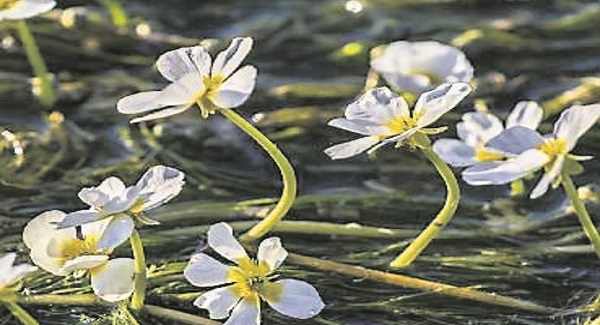
I know Clon is gorgeous. Whenever I go there myself, I lean on a bridge of the Feagle — where, in bare feet and short pants, I netted gudgeons as a boy — and watch dippers, grey wagtails, mallard and herons; and, these days, the lovely, flower-bedecked tresses of water-crowfoot drifting in the stream
In the Southern Star of April 22, Deirdre writes about Clonakilty Bay as an EU Protected Wetland, third among Cork wetlands for bird numbers in winter, and asks where are the hides, for visitors to watch them, where the boardwalks in the marshes, where the walks’ programmes identifying locations and species?
Passionate in the cause of drawing attention to these gems of Greater Clonakilty, she hopes to engage a groundswell of popular concern. Those interested can contact her at clonbiodiversity@gmail.com.
Meanwhile, reports reach me of a cuckoo heard by a reader near Kanturk for the first time in half a century and a tiny wanderer lost in the night, a baby pipistrelle bat.
Last week, Mim Hill, at Droumillihy, Leap in West Cork, found the tiny creature out on the floor of her bathroom; it looked like a withered beech leaf, I’d imagine. Anyway, her husband, Peter, put it on a pillar outdoors to let it fly off, but it fell to the ground, unable to take wing.
It began to squeak piteously. I suggested it might be dehydrated and they fed it water, greedily accepted, from a syringe. The first thing distressed creatures generally need is water. They put it in an open shed and found it still alive the next day, hanging from a rafter. Alas, it did not survive, despite its human guardians’ best efforts.
CONNECT WITH US TODAY



Be the first to know the latest news and updates